Browsing the Archives from nomadart, Author at Nomad Art - Page 2 of 217

Return to Habitat
This selection of recent etchings by John Wolseley derives from two journeys. The Tree Creepers of the Banyena River is the result of a trip to the Richardson River (Djaara name, Banyena) in the Victorian Wimmera, where John immersed himself in the creek systems, connected pools and the life forms they support. […]
Read More >


Return to Habitat
01 December - 31 December 2024
This selection of recent etchings by John Wolseley derives from two journeys.
The Tree Creepers of the Banyena River is the result of a trip to the Richardson River (Djaara name, Banyena) in the Victorian Wimmera, where John immersed himself in the creek systems, connected pools and the life forms they support.
The Bilby and Burrowing Bettong etchings were conceived in 2024 when John travelled to Watikinpirri – Newhaven Australian Wildlife Conservancy – a large tract of protected land dedicated to the return of endangered animals and ongoing habitat recovery.
The renewed presence of these animals is creating an increase in vegetation and natural habitat which has been lost to so much of arid Australia.
John Wolseley first travelled to locations across the central desert in 2006 and has returned regularly to deepen his engagement with Traditional Owners and the biota of Australian desert.

Tidal Zone
Anne McMaster’s coastal images breathe in and out with the rhythm of the moon and tides. Depicting the Tiwi Islands and north Australian coast, McMaster’s prints and watercolours investigate the coastal aesthetics of mangroves, coral, tidelines and beaches. Her images incorporate louvered window shapes found in tropical architecture and reference her studio view onto the coastal environment. The works include found objects gathered along […]
Read More >


Tidal Zone
15 November - 29 November 2024
Anne McMaster’s coastal images breathe in and out with the rhythm of the moon and tides.
Depicting the Tiwi Islands and north Australian coast, McMaster’s prints and watercolours investigate the coastal aesthetics of mangroves, coral, tidelines and beaches.
Her images incorporate louvered window shapes found in tropical architecture and reference her studio view onto the coastal environment. The works include found objects gathered along the beaches and mangroves such as ropes, corals and driftwood.
In 2019 Anne McMaster was an Artist in Resident at Darwin’s Tactile Arts Studios where she researched the notion of Drift – the motion of the sea, movements in time and elements of tidal flow.

SPRING
Gus Leunig Ann Cremean Rosa Purbrick Angus Cameron SPRING is a group exhibition celebrating the nature of northeast Victoria. With contrasting styles the artists celebrate the natural environment and seasonal abundance of the place they call home. View the exhibition catalogue Gus Leunig Gus Leunig’s colourful and poetic paintings encapsulate his […]
Read More >


SPRING
07 September - 27 October 2024
Gus Leunig
Ann Cremean
Rosa Purbrick
Angus Cameron
SPRING is a group exhibition celebrating the nature of northeast Victoria. With contrasting styles the artists celebrate the natural environment and seasonal abundance of the place they call home.
Gus Leunig
Gus Leunig’s colourful and poetic paintings encapsulate his love of the natural environment in the countryside where he lives in northeast Victoria.
Leunig’s imagery is created through a mixture of observation and imaginative expression. His art features quirky figures which inhabit a complex and whimsical world. The elements in his work are drawn together through a tight compositional framework while creating playful pathways with unexpected encounters. Gus Leunig lives in and works in Avenel, Victoria.
Ann Cremean
Ann is a visual artist creating contemporary landscape paintings from her Melbourne studio. Inspiration comes from the landscapes around Euroa. The granite outcrops, textures of the bush, farmland and waterways are the subjects of her work.
These works are a response to light and movement found in nature. After many hours in the bush around Euroa observing shapes and light, these works are made quickly in the studio based on memory. The images have been given space on the canvas to allow them to float and to appear as fleeting glances of landscapes.
Rosa Purbrick
Rosa Purbrick creates diverse organic images with paint on canvas, works on paper and in mixed media. Rosa lives and works at Tahbilk Winery on the banks of the Goulburn River in Central Victoria. For many years now she has turned her eye to the landscape garnering inspiration not only from Tahbilk but also from her travels into outback Australia.
“I have always been fascinated by nature. Its ability to create ever changing patterns – light dancing across water, clouds transcending skies, their shadow play over the landscape. Strata layering, ridges, triangular formations, the topography. This has been a constant inspiration over the many years of observing the world around me. It is what I hope you see imbued in my work”
Angus Cameron
Based Avenel in the Strathbogie Ranges in northeast Victoria, Angus makes prints and impressions on paper that reflect the environment where he lives. His works embody aesthetics found in nature echoing forms and patterns that make up the micro and macro world of plants and place. The work sits in a space between abstraction and representation. It is a filtered gaze reflecting the patterns and shapes of the land and the life it supports.

Art from the Stone Country
Rare and collectable works on paper from Western Arnhem Bardayal Nadjamerrek (dec), Ezariah Kelly (dec), England Banggala (dec), Gavin Namarnyilk (dec), Graham Badari, Joe Guymala, Peter Nabarlambarl (dec). Art from the Stone Country explores the cultural and artistic traditions from Western Arnhem. These artists and cultural custodians represent an historic group who have maintained […]
Read More >
Art from the Stone Country
01 May - 31 May 2024Rare and collectable works on paper from Western Arnhem
Bardayal Nadjamerrek (dec), Ezariah Kelly (dec), England Banggala (dec), Gavin Namarnyilk (dec), Graham Badari, Joe Guymala, Peter Nabarlambarl (dec).
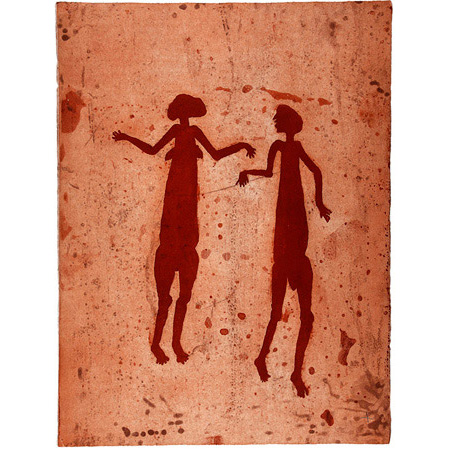
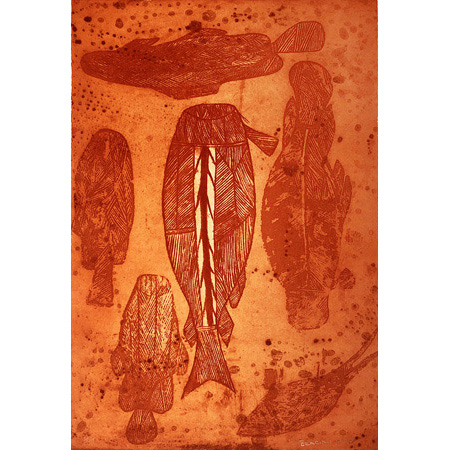
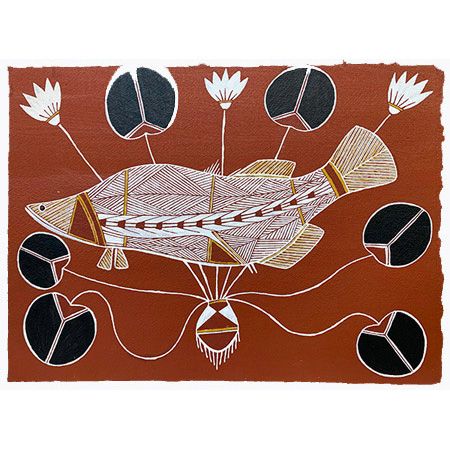
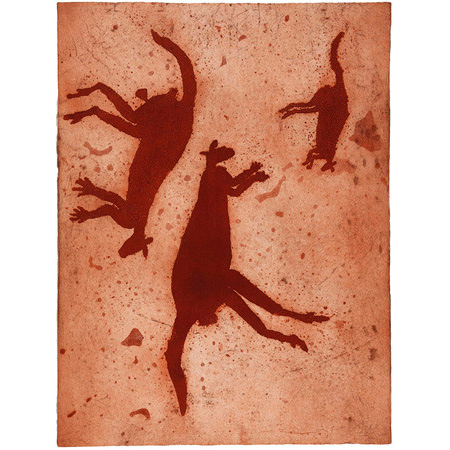
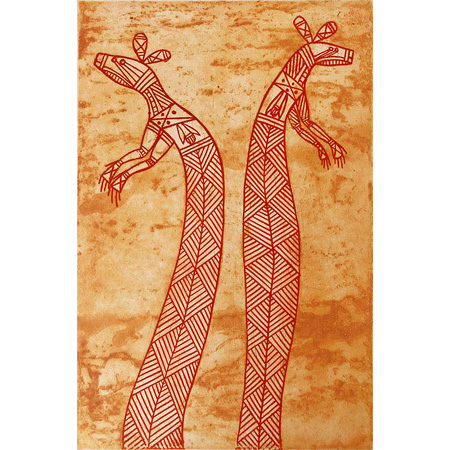
Art from the Stone Country explores the cultural and artistic traditions from Western Arnhem. These artists and cultural custodians represent an historic group who have maintained the practice and knowledge associated of rock art painting on the Arnhem plateau for more than 40,000 years.
Western Arnhem Land is the home of the Mok Clan of the Kunwinjku people who have inhabited their lands for hundreds of generations. Their connection to the country is deeply ingrained in every aspect of life.
Kunwinjku people believe ancestral beings travelled through the country creating landmarks and places in which they continue to dwell, known as Djang (Dreaming). Accordingly, the Kunwinjku people maintain a profound and ancient visual tradition.
Paintings on rock, bark and more recently paper connect with ancient rituals, stories and spiritual associations. Rendered simply and directly with white on red ochre, these paintings narrate the soul and spirit of the Stone Country and its inhabitants.
Featuring: the acclaimed Bardayal Bim
boxed folio of ten etchings.
View the Bardayal Bim Catalogue
And the historic Kunwarrde Bim – Injalak Hill
Suite of 12 etchings in a cloth bound box.
View the Kunwarrde Bim Catalogue

Anabranch
Gus Leunig and Angus Cameron ARTBOX – Jacobson’s Outlook, Nagambie Anabranch can be viewed any time, but will be open on Saturdays and Sundays from 2 – 24 March, 10.30 am – 12.30 pm Other times by appointment For more information contact Rose Cameron gallery@nomadart.com.au, Tel 0415 912 115 Anabranch is a joint exhibition […]
Read More >



Anabranch
02 March - 24 March 2024
Gus Leunig and Angus Cameron
ARTBOX – Jacobson’s Outlook, Nagambie
Anabranch can be viewed any time, but will be open on
Saturdays and Sundays from 2 – 24 March, 10.30 am – 12.30 pm
Other times by appointment
For more information contact Rose Cameron
gallery@nomadart.com.au, Tel 0415 912 115
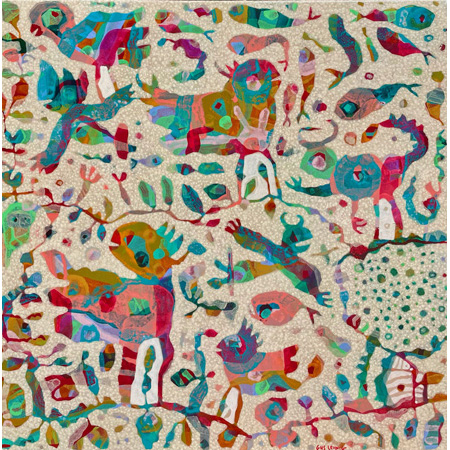
Anabranch is a joint exhibition of paintings and prints examining the artists shared environment along the creek and river systems of the Strathbogie Ranges and beyond.
Anabranch refers to the way in the artists explore elements and pathways of their subject matter but continually return to the essence of the natural environment as a key reference.

Visions of the Kimberley – Art, place, culture, lore
Paddy Carlton Queenie McKenzie Helicopter Joe Tjungurrayi Elizabeth Nyumi Rammey Ramsey Rusty Peters Gordon Barney Eubena Nampitjin Exhibition Catalogue This selection of works is drawn from the remote regions of East Kimberley and Great Sandy Desert. Nomad Art presents eight distinguished artists each renowned for dynamic contemporary expression of their country, culture […]
Read More >


Visions of the Kimberley – Art, place, culture, lore
01 November - 30 November 2023
Paddy Carlton
Queenie McKenzie
Helicopter Joe Tjungurrayi
Elizabeth Nyumi
Rammey Ramsey
Rusty Peters
Gordon Barney
Eubena Nampitjin
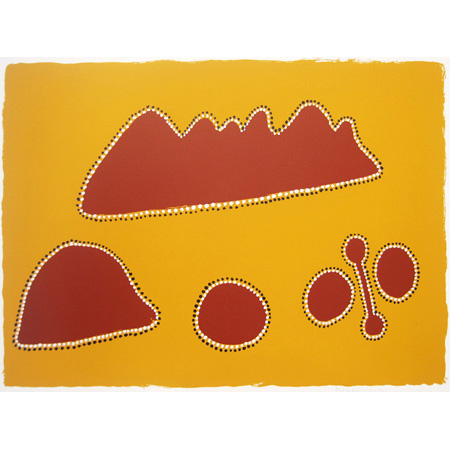
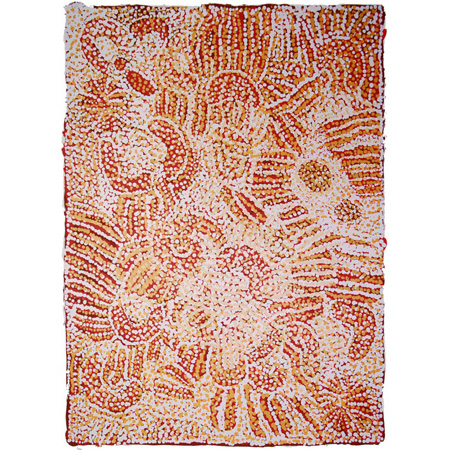
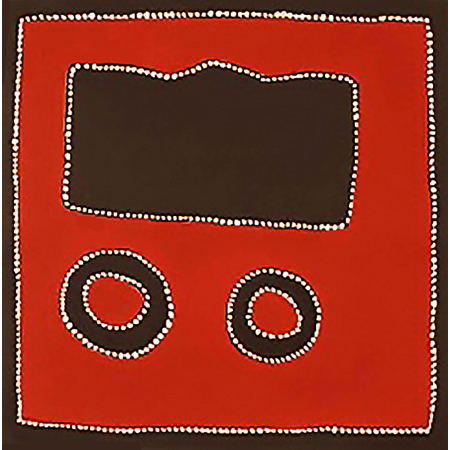
This selection of works is drawn from the remote regions of East Kimberley and Great Sandy Desert. Nomad Art presents eight distinguished artists each renowned for dynamic contemporary expression of their country, culture and lore.
The Kimberley is a vast and spectacular region located north of the Great Sandy and Tanami Deserts. Aboriginal people have been living on these ancient lands for thousands of years and are deeply connected to Country.
Warmun artists from Turkey Creek are renowned for images in natural ochres, which are integral to the contemporary expression of the Gija people. These etchings draw upon traditional Ngarrangkarni (Dreaming) stories and contemporary life.
Senior artist Gordon Barney painted his country Birnoowoo, around Alice Downs Station, where he worked as a stockman and where his family would often camp. Gordon’s paintings are distinct in their use of line and empty space, to depict the hills in his country. This etching depicts a creek that runs through his Country, Birnoo. As he walked across this land with family there was always an abundance of bush food for everyone.
Rusty Peters is a senior Gija man of Joowoorroo skin, his detailed knowledge of the land and stories from Springvale and neighbouring Moola Boola stations is reflected in distinctive paintings in traditional red and yellow ochres and black charcoal. While recognisably part of the ‘Warmun’ style the intricate curves mapping Country and the dark caves and rivers in his images are particular to Rusty’s work.
The works by Rammey Ramsey relate to the flat country in the area near Elgee Cliffs, south of Bedford Downs, which has the same Gija name as the artist, Warlawoon. His artworks show the places where Rock Wallabies live as well as camping areas near waterholes. Images of cliffs, hills, riverbeds, rocks, waterholes, roads, stockyards and meeting places appear as distillations of important features of the landscape.
Mingmarriya/Gara Garag (Queenie McKenzie) was a pioneer of the Kimberley art movement, an established painter, and a respected custodian of the local Gija customs and lore. Her art represents powerful landscapes and important stories of her Country.
Paddy Carlton was a senior elder and law man in his community and across the Kimberley region. His paintings reflect the richness of his culture and the love of his traditional country. Paddy was the key artist and mentor for Waringarri Arts.
Warlayirti Artists is located in the community of Wirrimanu (Balgo) in the southeast Kimberley, on the edge of the Great Sandy and Tanami Deserts. These artists have a reputation for vibrant colour, bold brush-strokes and distinctly individual art works which have strong connections to their country through traditional nomad life along waterholes and soaks of the Canning Stock route.
Esteemed law woman and senior artist, Eubena Nampitjin was renowned for her spontaneity and strength of brush mark that carved the paint, leaving rhythmical tracks across the canvas. Her work resonates with the power of place and intimate knowledge of country. Art was like her second language, and she created with passion and dedication, weaving stories from the Tjukurrpa (Dreaming) as well as her personal history and knowledge of her traditional country, southwest of Balgo in the Great Sandy Desert and along the middle stretches of the Canning Stock Route.
Helicopter Joe Tjungurrayi’s approach and dedication to the act of painting is evidence of the reverence which he holds for his country. Helicopter was brought up in a traditional nomadic lifestyle, learning from childhood the location of water sources and how to hunt for bush food. Since 1994 Helicopter has been painting in his own distinctive linear style that emanates from the central feature of a soak water.
Elizabeth Nyumi’s country is in the Great Sandy Desert, west of Kiwirrkurra, and dominated by tali (sand hills). Her paintings of Parwalla depicts a large swampy area, which fills with water after the wet season rain and consequently produces an abundance of bush foods. The majority of Nyumi’s print shows the different bush foods, women, shown as the U shapes, with their wana (digging sticks) and coolamons gathering the foods and whitish colours representing the spinifex.

Tiwi Editions – New collagraphs from Milikapiti
View works on the online gallery Nomad art is proud to present a new body of limited edition collagraphs from Jilamara Arts and Crafts on the Tiwi islands. The collection features work by Michelle Woody Minnapinni, Timothy Cook, Conrad Kamilowra Tipungwuti, Raelene Lampuwatu Kerinauia and Janice Pungautiji Murray among others. The prints were produced […]
Read More >


Tiwi Editions – New collagraphs from Milikapiti
01 October - 29 October 2023View works on the online gallery
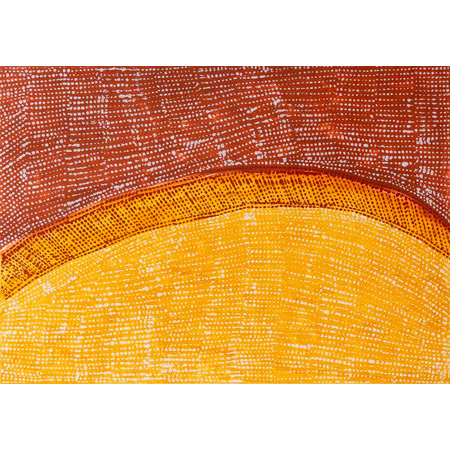
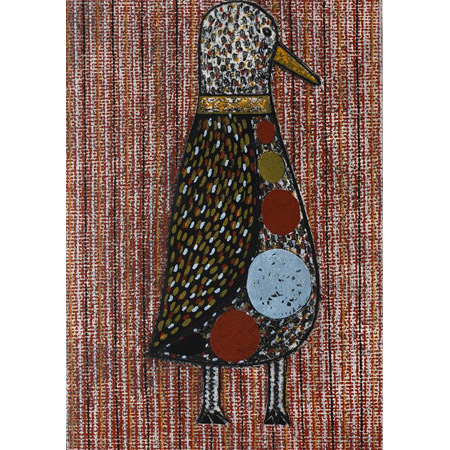
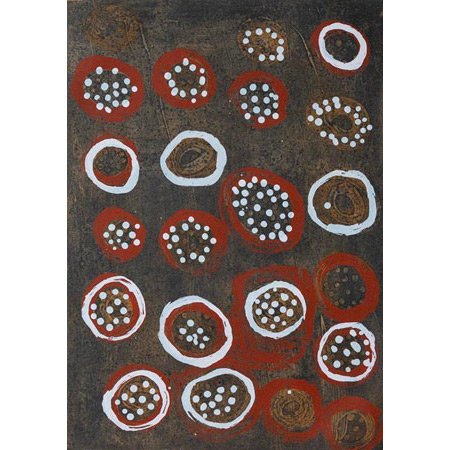
Nomad art is proud to present a new body of limited edition collagraphs from Jilamara Arts and Crafts on the Tiwi islands. The collection features work by Michelle Woody Minnapinni, Timothy Cook, Conrad Kamilowra Tipungwuti, Raelene Lampuwatu Kerinauia and Janice Pungautiji Murray among others. The prints were produced during a workshop with master printmaker Basil Hall in 2023.
Tiwi art is a powerful and unique expression which is drawn from the language, ceremonies, and material culture of the Tiwi people. Tiwi art is often inspired by two significant ceremonial rituals, Pukumani (mourning ceremony) and Kulama (initiation or yam ceremony) which echo Tiwi cosmology and mythology. Painted designs are based on patterns of lines and dots derived from the body paintings for these rituals, however emphasis is also placed on innovation and individuality rather than associations with totemic groups or kinship systems. The result is powerful and individual imagery created with natural pigments. The Tiwi are extraordinary exponents of this convergence of freedom and constraint informed by the heritage of Tiwi culture.
Michelle Woody applies Tiwi earth pigments using the Kayimwagakimi (comb), a painting tool made from locally harvested ironwood and used in Tiwi ceremonial body painting. In the long-standing tradition of her ancestors, she utilises three traditional colours of the island landscape: white, yellow and red.
Timothy Cook is a celebrated Tiwi artist nationally and internationally. His art depicts body paint designs used in the Pukamani Ceremony (Tiwi burial ceremony) and the Kulama Ceremony (yam ceremony). His work is characterised by a powerful compositions and robust application of lines dots and shapes. Timothy’s distinctive style has received much attention and with numerous group and solo exhibitions.
Conrad Tipungwuti has been painting at Jilamara Arts since the late 1990’s. Alongside Timothy Cook, Conrad is part of the Ngawa Mantawi (all of us together) program which supports artists with special needs, while remaining close to family and Country. The over-arching themes of his work depict the wet season Pakatiringa (rain) and the Kulama initiation ceremony. This is represented by large concentric circles that refer both to the yams prepared during the ceremony and large rings that appear around the moon in late wet season signifying the beginning of the Kulama season.
Janice Murray is celebrated for her depictions of a vast array of Tiwi birds. Her works incorporate the body designs used in the Pukamani ceremony. The geometric patterns reference stories of mythological significance involving ancestors who were changed into animals or birds.

Watermarks
ARTBOX, Jubilee Park, Avenel This exhibition from the Nomad Art Collections looks at the diverse ways artists explore the notion of water. The works range from depictions of the sea, living water in the desert, ceremonial associations and environmental perspectives. The artists include: Candy Nakamarra – Central Australia Helicopter Joe Tjungurrayi – Great […]
Read More >


Watermarks
07 October - 29 October 2023ARTBOX, Jubilee Park, Avenel
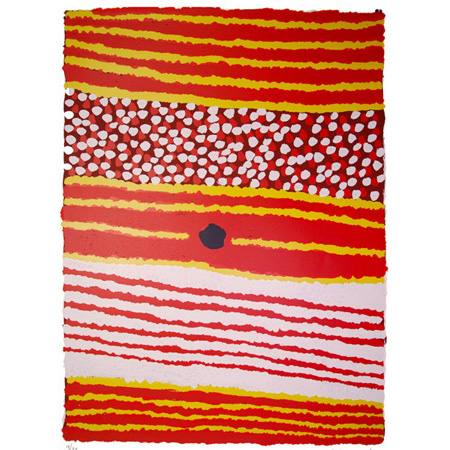
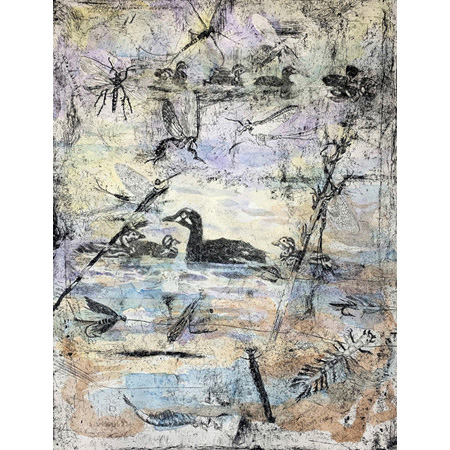
This exhibition from the Nomad Art Collections looks at the diverse ways artists explore the notion of water. The works range from depictions of the sea, living water in the desert, ceremonial associations and environmental perspectives.
The artists include:
Candy Nakamarra – Central Australia
Helicopter Joe Tjungurrayi – Great Sandy Desert
Bawaka Yunupingu – East Arnhem Land
Laurie Nona –Torres Strait Islands
Ezarahia Kelly – West Arnhem Land
Winsome Jobling – Northern Territory
Join us for the opening Saturday October 7th, 10.30 am – 1 pm
Watermarks can be viewed any time and attended as follows:
Sunday 8th October, Avenel market day, 9.00 am – 1.00 pm
October 14/15 from 10 am – 1 pm
October 21/22 from 10 am – 1 pm
Other times by appointment
More information – gallery@nomadart.com.au, 0415 912 115

Alfonso, Lorna and Jane
Nomad Art is proud to present new paintings by Alfonso Puautjimi, Lorna Kantilla and Jane M Tipuamantumirri. Alfonso has been painting with the Ngaruwanajirri group on the Tiwi Islands for over 25 years. His paintings depict local objects including planes, houses, trucks and boats. Alfonso uses bold brush strokes, applying vibrant ochre colours […]
Read More >


Alfonso, Lorna and Jane
05 February -
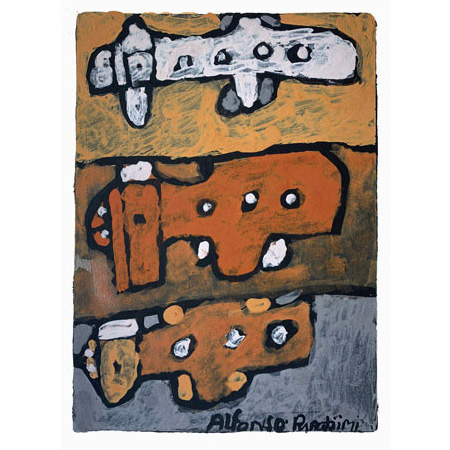
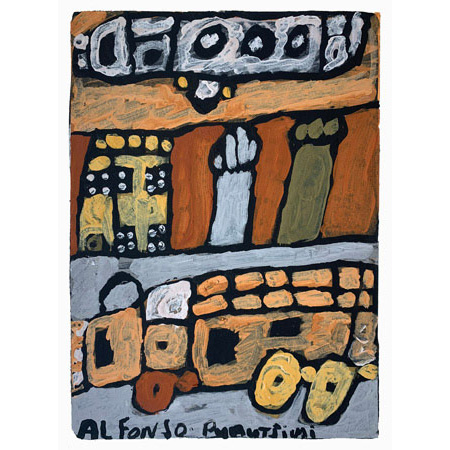
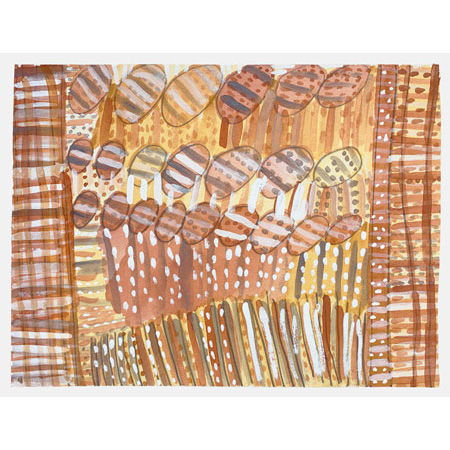
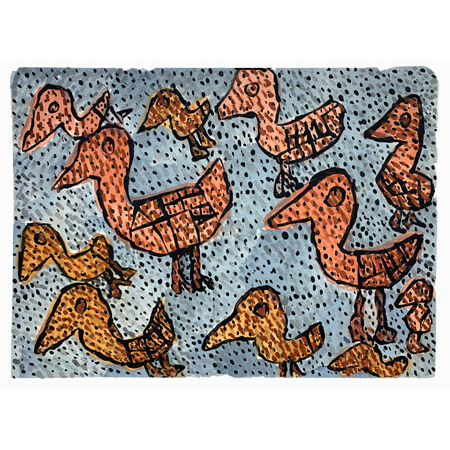
Nomad Art is proud to present new paintings by Alfonso Puautjimi, Lorna Kantilla and Jane M Tipuamantumirri.
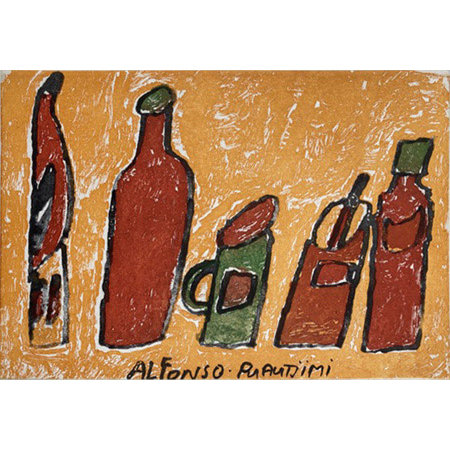
Alfonso has been painting with the Ngaruwanajirri group on the Tiwi Islands for over 25 years. His paintings depict local objects including planes, houses, trucks and boats. Alfonso uses bold brush strokes, applying vibrant ochre colours over a black background to create lines and shapes of the objects the depicts.
Lorna has been working with the Ngaruwanajirri group since the group began in August 1994. Her work with watercolours is lively and spontaneous and has a feeling of movement through the use of full and flowing strokes. Sometimes the paint is transparent, sometimes opaque and thick. Lorna`s paintings are mostly non-figurative, using lines, dots and sometimes circles.
Jane has also been painting with the Ngaruwanajirri group since the inception of the centre in 1994. Jane draws subject matter from her Tiwi culture and surrounds including mud mussels, magpie goose, shark, fish, tunga (bark basket), Tokwampini, (ancestral bird) and pamajini (arm band for ceremony).
Ngaruwanajirri artists are encouraged to explore their individuality and freedom of expression, fostering skills, innovation and sense of belonging. Under a beautiful painted roof of the Keeping Place. The artists are inspired by their culture and surroundings. As with most Tiwi art the predominant colours used are natural ochres. White and yellow are collected from two beaches on Bathurst Island and burning the yellow ochre over a fire produces a third colour, red.
Ngaruwanajirri (meaning helping one another in Tiwi) was established as a cooperative to support Tiwi artists with disabilities and to provide employment for people at Wurrumiyanga.

A Year in Review
As 2022 draws to a close, we celebrate our first year of Nomad Art at Kibble Lane, Avenel. It has been a year of celebrations and new beginnings. Thank you to all those who supported and participated in our artistic program. A special acknowledgement to Arts Victoria for supporting the reactivation of Nomad Art in […]
Read More >



A Year in Review
-As 2022 draws to a close, we celebrate our first year of Nomad Art at Kibble Lane, Avenel. It has been a year of celebrations and new beginnings.
Thank you to all those who supported and participated in our artistic program. A special acknowledgement to Arts Victoria for supporting the reactivation of Nomad Art in 2022.
The year kicked off with a workshop with paper making legend Winsome Jobling in March. In April master printmaker Basil Hall visited the Nomad Art workshop to share his skills and knowledge with a collagraph workshop. The irrepressible John Wolseley exhibited at Nomad Art in July. John’s new prints feature various creatures including Forest Kingfishers and Striated Pardalotes that inhabit the rich aquatic systems of rivers, creeks and ponds.
This year we featured a series of lectures on Aboriginal Art featuring the rich art making regions of the Tiwi Islands and western Arnhem Land. Nomad Art Lecture series will continue in 2023.

Christmas orders
Nomad Art is a rich source of limited-edition prints by artists working across remote Australia. Our online catalogue includes works from eastern Arnhem Land, the Kimberley, central and western deserts, the Tiwi and Torres Strait Islands. Artworks and gift certificates are available through the Nomad Art website. Please allow two working weeks to receive orders in the lead up to the busy Christmas period.
Links to the online Gallery
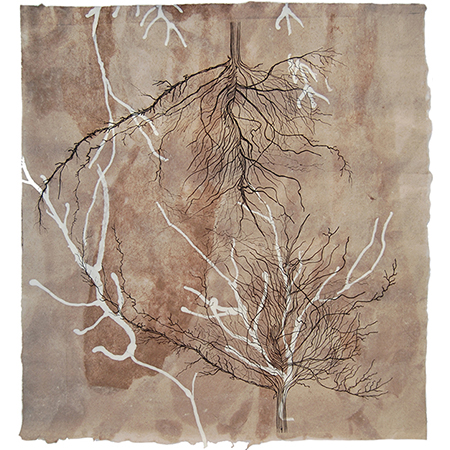
Groundswell, work in paper by Winsome Jobling
Maku Inmaku Pakani (witchety grub songline) by Ngupulya Pumani
Australasian Grebes on the Witjibar River by John Wolseley

John Wolseley – by the creek
Recent etchings, woodcuts and frottages These prints were started four years ago by John while he was working in East Arnhem land with the late Mulkun Wirrpanda, and in the Riverina while making paintings for the project Earth Canvas – a collaborative project about regenerative farming with six artists and six farmers. The Arnhem land prints include […]
Read More >


John Wolseley – by the creek
01 July - 17 July 2022Recent etchings, woodcuts and frottages
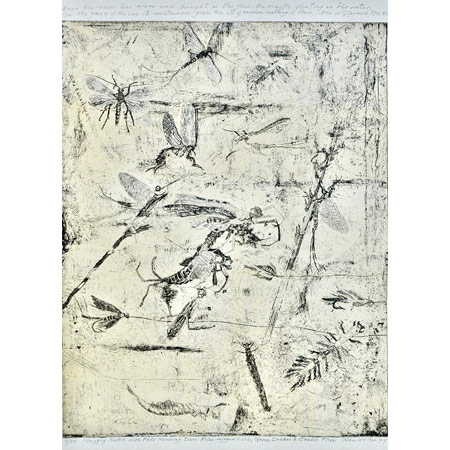
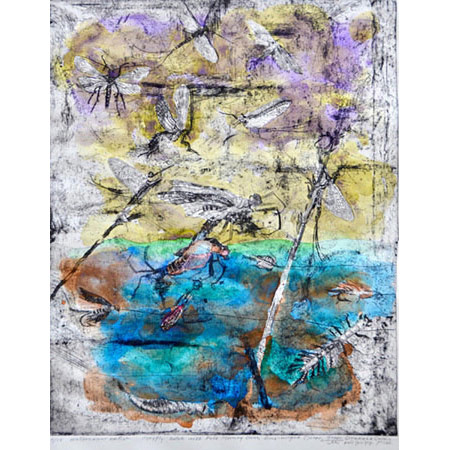
These prints were started four years ago by John while he was working in East Arnhem land with the late Mulkun Wirrpanda, and in the Riverina while making paintings for the project Earth Canvas – a collaborative project about regenerative farming with six artists and six farmers.
The Arnhem land prints include various creatures including Forest Kingfishers, Striated Pardalotes and ants which nest in termite mounds. Several of the birds are part of the big termite paintings in an exhibition called Still Life at the Buxton gallery, University of Melbourne.
The Riverina etchings are about the miccorhizal fungus skeins and webs which connect trees and plants, and the rich aquatic life of the rivers, creeks and chains of ponds on Bibberinga Farm.
The artist would like to acknowledge Kaitlyn Gibson for her skill for printing of these works.
EVENTS
An evening soiree with the artist and his art
Friday 15 July 5.00 pm – $15 (new date)
Painting demonstration by John Wolseley SOLD OUT
Saturday 16 July 2.00 pm – $25 with afternoon tea (new date)
A demonstration of plein air watercolour, pencil, charcoal, ink, mud, frottage, nature printing and feral mark making. John will discuss his philosophical approach to art and irrepressible love of nature while demonstrating his methods of art making.
Bookings Essential
0428 308 793, 0415 912 115
Exhibition open by appointment 3 – 17 July
Winsome Jobling
Winsome Jobling has 40 years’ experience turning natural fibres into fabulous two and three-dimensional art. She has exhibited nationally including a retrospective exhibition at the Northern Territory Museum in 2016 and regular solo exhibitions at Nomad Art Gallery. Winsome recently conducted a paper making workshop at Nomad Art Studio in Avenel. During the workshop […]
Read More >




Winsome Jobling
01 April - 30 April 2022
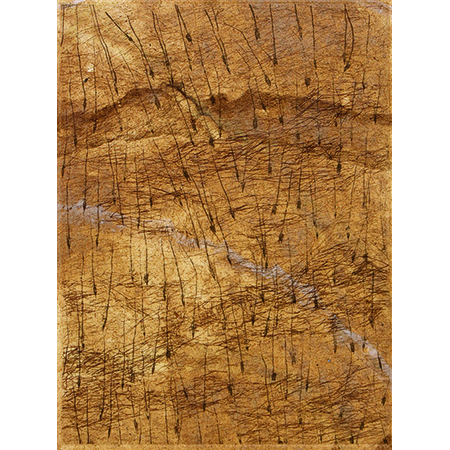
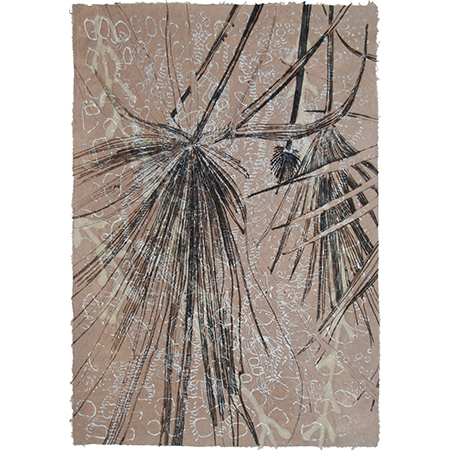
Winsome Jobling has 40 years’ experience turning natural fibres into fabulous two and three-dimensional art. She has exhibited nationally including a retrospective exhibition at the Northern Territory Museum in 2016 and regular solo exhibitions at Nomad Art Gallery.
Winsome recently conducted a paper making workshop at Nomad Art Studio in Avenel. During the workshop people learnt how to choose suitable plant fibres, how to process them and form sheets of paper with a mould and deckle. They then expanded upon that skill turning the paper pulp into patterns and imagery through the paper making process. The outcome of the workshop was a series of unique and beautiful papers incorporating designs, stencils and water marks.

Focus on Basil Hall Editions
Basil Hall has been working with Aboriginal and non-Aboriginal artists since 1983. For 16 years, he was based in Darwin where he and a group of experienced printmakers made prints with many hundreds of artists from over 55 Art Centres in Central Australia, Arnhem Land, the Tiwi Islands and the Kimberley area of Western Australia […]
Read More >



Focus on Basil Hall Editions
01 March - 31 March 2022
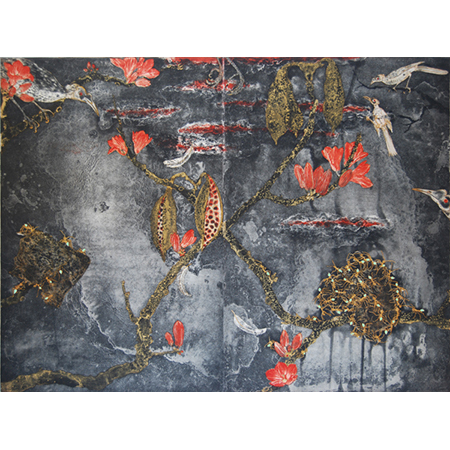
Basil Hall has been working with Aboriginal and non-Aboriginal artists since 1983. For 16 years, he was based in Darwin where he and a group of experienced printmakers made prints with many hundreds of artists from over 55 Art Centres in Central Australia, Arnhem Land, the Tiwi Islands and the Kimberley area of Western Australia and southeast Asia.
In 2001 he established Basil Hall Editions (BHE), which has since initiated some of the most exciting art projects carried out in remote communities throughout Australia.
BHE is a centre of printmaking excellence, providing expert assistance to artists who wish to collaborate in the making of etchings, silkscreen prints, relief prints and collagraphs. Basil is now based in Canberra, where he has a print studio and workshop.
Basil Hall has worked closely with Nomad Art since 2005,
collaborating on numerous projects including:
Replant: A new Generation of Botanical art
Custodians: Country and Culture
Djalkiri: we are standing on their names – Blue Mud Bay

Nomad Art – crossing borders
Nomad art is now open at its new home in Avenel, Victoria. This year we will offer a program of practical art workshops, exhibitions and lectures at the new art complex. For information click here. To celebrate reopening we are featuring watercolours and etchings by Anne McMaster and Jörg Schmeisser (dec). Jörg Schmeisser Jörg […]
Read More >




Nomad Art – crossing borders
01 February - 31 January 2022
Nomad art is now open at its new home in Avenel, Victoria. This year we will offer a program of practical art workshops, exhibitions and lectures at the new art complex. For information click here.
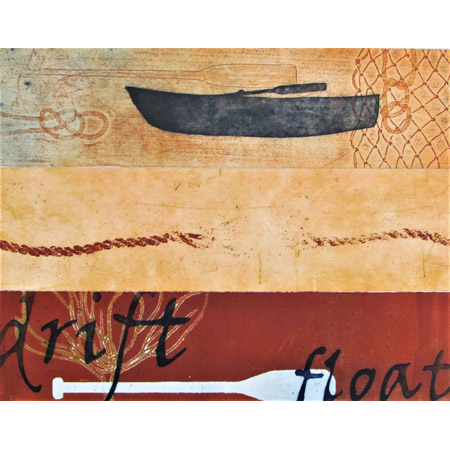
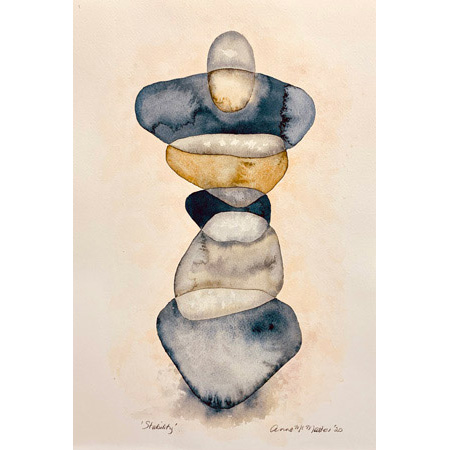
To celebrate reopening we are featuring watercolours and etchings by Anne McMaster and Jörg Schmeisser (dec).
Jörg Schmeisser
Jörg Schmeisser was born in Germany in 1942 and lived in Australia from 1978 when he was appointed Head of Printmaking and Drawing at Canberra School of Art at the Australian National University. Schmeisser’s distinguished printmaking career was informed by a restless curiosity about the perception and essence of the visual world. From the beginning, Schmeisser was inspired by travel, his imagination fired by regular experiences of the unfamiliar and unknown.
His love of travel took him to Israel, Thailand, Japan, China, USA, Europe, India and Antartica. He participated in numerous solo and group exhibitions nationally and internationally. His work is a visual travelog of his wondrous life journey in prints.
Anne McMaster
Anne is a contemporary visual artist based in Darwin, Australia. Her explorations with printmaking and watercolour mediums have led her to investigate the coastal aesthetics of coastal mangroves, coral, tide lines and sea faring objects. Through the characteristics of using these materials and techniques Anne has incorporated the louvered window shapes found in tropical architecture to format her mark making and imagery.
Her recent research explored the notion of Drift, the motion of moving on the sea, movements in time, and elements of tidal flow. Anne uses the salty sea washes over etching plates and in her water colours representing the rhythmic tidal flows that occur daily, and is part of the natural coastal world.
We acknowledge that we are on the traditional lands of the Taungurung people and pay our respects to their Elders past, present and emerging.

All Things Tiwi
Featuring stunning new fabrics from Jilamara Arts and Crafts, including designs on linen by Michelle Woody, Raelene Kerinauia, Patrick Freddy Puruntatameri, Kaye Brown, Dymphna Kerinaiua, Dino Wilson, Pauletta Kerinaiua and Timothy Cook. View works on the textile gallery View the Jilamara print collection Recent works on paper by Anne McMaster. Anne is an artist now based […]
Read More >




All Things Tiwi
01 December - 31 December 2021
Featuring stunning new fabrics from Jilamara Arts and Crafts, including designs on linen by Michelle Woody, Raelene Kerinauia, Patrick Freddy Puruntatameri, Kaye Brown, Dymphna Kerinaiua, Dino Wilson, Pauletta Kerinaiua and Timothy Cook.
View works on the textile gallery
View the Jilamara print collection
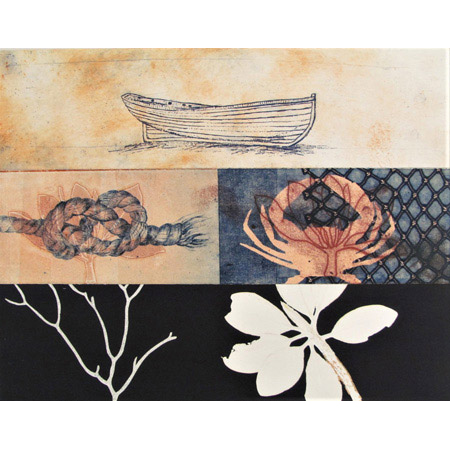
Recent works on paper by Anne McMaster. Anne is an artist now based in Darwin after many years living on the Tiwi Islands. Her explorations with printmaking and watercolour mediums have led her to investigate the coastal aesthetics of mangroves, coral, tide lines and sea faring objects.

Keeping Place: Tiwi Art from Ngaruwanajirri
View works on the online gallery Nomad Art is proud to present Keeping Place, Tiwi Art from Ngaruwanajirri Inc, featuring new etchings by Alfonso Puautjimi, Jane Tipuamantumirri, Lorna Kantilla, Lillian Kerinaiua, Alexandrina Kantilla and Ken Wayne Kantilla. This was the first experience for these artists in creating multi plate colour etchings. The print […]
Read More >



Keeping Place: Tiwi Art from Ngaruwanajirri
01 November - 30 November 2021
View works on the online gallery
Nomad Art is proud to present Keeping Place, Tiwi Art from Ngaruwanajirri Inc, featuring new etchings by Alfonso Puautjimi, Jane Tipuamantumirri, Lorna Kantilla, Lillian Kerinaiua, Alexandrina Kantilla and Ken Wayne Kantilla.
This was the first experience for these artists in creating multi plate colour etchings. The print workshop was held inside the wonderful airy workspace called ‘Keeping Place’ at Wurrumiyanga. The artists were assisted by Master printer Basil Hall in April 2021 and the workshop funded by Arts NT.
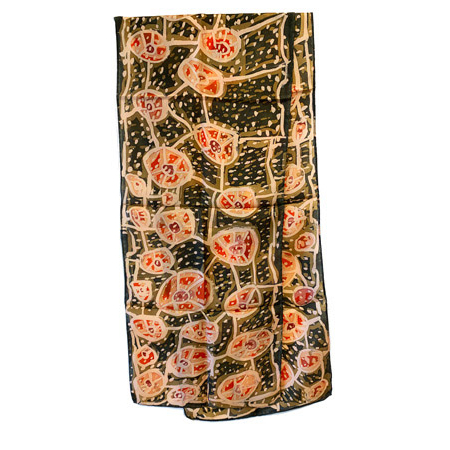
These artists mostly portray secular aspects of Tiwi life, ranging from quirky images of houses, cars, planes, and bicycles, to fish and magpie geese but also Jilamara (ceremonial designs). The exhibition also includes works on paper, carvings and silk scarves which shows their diversity of skill and design.
Ngaruwanajirri artists are encouraged to explore their individuality and freedom of expression, fostering skills, innovation and sense of belonging. Under a beautiful painted roof of the Keeping Place, artists draw, paint and sculpt. The artists are inspired by their culture and surroundings. As with most Tiwi art the predominant colours used are natural ochres. White and yellow are collected from two beaches on Bathurst Island and burning the yellow ochre over a fire produces a third colour, red.
Ngaruwanajirri (meaning helping one another in Tiwi) was established in 1994 as a cooperative to support Tiwi artists with disabilities and to provide employment for people at Wurrumiyanga.

New Prints from Borroloola
This new body of etchings is by Stewart Hoosan, Marjorie Keighran, Jack Green, Nancy McDinny from Waralungku Artists in Borroloola, a remote community on the McArthur River in the Northern Territory in the the Gulf of Carpentaria. It is set in an arresting landscape of rocky hills, cattle-grazed scrub, billabongs, and wide horizons. Waralungku artists continue to produce […]
Read More >


New Prints from Borroloola
01 July - 31 July 2021
This new body of etchings is by Stewart Hoosan, Marjorie Keighran, Jack Green, Nancy McDinny from Waralungku Artists in Borroloola, a remote community on the McArthur River in the Northern Territory in the the Gulf of Carpentaria. It is set in an arresting landscape of rocky hills, cattle-grazed scrub, billabongs, and wide horizons.
Waralungku artists continue to produce exciting contemporary art. They have a unique voice and style. Borroloola artists depict the life, history and political issues of the region, as well as the distinctive beauty of the surrounding landscape, flora and fauna. The images are layered with a sense of past histories and continuing connections.
This series of etchings was produced during a workshop with Darwin printmaker Jaqueline Gribbin at Borroloola in 2020.

This land after – this land before
Angus Cameron, Winsome Jobling, Talitha Kennedy and selected works from Nomad Art Collections This land after – this land before is a meeting place for the work of three artists who question our cultural ability to live within the natural environment. The exhibition offers a sensual and intellectual engagement with nature on both philosophical […]
Read More >


This land after – this land before
04 December - 06 December 2020
Angus Cameron, Winsome Jobling, Talitha Kennedy and selected works from
Nomad Art Collections
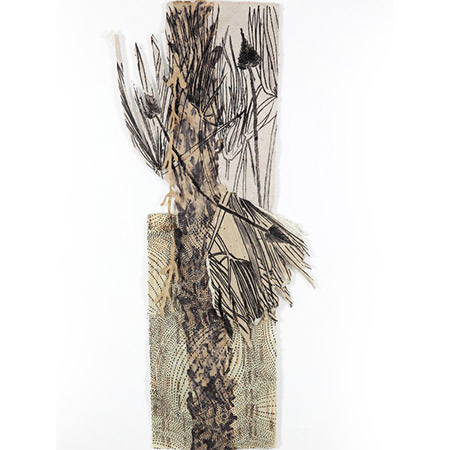
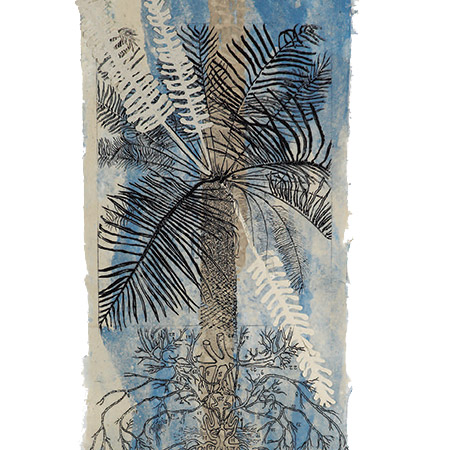
This land after – this land before is a meeting place for the work of three artists who question our cultural ability to live within the natural environment. The exhibition offers a sensual and intellectual engagement with nature on both philosophical and aesthetic grounds.
Euroa Butter Factory, Victoria
Showing 5th – 6th December 2020
Angus Cameron makes prints and impressions on paper that reflect the environment where he lives. His works embody aesthetics found in nature echoing forms and patterns that make up the micro and macro world of plants and place. On a higher level the work questions our cultural and political histories and management of the land.
Winsome Jobling has exhibited nationally and internationally since 1981. Her printed works on paper, paper installations and sculptural forms extend traditional notions of papermaking. Her art merges contrasting elements of texture, translucence, fragility and strength. Her practice is intrinsically linked to the environment on intellectual and physical levels.
Talitha Kennedy’s work embodies an aesthetic of fecundity where creative forces ocellate between the growth and decay. Her soft leather sculptures fuse notions of plant, body, animal and land. Her hand stitched organic forms reflect our fraught relationship with the natural world, where we camouflage our contemporary selves from the cycle of death, decay and renewal.

Inner Worlds II
Marlene Rabuntja, Marjorie Keighran, Stewart Hoosan, Dion Beasley and Ray James Tjangala This month we continue to explore the imaginative world of artists who are celebrated for their distinctive personal styles. These works take us on a visual journey through memories and observations of people who live across Australia. They draw us into a […]
Read More >


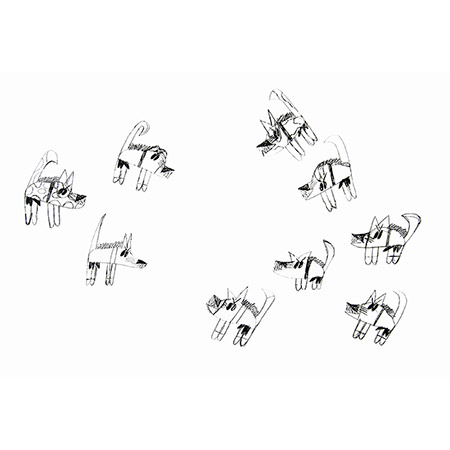

Inner Worlds II
01 October - 31 October 2020
Marlene Rabuntja, Marjorie Keighran,
Stewart Hoosan, Dion Beasley and Ray James Tjangala
This month we continue to explore the imaginative world of artists who are celebrated for their distinctive personal styles. These works take us on a visual journey through memories and observations of people who live across Australia. They draw us into a world of experiences and knowledge through imagery of animals, plants and places that embody remote life. We hope you enjoy Inner Worlds ll.
Marlene Rubuntja
Marlene draws inspiration from what she sees around her at Yarrenyty Arltere Town Camp in Alice Springs. She is interested in telling proudly the stories of her ancestors as well as her husband’s country atKalkarindji. These are the delicate twigs that fall from the desert trees.
Marjorie Keighran
Marjorie is a senior Garrwa woman, whose Dreaming is Kananganja (Emu). Marjorie was born at Westmoreland Station on the NT and Queensland border. She grew up at Wollogorang station and Red Bank Mine, south-east of Borroloola, where she spent her days hunting and gathering bush tucker. Many of Marjorie’s paintings contain images of nanny goats as she spent many of her teenage days on the station at Robinson River herding and looking after them: “We’d look after them and take them down to the water and take them back up again”.
Stewart Hoosan
Stewart Hoosan depicts life and the history of the people around Borroloola, a remote community on the McArthur River in the Northern Territory, set in an arresting landscape of rocky hills, cattle-grazed scrub, billabongs, and wide horizons. Hoosan’s images are layered with a sense of past histories and continuing connections set amongst the distinctive beauty of the surrounding landscape, flora and fauna.
Dion Beasley
Being profoundly deaf Dion has experienced many challenges throughout his life but has developed a great passion for drawing, which has served as a means of communication with others. Dion’s delightful depiction of dogs form the basis of the majority of his drawings. Dion’s personal expression focuses on the camp dogs that are central to the life of Aboriginal communities, with its own dramas, tensions and energies.
Ray James Tjangala
Tjangala’s print is part of a suite of etchings by Papunya Tula artists which demonstrates the strength of each artist as they successfully translate their Tjukurrpa to the medium of etching. Tjangala’s image relates to the soakage water site Yunala, west of Kiwirrkura community in Western Australia. In ancestral times a large group of Tingari Men camped at this site before continuing their travels further east to Pinari, north-west of Kintore community. While at Yunala they gathered the edible roots of the bush banana or silky pear vine, (Marsdenia australis), also known as yunala, which is plentiful in the region. The designs in the etching represent body paint worn during ceremonies relating to Yunala.
View works online:
Inner Worlds
Dulcie Sharpe, Monique Auricchio, Malaluba Gumana (dec), John Wolseley This month we are looking into the imaginative world of the artist. Inner Worlds presents artists who are celebrated for their distinctive personal styles. These works take us on a journey through memories and observations to tell us stories of animals, places and emblematic […]
Read More >
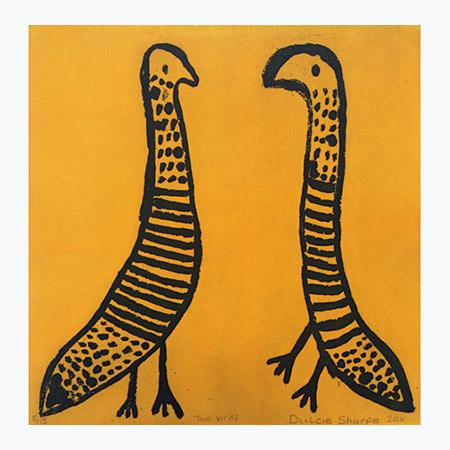

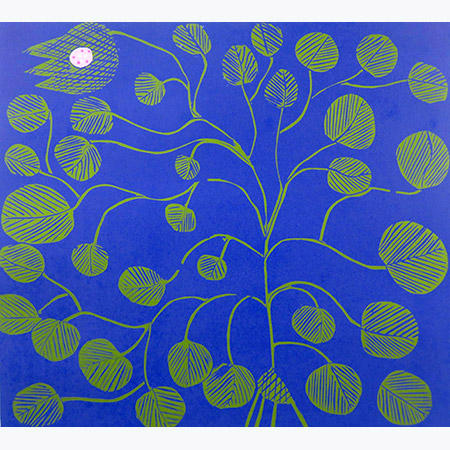


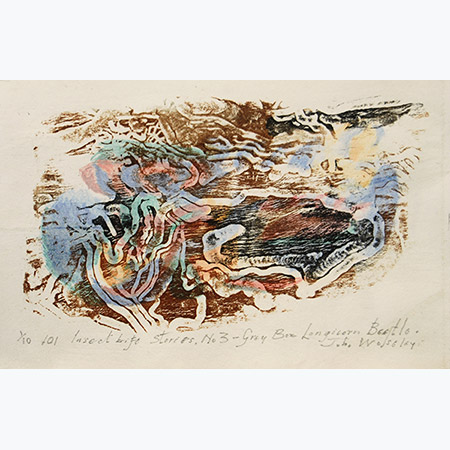
Inner Worlds
01 September - 30 September 2020
Dulcie Sharpe, Monique Auricchio,
Malaluba Gumana (dec), John Wolseley
This month we are looking into the imaginative world of the artist. Inner Worlds presents artists who are celebrated for their distinctive personal styles. These works take us on a journey through memories and observations to tell us stories of animals, places and emblematic characters. They draw us into a world observed – with the thoughts, humour, fear and joy that embody life. We hope you enjoy Inner Worlds.
Dulcie Sharpe was born at Jay Creek in the Northern Territory. The inspiration for her art comes from animals and bush tucker and features powerful images of the artists’ Arrernte homelands west of Alice Springs.
Monique Auricchio is a New South Wales based printmaker who explores the menacing relationships between predator and prey in the animal kingdom. Her work contains whimsical and theatrical elements of animals infused with human sensibility and evokes the fragile and peculiar pecking order of the human and animal condition.
Malaluba Gumana (dec) was an NT artist who lived at Gangan, NE Arnhem Land. Malaluba mainly painted her mother’s Gålpu clan designs of dhatam (waterlilly), djari (ripples and rainbows), djayku (filesnake) and wititj (olive python). Her imagery refers to one of the oldest continuous human religious iconographical practices – the story of the Rainbow Serpent. Djaykuŋ (filesnake) lives amongst the dhatam, causing Djari, on the surface of the water. It also refers to the power of the storm created by Wititj, the diagonal lines representing trees that have been knocked down as Wititj moves from place to place.
English born artist John Wolseley has travelled and painted Australia from the central deserts to the forests of Tasmania and the tidal reaches of east Arnhem Land and beyond. His work over the last twenty years has been a search to discover how we dwell and move within landscape – a kind of meditation on how land is a dynamic system of which we are all a part. Through his series of works entitled One Hundred and One Insect Life Stories, Wolseley invites us to enter the umwelt or ‘life world’ of non-human creatures.
View works online:

Tiwi Focus
Jean Baptiste Apuatimi (dec), Maria Josette Orsto, Raelene Kerinauia and Janice Murray are senior Tiwi artists of national repute. Each has forged a distinct style within the artistic traditions of their culture. This group of women have also been leaders in their art centres and prolific, consistent and innovative artists and printmakers over many […]
Read More >


Tiwi Focus
01 August - 31 August 2020
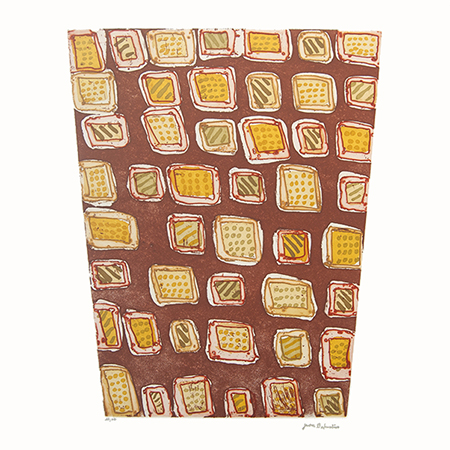
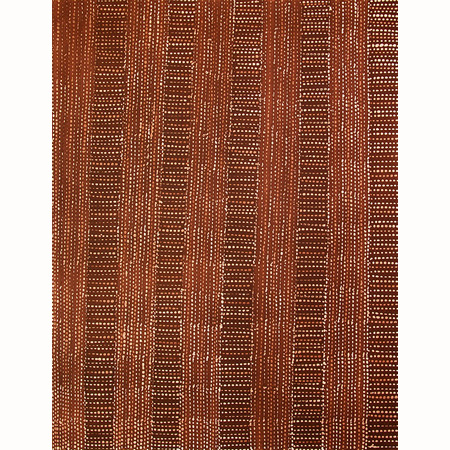
Jean Baptiste Apuatimi (dec), Maria Josette Orsto, Raelene Kerinauia and Janice Murray are senior Tiwi artists of national repute. Each has forged a distinct style within the artistic traditions of their culture. This group of women have also been leaders in their art centres and prolific, consistent and innovative artists and printmakers over many years.
The art of mother and daughter duo Jean Baptiste Apuatimi (dec) and Maria Josette Orsto emanates from a deep knowledge of Tiwi culture and ceremonies. Their innovative and powerful designs are characterised by the constant exploration of new ways of expressing connections to their culture.
Raelene Kerinauia is a celebrated artist and finalist in the 2020 National Aboriginal and Torres Strait Islander Art Awards in Darwin and won the Telstra Bark Painting Award in 2011. She is well-known for painting with the kayimwagakimi (ironwood comb).
Janice Murray is celebrated for her depictions of a vast array of Tiwi birds. Her works incorporate the body designs used in the Pukamani ceremony. The geometric patterns reference stories of mythological significance involving ancestors who were changed into animals or birds.
Tiwi art is unique; inspired by the distinct language, ceremonies and material culture of the Tiwi people. Tiwi art is often inspired by two significant ceremonial rituals, Pukumani (mourning ceremony) and Kulama (initiation or yam ceremony) which echo Tiwi cosmology and origin myths of the Tiwi.
Painted designs are based on patterns of lines and dots derived from ritual body paintings, however emphasis is also placed on innovation and individuality rather than associations with totemic groups or kinship systems. The result is powerful and individual imagery created within the bounds of natural pigments. Jean Baptiste Apuatimi, Maria Josette Orsto, Raelene Kerinauia and Janice Murray are extraordinary exponents of this convergence of freedom and constraint informed by the powerful heritage of Tiwi culture.
View works online:

Influential Women
Lorna Naparulla Fencer (dec), Fiona Hall, Queenie McKenzie (dec), Regina Pilawuk Wilson. Influential Women is the first of our new series that profiles key artists from the Nomad Art Collection. Each month we will curate a small group of selected artists who have made many outstanding prints. Each of these women are prolific and highly regarded Australian […]
Read More >



Influential Women
06 July - 30 July 2020
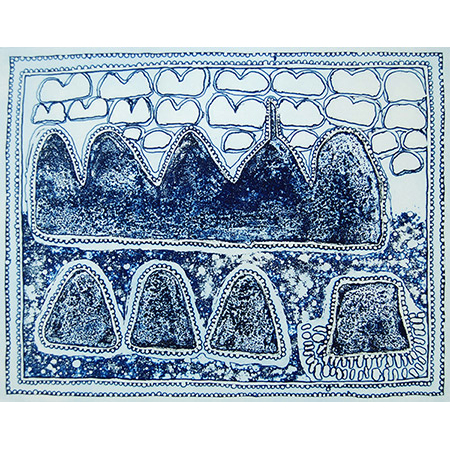
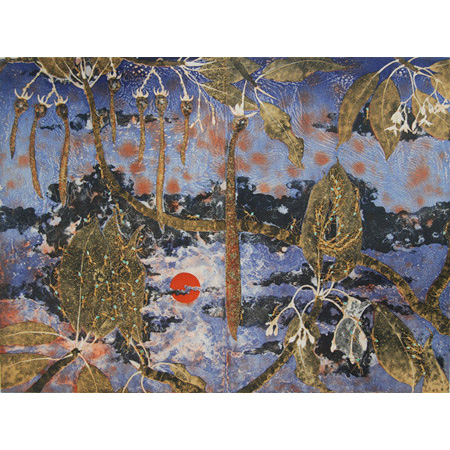
Lorna Naparulla Fencer (dec), Fiona Hall, Queenie McKenzie (dec), Regina Pilawuk Wilson.
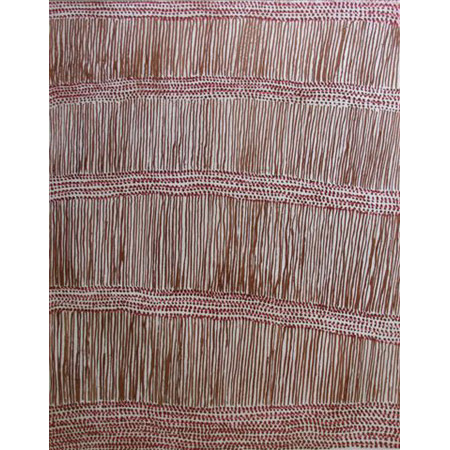
Influential Women is the first of our new series that profiles key artists from the Nomad Art Collection. Each month we will curate a small group of selected artists who have made many outstanding prints.
Each of these women are prolific and highly regarded Australian artists, innovators and leaders. Influential in their own communities, they have all developed unique and deep and original art, which is based on their knowledge of culture and community.
Lorna Naparulla Fencer was a celebrated and innovative Warlpiri artist from Lajamanu. Fiona Hall most recently from Tasmania is acclaimed internationally for her environmental and ethno-botanical art and research. Queenie McKenzie was one of the most prominent painters of the Warmun (Turkey Creek) community in Kimberley Ranges and Regina Pilawuk Wilson who co-founded the Peppimenarti Community for the Ngangikurrungurr people in the Daly River region is a leading contemporary artist.
View works online:

Manifest: selected prints from the Nomad Art Collection
Curated by Angus Cameron #InThisTogether2020 The works selected for this online exhibition are drawn from over 120 exhibitions and projects Nomad Art has produced over 15 years and celebrates the unique culture and heritage of cross-cultural Australia. The works are essentially personal favourites; a director’s cut if you like and a reflection […]
Read More >



Manifest: selected prints from the Nomad Art Collection
30 May - 30 June 2020
Curated by Angus Cameron
#InThisTogether2020
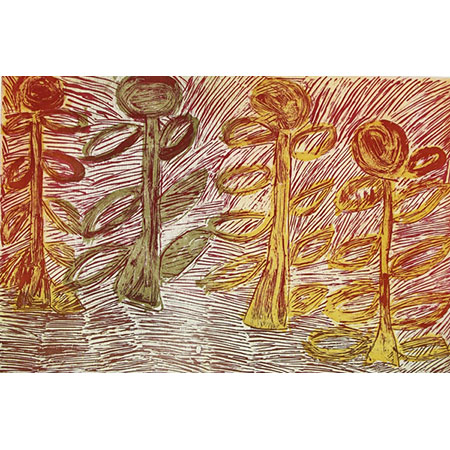
The works selected for this online exhibition are drawn from over 120 exhibitions and projects Nomad Art has produced over 15 years and celebrates the unique culture and heritage of cross-cultural Australia. The works are essentially personal favourites; a director’s cut if you like and a reflection on a heightened period of Australian art. Delving back over the years, these works emerged like a family of close friends. They manifest as strong and appealing artworks – ones that I would choose to have around me every day; images that manifest as food for the soul and the mind.
Limited edition prints have their own process and aesthetic; they are not like their often larger and more expensive cousins – canvas and bark paintings. Prints are commonly smaller and accessible snippets of larger stories. Printmaking is an affordable and democratic art form; the notion of printmaking can be thought of as a revolutionary activity that promulgates ideas Prints are often embedded with strong political statements which make the work so poignant and important. Most of all they are a joy to behold and own as part of one’s life — on the walls that surround us every single day.

Animal Studies by Monique Auricchio
Monique Auricchio has developed a reputation based on a combination of highly developed printing skills and imaginative imagery. Her work examines human perceptions of animals, often using shadow and dark tones to emphasise the threatening or foreboding elements of the relationship. Monique Auricchio’s art is often whimsical and theatrical, creating dreamlike images in […]
Read More >


Animal Studies by Monique Auricchio
30 May - 30 June 2020
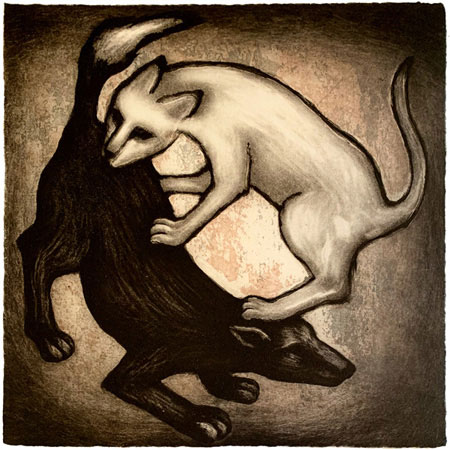
Monique Auricchio has developed a reputation based on a combination of highly developed printing skills and imaginative imagery. Her work examines human perceptions of animals, often using shadow and dark tones to emphasise the threatening or foreboding elements of the relationship.
Monique Auricchio’s art is often whimsical and theatrical, creating dreamlike images in shadowy, semi-urban settings. The works are layered with allegorical and proverbial references, yet evoke a sense of the unfamiliar. Images often feature animals infused with human sensibility. Birds provide the artist with a rich and abundant source of subject matter, as she explores the fragile and peculiar pecking order of the human and animal condition with satirical warmth and gentle humour.

Shining Light: prints by leading contemporary Indigenous artists from Nomad Art Collections
Curated by Talitha Kennedy An exhibition of limited edition prints by artists from remote Australia. Featuring works by: Nyapanyapa Yunupingu, Janangoo Butcher Cherel (dec), Pedro Wonaeamirri, Elizabeth Nyumi (dec), Bardayal Nadjamerrek (dec), Dorothy Napangardi (dec), Ronnie Tjampitjinpa. Selected from Nomad Art’s comprehensive catalogue of limited edition prints, this exhibition celebrates the strength […]
Read More >




Shining Light: prints by leading contemporary Indigenous artists from Nomad Art Collections
24 April - 31 May 2020
Curated by Talitha Kennedy
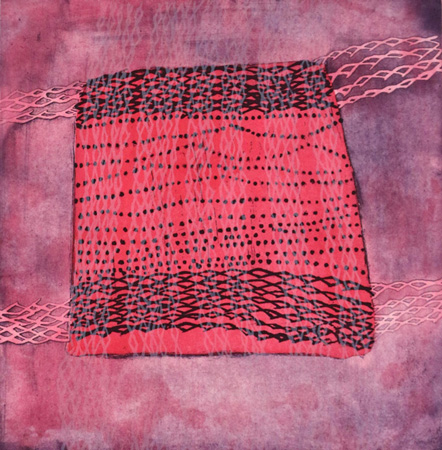
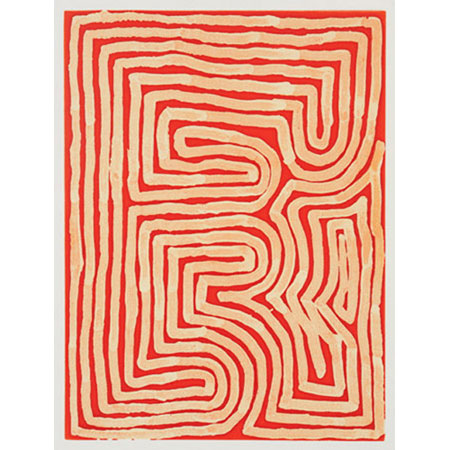
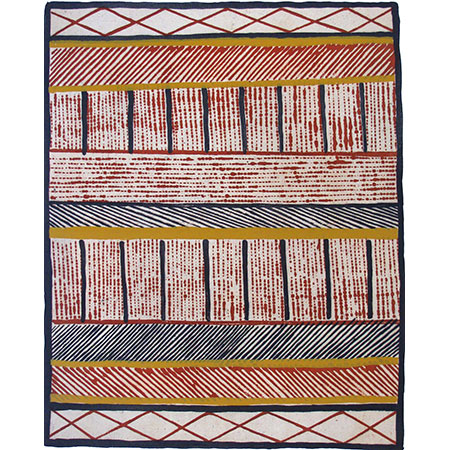
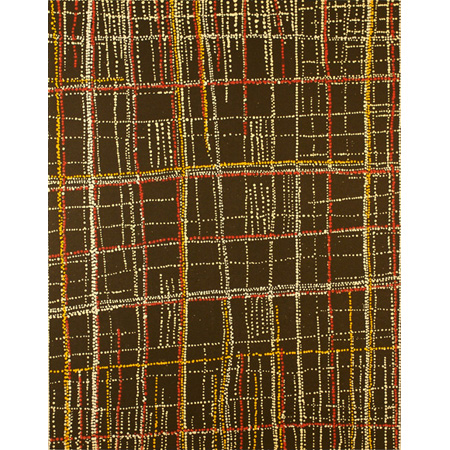
An exhibition of limited edition prints by artists from remote Australia. Featuring works by: Nyapanyapa Yunupingu, Janangoo Butcher Cherel (dec), Pedro Wonaeamirri, Elizabeth Nyumi (dec), Bardayal Nadjamerrek (dec), Dorothy Napangardi (dec), Ronnie Tjampitjinpa.
Selected from Nomad Art’s comprehensive catalogue of limited edition prints, this exhibition celebrates the strength and diversity of art from the Top End, Kimberley and Central Australia through etchings, silkscreens, linocuts and lithographs.
‘Printmaking has been the ignition for many leading Indigenous artists who headline contemporary biennales and win major art awards. Works by these artists have energised the contemporary art scene with powerful creations that roar with deep culture and gift us an experience of country. In light of recent grand scale installations and immersive media works grabbing attention in the big exhibitions and events, I want to draw attention to the intimacy of prints on paper’. Talitha Kennedy 2020

Enlighten Canberra
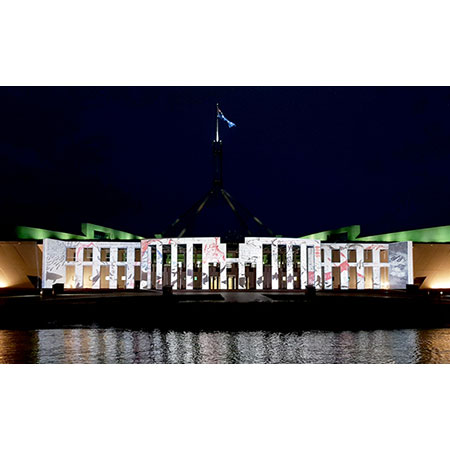
Projections on Parliament House by Jacqueline Gribbin. Projections from the portfolio – Dear Gilbert…(Song for the Ichthyologist), by Jacqueline Gribbin 2017-2019. To create these works Darwin artist Jacqueline Gribbin revived a collection of old and forgotten relief printing blocks of scientific drawings by Gilbert Percy Whitley (Ichthyologist and Curator of Fishes, Australian Museum, 1922-1964).
Read More >


Enlighten Canberra
01 March - 08 March 2020
Projections on Parliament House by Jacqueline Gribbin.
Projections from the portfolio – Dear Gilbert…(Song for the Ichthyologist), by Jacqueline Gribbin 2017-2019. To create these works Darwin artist Jacqueline Gribbin revived a collection of old and forgotten relief printing blocks of scientific drawings by Gilbert Percy Whitley (Ichthyologist and Curator of Fishes, Australian Museum, 1922-1964).

Recent Prints by Neridah Stockley
Neridah Stockley is a Northern Territory artist who lives and works in Alice Springs. She has a Bachelor of Fine Arts (painting) from the National Art School in Sydney, 2001, and has been an arts worker for Papunya Tula Artists, Bindi Inc. and Maruku Arts. This series of etchings by renown Alice Springs […]
Read More >


Recent Prints by Neridah Stockley
20 January - 17 February 2020
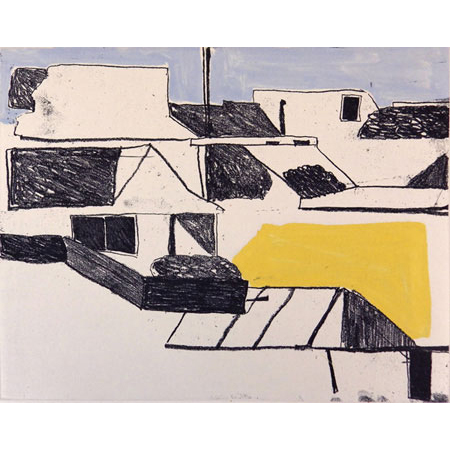
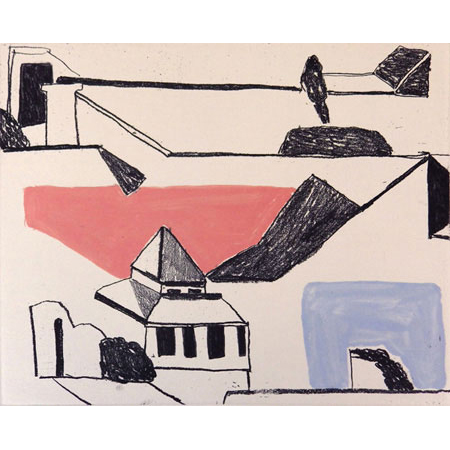
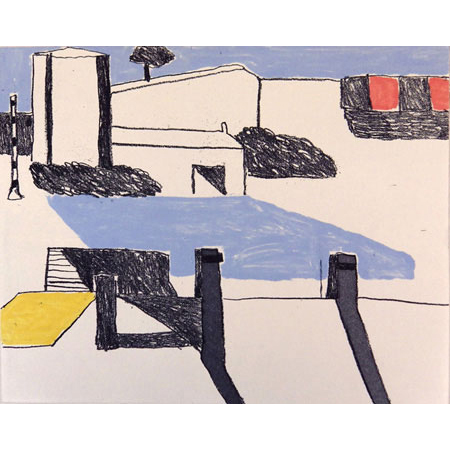
Neridah Stockley is a Northern Territory artist who lives and works in Alice Springs. She has a Bachelor of Fine Arts (painting) from the National Art School in Sydney, 2001, and has been an arts worker for Papunya Tula Artists, Bindi Inc. and Maruku Arts.
This series of etchings by renown Alice Springs based artist Neridah Stockley was editioned at Basil Hall Editions, Braidwood, NSW in 2019. The collection includes evocative studies of Fremantle, Jordan and Morocco. Stockley’s paired back images draw upon elements of line, space, shape and colour to capture the essence of these urban landscapes.

Yúbburr-yubburr: Dusk
Nomad Art in conjunction with Bábbarra Women’s Centre and Euroa Butter Factory present Yúbburr-yubburr: Dusk Yúbburr-yubburr: Dusk brings together well-known female artists from the Kuninjku homelands of Arnhem Land. Their colourful and expressive hand printed fabrics integrate time-honoured traditions of art making with contemporary imagery. Deborah Wurrkidj, Jennifer Wurrkidj, Susan Marawarr, Janet Marawarr, […]
Read More >




Yúbburr-yubburr: Dusk
06 December - 08 December 2019
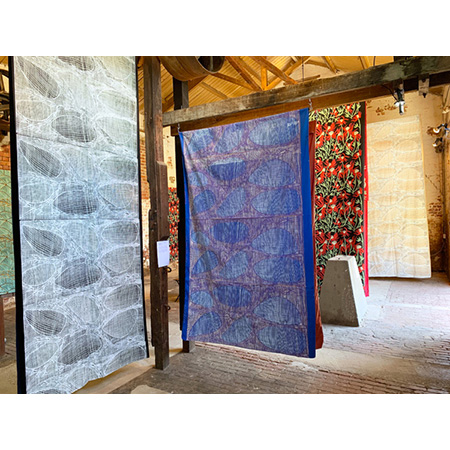
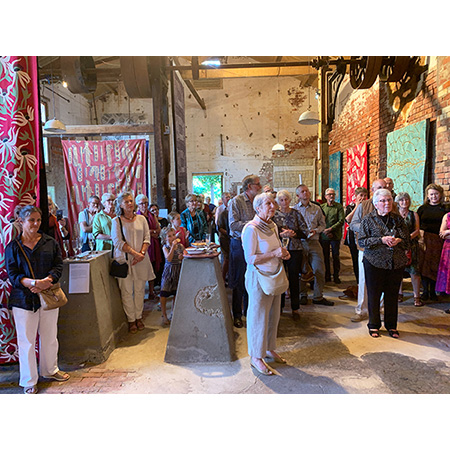
Nomad Art in conjunction with Bábbarra Women’s Centre and Euroa Butter Factory present Yúbburr-yubburr: Dusk
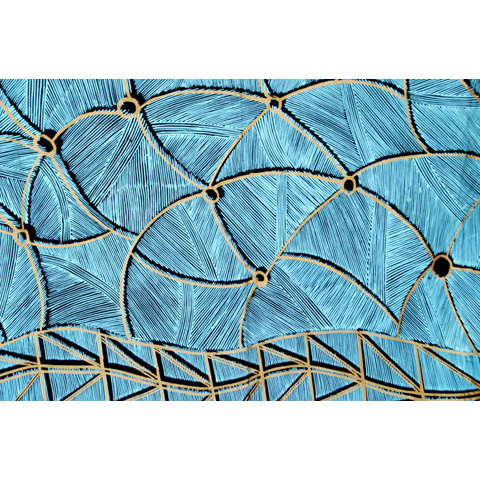
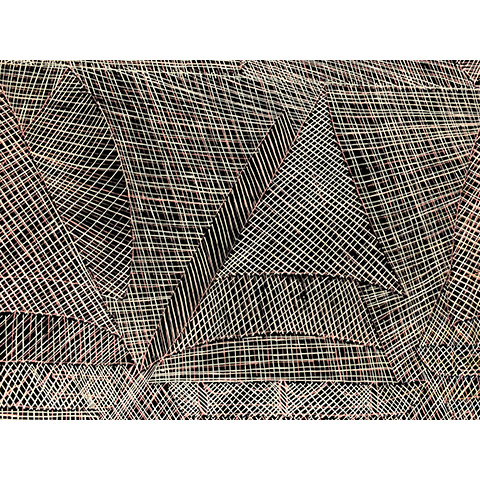
Yúbburr-yubburr: Dusk brings together well-known female artists from the Kuninjku homelands of Arnhem Land. Their colourful and expressive hand printed fabrics integrate time-honoured traditions of art making with contemporary imagery.
Deborah Wurrkidj, Jennifer Wurrkidj, Susan Marawarr, Janet Marawarr, Raylene Bonson, Elizabeth Kala Kala and Melba Gunjarrwanga, are women of the stone country who work with Babbarra Designs.
These women have formed the backbone of a generation of Kuninjku artists since the 1990s. They continue to forge a path for women in their community and push the boundaries of their creative practice.
Yúbburr-yubburr refers to the light just after sundown or ‘dusk’, referencing the pallet of colours the Babbarra artists use to print their fabrics. The colours remind the women of the light and hues from the sun in nature.

Yirrkala Print Space 2019
Yirrkala Print Space is one of the Australia’s premier print studios specialising in limited edition works on paper produced on their own press. The studio continues to expand its collaborations with master printmakers from across Australia and around the world to facilitate new works and continue the development of techniques and experimentation across the […]
Read More >
Yirrkala Print Space 2019
01 December - 22 December 2019
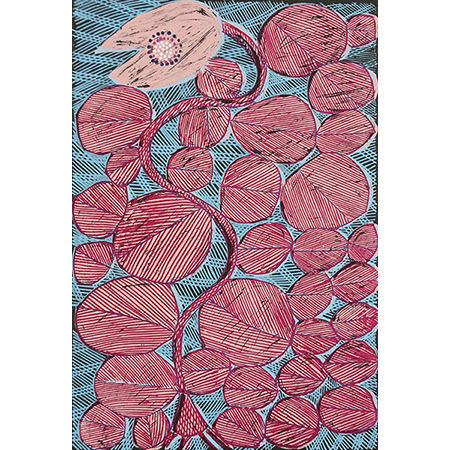
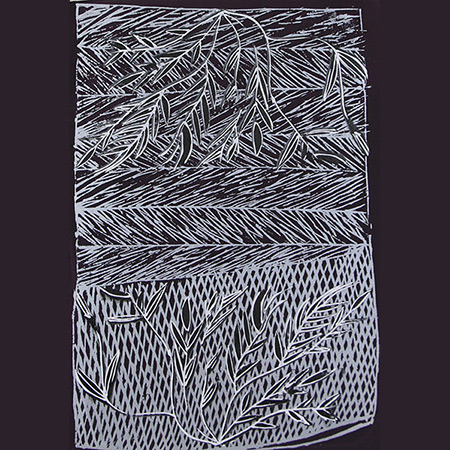
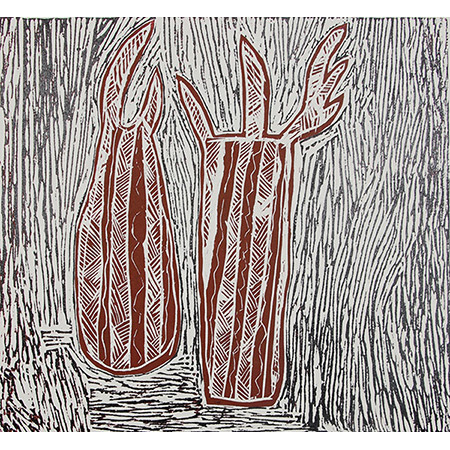
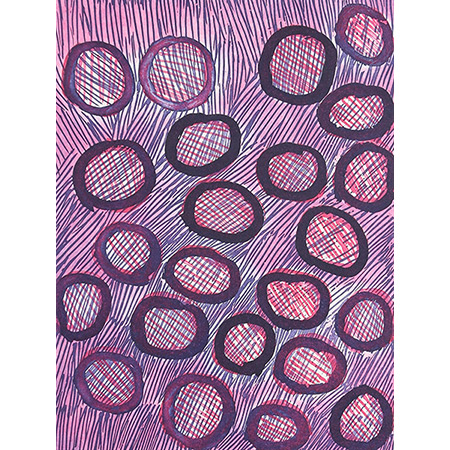
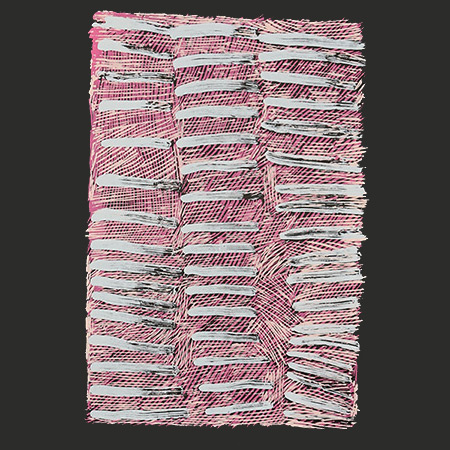
Yirrkala Print Space is one of the Australia’s premier print studios specialising in limited edition works on paper produced on their own press. The studio continues to expand its collaborations with master printmakers from across Australia and around the world to facilitate new works and continue the development of techniques and experimentation across the generations of Yolngu printmakers. Printmaking techniques including Japanese woodblock, etching, linocut, screenprints and collagraphs have been learnt, absorbed and applied, combining traditional designs and knowledge to create new artworks.
While these Yolngu artists are respectful of the discipline of miny’tji (sacred design), the nature of the printmaking process has provided artistic freedom of expression; enabling them to experiment with colour, imagery, concepts and design without compromising their spiritual identity. The art of Yirrkala Print Space is being collected and exhibited by galleries around Australia.

North to South
Nomad Art is now in Euroa, north-east Victoria in Taungurung Country, where we acknowledge the Taungurung people and pay our respects to their Elders past and present. Nomad Art will continue from our new base in Euroa, where we will promote prints from over 35 Aboriginal Art Centres and artists based in regional and remote Australia. Nomad Art […]
Read More >




North to South
01 September - 30 September 2019
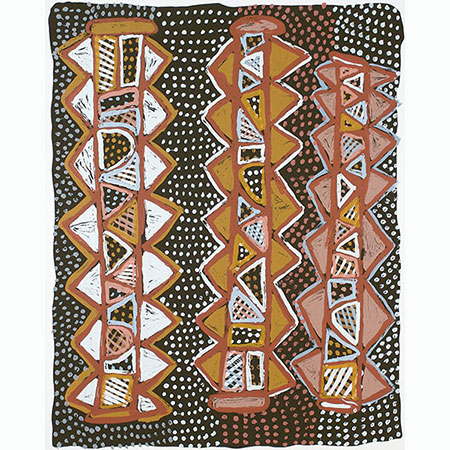
Nomad Art is now in Euroa, north-east Victoria in Taungurung Country, where we acknowledge the Taungurung people and pay our respects to their Elders past and present.
Nomad Art will continue from our new base in Euroa, where we will promote prints from over 35 Aboriginal Art Centres and artists based in regional and remote Australia.
Nomad Art – Out of the Office
We will be away from 22 September – 14 October but contactable via email – gallery@nomadart.com.au
To celebrate we are featuring our favourite projects
Replant: A New Generation of Botanical Art
Djalkiri: We are standing on their names, Blue Mud Bay
Tales of the Avians
Custodians: Country and Culture

Injalak Arts Prints from the stone country of Western Arnhem Land
This body of work explores the links between Indigenous cultural heritage, environment and aesthetic traditions of artists from western Arnhem Land. The artists represent a unique group of painters and print makers who have maintained the distinctive practise associated with the traditions of rock art painting in western Arnhem Land and the knowledge it purveys. The artists, many […]
Read More >

Injalak Arts Prints from the stone country of Western Arnhem Land
01 May - 31 May 2019
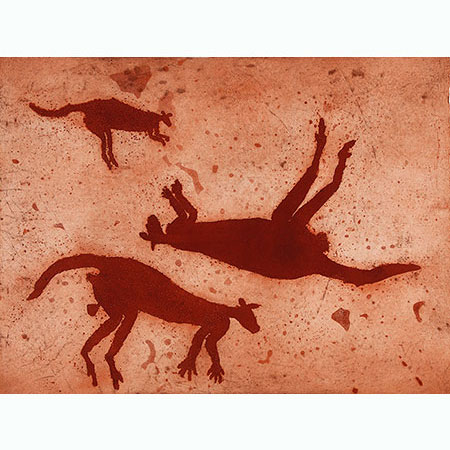
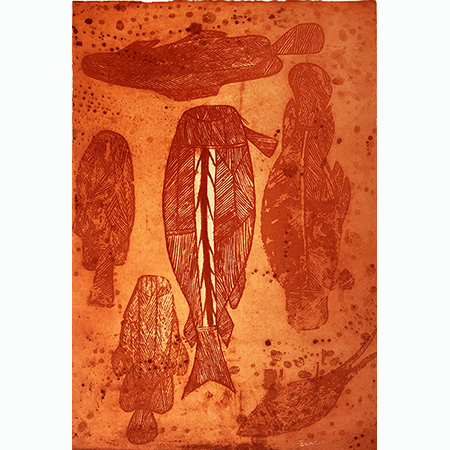
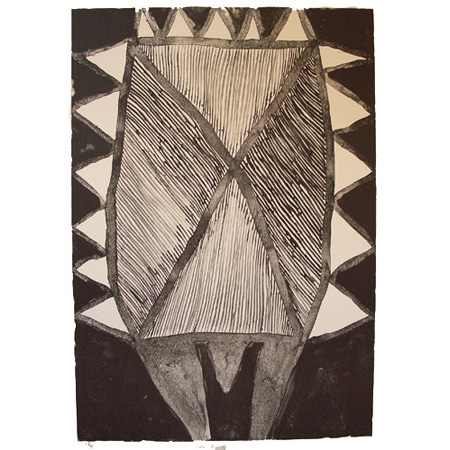
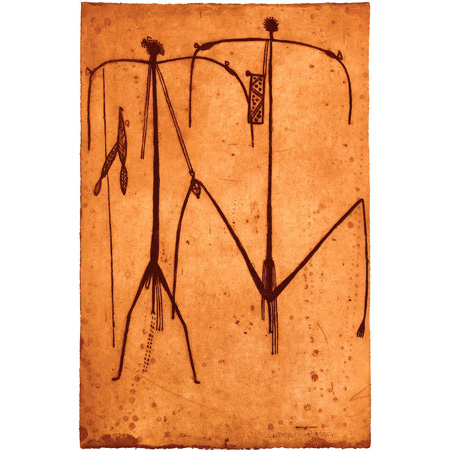
This body of work explores the links between Indigenous cultural heritage, environment and aesthetic traditions of artists from western Arnhem Land.
The artists represent a unique group of painters and print makers who have maintained the distinctive practise associated with the traditions of rock art painting in western Arnhem Land and the knowledge it purveys. The artists, many of whom are now deceased, include some of the great practitioners of Kunwinjku art including Graham Badari, Bardayal (Lofty) Nadjamerrek (dec), England Banggala (dec), Solomon Girrabul (dec) and Ezarahia Kelly.
The Stone Country of western Arnhem Land also known as the plateau country adjoins Kakadu National Park. The rocky outcrops of the escarpment dominate the landscape while adjacent flood plains, permanent rivers and billabongs are abundant with life of countless species of animals and plants.

Warlayirti Artists and Printmakers
Warlayirti Artists from Balgo are well known for their beautiful, high quality artworks including limited edition prints. The prints are the result of a long-standing collaboration between the Balgo artists and the printers from Northern Editions in Darwin. This partnership resulted in numerous editions of etchings and screen prints and expanded to include […]
Read More >

Warlayirti Artists and Printmakers
01 May - 31 May 2019
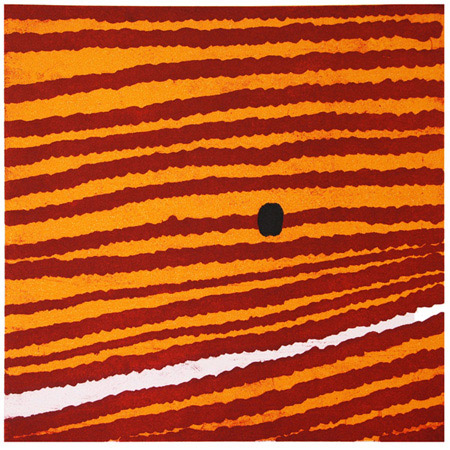
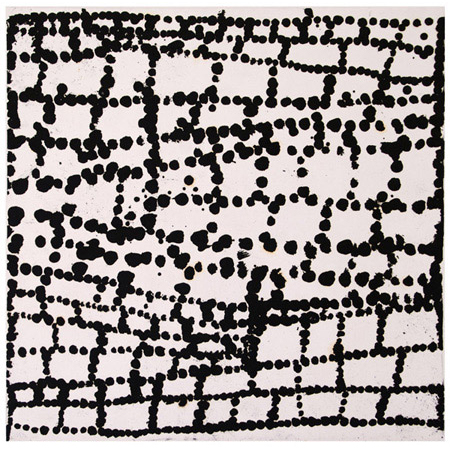
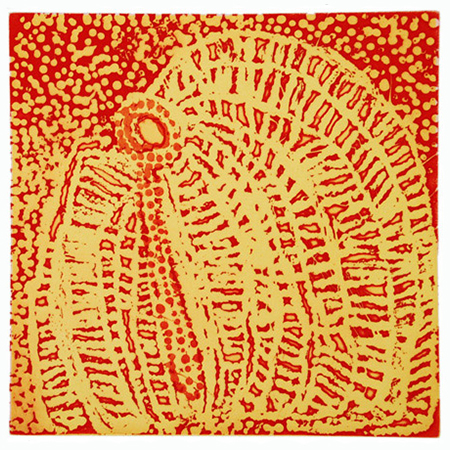
Warlayirti Artists from Balgo are well known for their beautiful, high quality artworks including limited edition prints.
The prints are the result of a long-standing collaboration between the Balgo artists and the printers from Northern Editions in Darwin. This partnership resulted in numerous editions of etchings and screen prints and expanded to include Japanese woodblock printing for the men.
The collection of editions available at Nomad Art include significant senior artists Eubena Nampitjin, Elizabeth Nyumi, Ningie Nanala, Helicopter Joey Tjungurrayi and Bai Bai Napangarti and some the first prints created by these artists between 2002 – 2007.
As senior custodians from Balgo, Lake Mackay, Canning Stock Route, Billiluna, Tanami and Great Sandy Deserts, the artists hold a unique position in Aboriginal and artistic history.

Anne McMaster
Anne McMaster continues her exploration of the natural habitats of the Tiwi Islands including coastal mangroves and coral. Other elements that influence her work are the changing nature of the seasons and the beautiful Island light. These works were created in early 2019 as Anne prepares her departure from Melville Island after many years. […]
Read More >


Anne McMaster
01 March - 29 March 2019
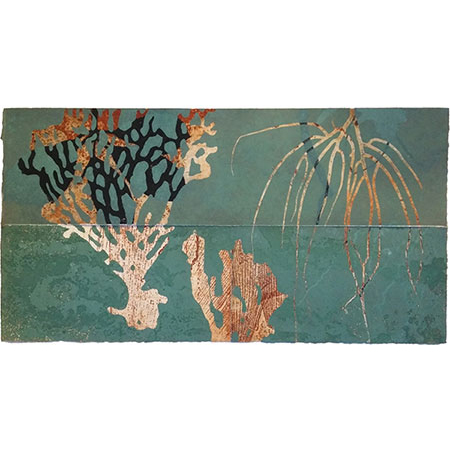
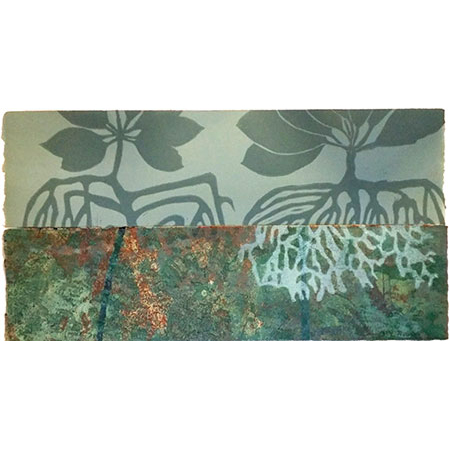
Anne McMaster continues her exploration of the natural habitats of the Tiwi Islands including coastal mangroves and coral. Other elements that influence her work are the changing nature of the seasons and the beautiful Island light. These works were created in early 2019 as Anne prepares her departure from Melville Island after many years.

Warlukurlangu Artists
This month we have delved into the archives to reveal classic etchings by senior Warlukurlangu artists Shorty Jangala Robertson, Paddy Japaljarri Stewart, Paddy Japaljarri Sims and Rosie Nangala Flemming. The artists are recognised for their bold colour and strong traditional iconography. The paintings tell the story of the artists’ connection to their country, the features of the landscape, […]
Read More >


Warlukurlangu Artists
01 March - 29 March 2019
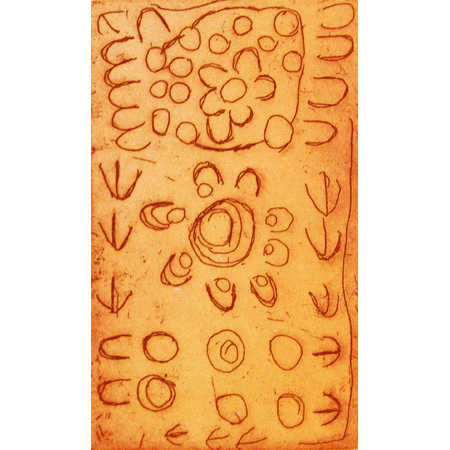
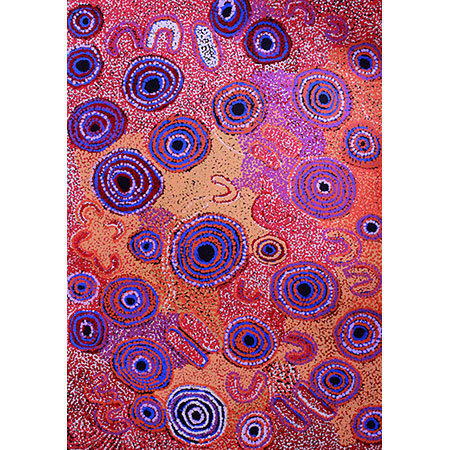
This month we have delved into the archives to reveal classic etchings by senior Warlukurlangu artists Shorty Jangala Robertson, Paddy Japaljarri Stewart, Paddy Japaljarri Sims and Rosie Nangala Flemming. The artists are recognised for their bold colour and strong traditional iconography. The paintings tell the story of the artists’ connection to their country, the features of the landscape, the plants and animals that are found there and the creation stories from the Dreamtime.
Each artist has his or her own particular style and distinctive colour palette. The artists love to experiment with different techniques ensuring that the artworks and styles are constantly evolving.
Sand stories and other collections
This month we are focusing on historical suites and collections. Works include an exciting series of six ceremonial body paint designs from Kaltjiti Arts, a collection of the first screenprints produced at mimili maku and an amazing folio of milpatjunanyi – sand stories by Nura Rupert and Nungalka (Tjaria) Stanley from Ernabella Arts. Milpatjunanyi – […]
Read More >


Sand stories and other collections
01 March - 29 March 2019
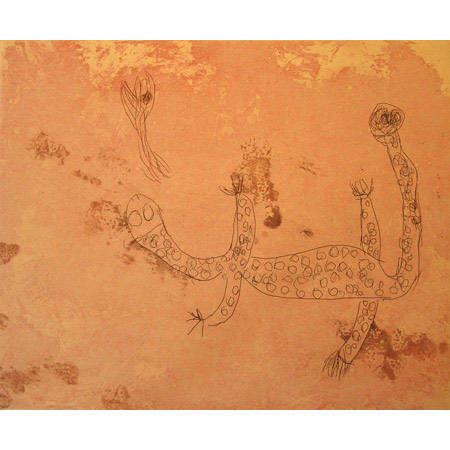
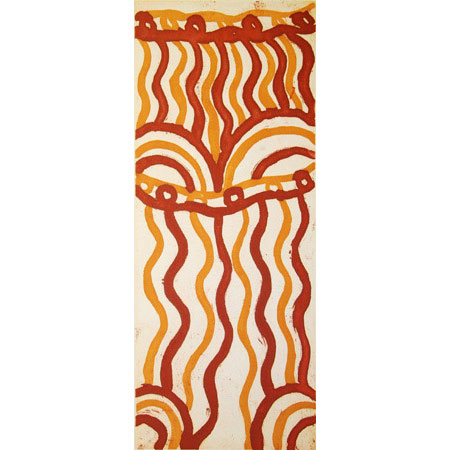
This month we are focusing on historical suites and collections. Works include an exciting series of six ceremonial body paint designs from Kaltjiti Arts, a collection of the first screenprints produced at mimili maku and an amazing folio of milpatjunanyi – sand stories by Nura Rupert and Nungalka (Tjaria) Stanley from Ernabella Arts.
Milpatjunanyi – telling stories in the sand
Telling stories by drawing in the sand is the domain of women and girls among the Pitjantjatjara and Yankunytjatjara speaking peoples of the desert country of central Australia.
These etching suites are a contemporary expression of an ancient, deeply held cultural practice. The stories are told in the sand on which the people sit – the ground across which they walk – and the land that has sustained them for thousands of years – providing the materials and subject matter for telling life’s big and small stories.
Traditionally these stories were often told in the evening, as family groups settled down for sleep in their transitory camp. One woman would take her mi/pa, the stick with which she beats the rhythm of the story, and with the other start drawing in the sand, episode by episode, smoothing the sand after each, until the story’s end.
View the Milpatjunanyi folio catalogue
View the Wati Ngintaka folio catalogue
Inma-ku Walka – Body design for Ceremony
These etchings are based on the imagery used for body painting during traditional lnma (traditional ceremonial dance). The designs are painted across the chest and breasts.
Other Nomad Art collections include:
Replant: A new generation of Botanical Art
Burning Bright from the Djalkiri Project
Custodians: Country & Culture
I am Tiwi
Waringarri Suite
Kunwarrde Bim – Injalak Hill Suite
Bardayal Bim
Yalangbara Suite

Reveal – from the collection
We have been busy looking through the archive and continually uploading exciting prints to the Nomad Art website. Reveal includes etching, silkscreen and woodcut prints produced over the last 15 years by artists from the Central Desert, Kimberley, Arnhem Land, Tiwi Islands and Darwin. View the works on the online gallery: Man, Woman, Child, etching by Rhonda […]
Read More >




Reveal – from the collection
01 February - 01 March 2019
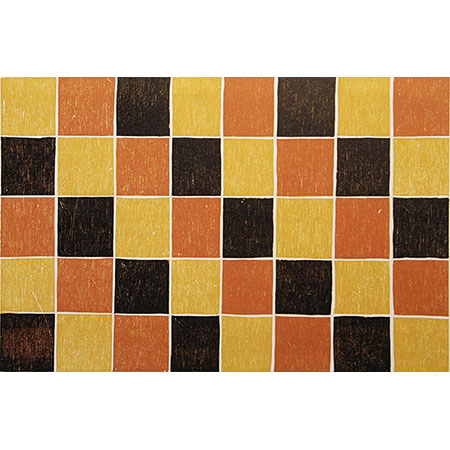
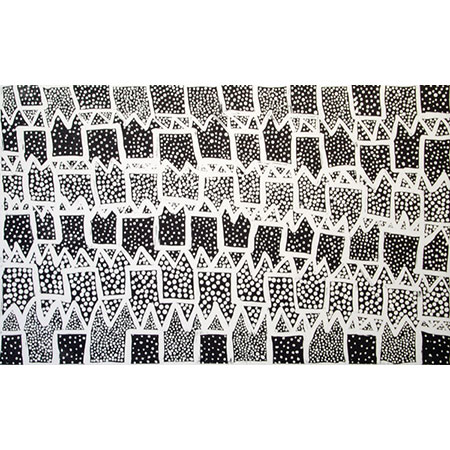
We have been busy looking through the archive and continually uploading exciting prints to the Nomad Art website.
Reveal includes etching, silkscreen and woodcut prints produced over the last 15 years by artists from the Central Desert, Kimberley, Arnhem Land, Tiwi Islands and Darwin.
View the works on the online gallery:
Man, Woman, Child, etching by Rhonda Sharpe
Untitled, woodcut by Mary Thomas
Barrwan Baru, reduction woodcut by Sandy Pascoe
Kalipinyapa, etching by Narlie Nakamarra

Chatter
View the Catalogue View works on the online gallery These works are part of Winsome Jobling’s 2018 series of works in paper entitled Chatter. The works are made using handmade papers, drypoint prints and stitching. During the paper making process watermarks, poured pulps and stencilled earth pigments and copy toner are added. Paper fibres […]
Read More >


Chatter
01 November - 30 November 2018
View works on the online gallery
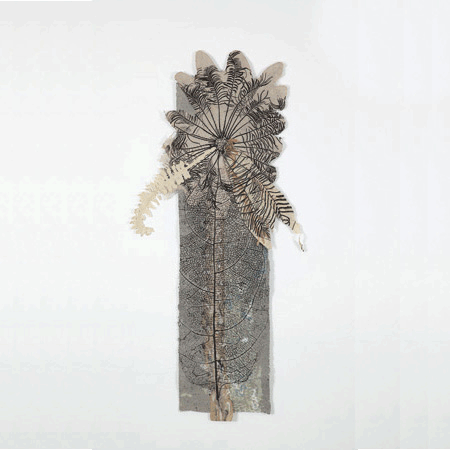
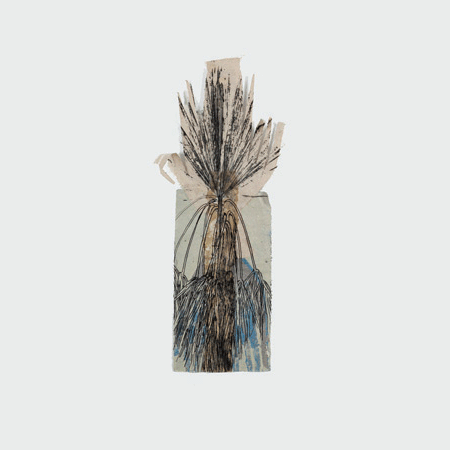
These works are part of Winsome Jobling’s 2018 series of works in paper entitled Chatter. The works are made using handmade papers, drypoint prints and stitching. During the paper making process watermarks, poured pulps and stencilled earth pigments and copy toner are added. Paper fibres include; gamba grass, spear grass, stringy bark, native kapok, devils ivy, abaca and kozo.
Artist’s statement
Six hectares of bushland at Berrimah that I visit lies between Charles Darwin National Park and the Darwin Speedway and is a microcosm of the whole Top End landscape. The savannah forest slides into mangrove on one side and into a low wet pandanus swamp on the other. There are magical places; a small rocky escarpment, a small bowl-shaped valley – cool and quiet and a circle of cycads on a little hill.
For the past 15 years it has been a place to think, research and to collect dyes pigments and plant fibres. It is a place to re-seed and regenerate, but also despair as the invasive weed Gamba grass (Andropogon gayanus) extends further or another fridge or pile of building material is dumped.
This remnant of bushland has colonies of Sand Palm (Livistona humilis) and age-old cycads that grow under a canopy of mainly Stringy Bark trees (Eucalyptus tetrodonta). They hustle together in groups or colonies like families, from first born to elders – strength in numbers!
Anchored in ancient, lateritic and nutrient poor soils both species have spindly, scaly trunks, tough water conserving leaves, and scratchy prickly souls.
The Northern Territory Threatened Species Network lists Cycas armsrtongii as vulnerable in the Top End as the few remaining colonies are in conservation reserves and threatened by the hot and high fires of introduced Gamba and Mission Grass (Cenchrus spp.).
By respecting the natural world with a greater empathy, our interactions might be tempered by a deeper understanding rather than viewing the world as an exploitable object.
The fibres I use to make paper are mainly sourced locally from both native and exotic plants. The Chatter papers are primarily made from local natives; Spear Grass (Sorghum intrans), Stringy Bark, Banyan (Ficus virens), Kapok (Cochlospermum fraseri) and the introduced Gamba Grass. I have also used Abaca (Musa textilis) and Devils Ivy (Epipremnum aureum).
The earth pigments I use are sourced from all over the Northern Territory. All are the worn-down grains from ancient geology. The charcoal is from bushfires, the ‘bones’ of bushland.
My work is both a collaboration with the natural world and a haptic response to our impact on it. My ideas, imagery and materials search for the internal energy and rhythms of the landscape of the Top End.
Winsome Jobling 2018 (Extract from Chatter catalogue essay)

Yirrkala Print Space 2018
Yirrkala Print Space is one of the Australia’s premier print studios specialising in limited edition works on paper produced on their own press. The studio continues to expand its collaborations with master printmakers from across Australia and around the world to facilitate new works and continue the development of techniques and experimentation across the […]
Read More >



Yirrkala Print Space 2018
01 October - 31 October 2018
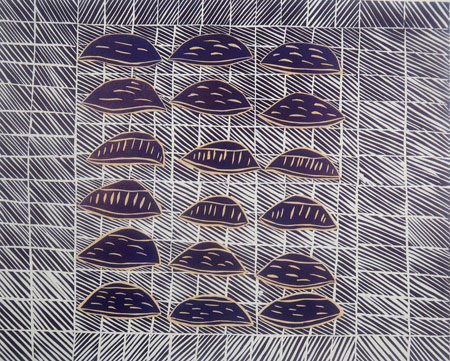
Yirrkala Print Space is one of the Australia’s premier print studios specialising in limited edition works on paper produced on their own press. The studio continues to expand its collaborations with master printmakers from across Australia and around the world to facilitate new works and continue the development of techniques and experimentation across the generations of Yolngu printmakers. Printmaking techniques including Japanese woodblock, etching, linocut, screenprints and collagraphs have been learnt, absorbed and applied, combining traditional designs and knowledge to create new artworks.
While these Yolngu artists are respectful of the discipline of miny’tji (sacred design), the nature of the printmaking process has provided artistic freedom of expression; enabling them to experiment with colour, imagery, concepts and design without compromising their spiritual identity. The art of Yirrkala Print Space is being collected and exhibited by galleries around Australia.

Tidal Zone – Tiwi Islands
My recent work is a response to living in a remote Indigenous community of Pickataramoor, on the Tiwi Islands in tropical Northern Australia. This remote location combines the challenges of conceptualising and creating art in relative isolation, while drawing inspiration from the unique geography of the landscape of my daily life. The rectangle […]
Read More >



Tidal Zone – Tiwi Islands
01 September - 30 September 2018
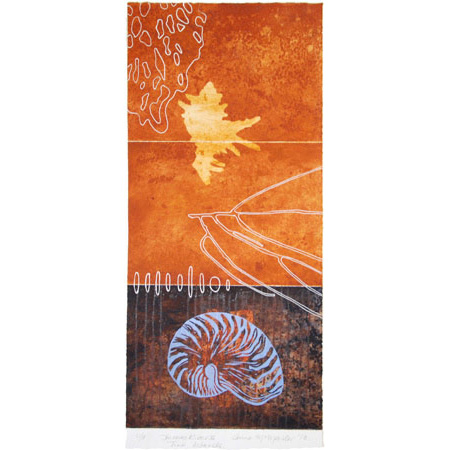
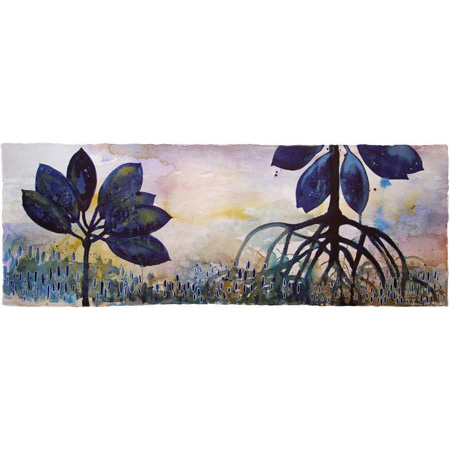
My recent work is a response to living in a remote Indigenous community of Pickataramoor, on the Tiwi Islands in tropical Northern Australia. This remote location combines the challenges of conceptualising and creating art in relative isolation, while drawing inspiration from the unique geography of the landscape of my daily life.
The rectangle paper panels are a direct reference to the louvered windows that I gaze through into the Tiwi landscape from my studio and home. Typical of Northern Territory Top-end architecture, these panels act as a vent which gives me a wider sense of the elements outside. Gentle breezes pass through and sounds and scents permeate inside, highlighting the seasons and my location.
The arrangement of etchings shows motifs and linear detail of elements of the geography of Melville Island. Images have been created by etching through pitted and washy bitumen exposed to heavy monsoon rain and left to the elements, forming washy textures. Mangrove sprigs from the coast have been used as stencils between aluminium plates and the paper in the printmaking process.
It is at the periphery of the island that I find most fascinating, acting metaphorically as a barrier or boundary line for contact with family; emphasising the remoteness of my location. It is within this context that the louvres are used, highlighting a zone between two spaces – defining my creative realm.
Anne McMaster

Then and Now – images of the Gulf
The word ”waralungku’ (pronounced Wharr Ral Loonghu) represents all of the language groups of the Borroloola Region and is the place name for the Burketown crossing on the McArthur River. The crossing is on the main road just outside of Borroloola. Waralungku is also associated with the Hill Kangaroo dreaming and an imprint […]
Read More >





Then and Now – images of the Gulf
01 September - 30 September 2018
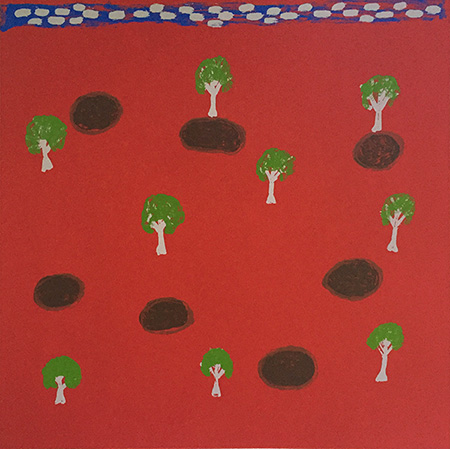
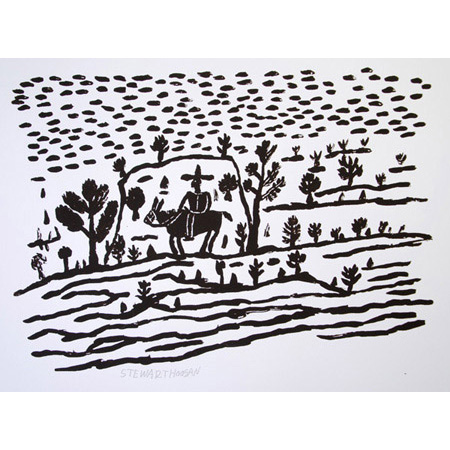
The word ”waralungku’ (pronounced Wharr Ral Loonghu) represents all of the language groups of the Borroloola Region and is the place name for the Burketown crossing on the McArthur River. The crossing is on the main road just outside of Borroloola.
Waralungku is also associated with the Hill Kangaroo dreaming and an imprint of its feet, tail and hind quarters are located at this site.
Borroloola is a remote community on the McArthur River in the Northern Territory of Australia 30 miles upstream from the Gulf of Carpentaria. It is set in a arresting landscape of rocky hills, cattle-grazed scrub, billabongs, and wide horizons.
Waralungku artists continue to produce exciting contemporary art. They have a unique voice and style. Borroloola artists depict both the life and the history of the community, as well as the distinctive beauty of the surrounding landscape, flora and fauna. The images are layered with a sense of past histories and continuing connections.

East Kimberley Focus
East Kimberley Focus is the first of our series of online presentations. Each month we will delve into the Nomad collections to uncover hidden gems, profile selected artists and present new work. The idea is to reflect on the extraordinary creative output by Aboriginal artists and printmakers over the last two decades. […]
Read More >





East Kimberley Focus
02 July -
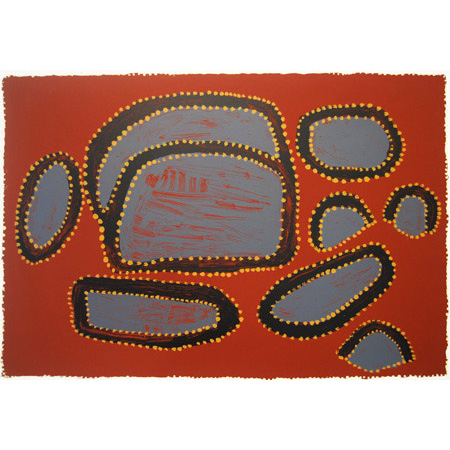
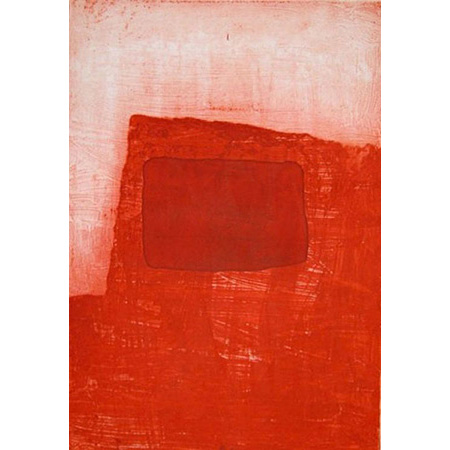
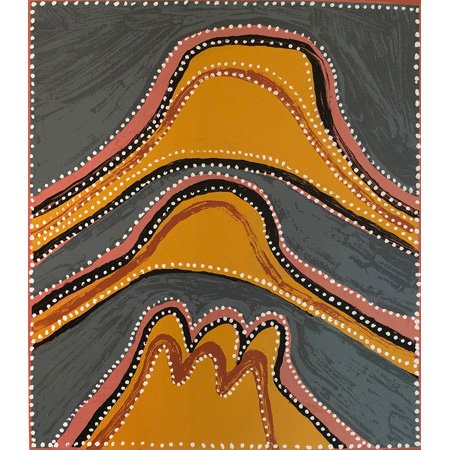
East Kimberley Focus is the first of our series of online presentations. Each month we will delve into the Nomad collections to uncover hidden gems, profile selected artists and present new work. The idea is to reflect on the extraordinary creative output by Aboriginal artists and printmakers over the last two decades.
This month we are focusing on two Kimberley Art Centres, Warmun Arts and Waringarri Arts from the east Kimberley Ranges. Aboriginal artists in the Kimberly have been making etchings, screen prints and lithographs since the 1990s. The collection includes great artists such as Queenie McKenzie, Betty Carrington, Mabel Juli, Lena Nyadbi, Rammey Ramsey, Rusty Peters, Gabriel Nodea, Mignonette Jamin, Billy Thomas and Paddy Carlton to name a few.
Since its inception in 1998, Warmun Art Centre has been one of remote Australia’s most significant cultural institutions. Owned and governed by Gija people, the centre was established by founding members of the contemporary painting movement in Warmun such as Queenie McKenzie, Lena Nyadbi, Betty Carrington and others. The elders recognised and responded to the need for a community owned and controlled centre through which they could support, maintain and promote Gija art, belief, language and culture.
Established 20 years earlier in the late 1970’s, in the heart of Miriwoong country at Kununurra, Waringarri artists also convey the importance of their country and culture through art. Miriwoong land extends from the Northern Territory border to Kununurra, Lake Argyle, Keep River and the Ord River in the east Kimberley.
A range of printmakers from studios such as Red Hand Prints, Northern Editions, Basil Hall Editions and Australian Print Workshop have worked in collaboration with Miriwoong and Gija artists to produce stunning and ground breaking contemporary art prints. We are pleased to present a small selection of these works from the past & present.
View works by Warmun artists on the online gallery

Darwin Dogs by Winsome Jobling and Merran Sierakowski
Darwin Dogs are exposed for what they are…yappy, snappy half crazed dogmatists, crooked as a dog’s hind leg, lurking with intent behind the wire in Darwin burbs. Darwin artists Winsome Jobling and (onetime postie) Merran Sierakowski have decided that things are getting out of hound, so they have waded fearlessly into the […]
Read More >


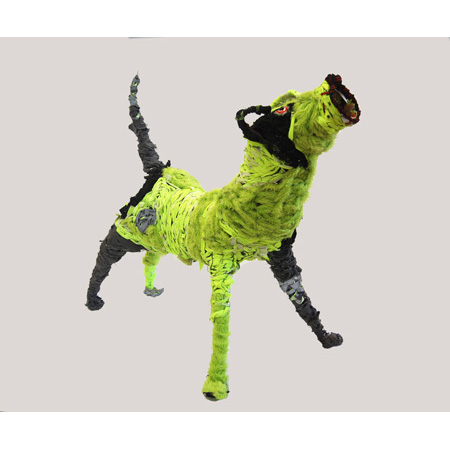


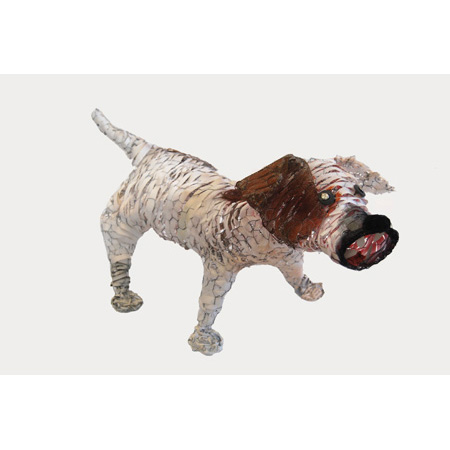
Darwin Dogs by Winsome Jobling and Merran Sierakowski
04 May - 25 May 2018
Darwin Dogs are exposed for what they are…yappy, snappy half crazed dogmatists, crooked as a dog’s hind leg, lurking with intent behind the wire in Darwin burbs.
Darwin artists Winsome Jobling and (onetime postie) Merran Sierakowski have decided that things are getting out of hound, so they have waded fearlessly into the dog eat dog world, with a dog’s breakfast of a show at Nomad Art this month.
The artists are dog tired at being ruffed up and plan to bite back with this canine dishplay. It may be a bit ruff around the edges and a mastiff waste of time, but it is the leashed they could do. So don’t bite the hand that feeds you, at the very leashed you mutt as well get along to Darwin Dogs. After all every dog has its day, barking dogs seldom bite and it is our last little show at Nomad Art Gallery in Parap.
View works by Merran Sierakowski on the online gallery

Full Circle: Journeys of an Artist
By Jörg Schmeisser Jörg Schmeisser’s distinguished printmaking career was informed by a restless curiosity of the visual world. From the beginning, he was inspired by travel, his imagination fired by regular experiences of the unfamiliar and unknown. This online exhibition celebrates work produced during travels, residencies and fellowships to Angkor Wat in Cambodia, […]
Read More >


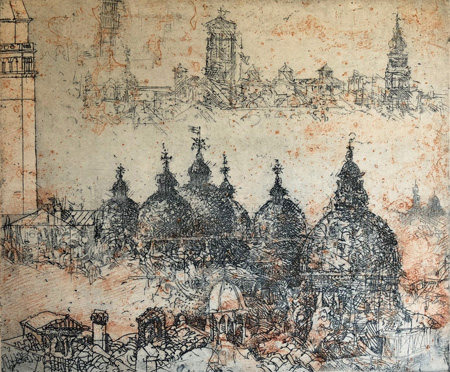
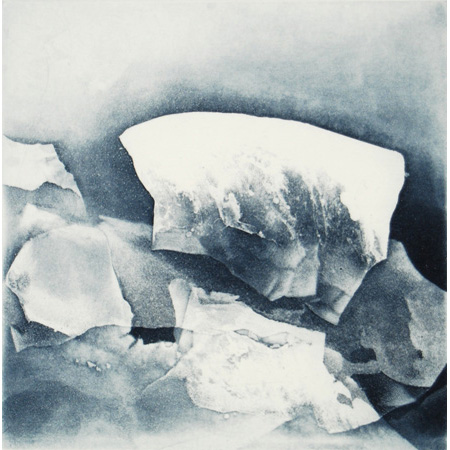
Full Circle: Journeys of an Artist
01 May -By Jörg Schmeisser
Jörg Schmeisser’s distinguished printmaking career was informed by a restless curiosity of the visual world. From the beginning, he was inspired by travel, his imagination fired by regular experiences of the unfamiliar and unknown.
This online exhibition celebrates work produced during travels, residencies and fellowships to Angkor Wat in Cambodia, Venice, Hangzhou in China, Ladakh in northern India and Antarctica
‘Schmeisser’s keen observation of his surroundings is revealed in the extraordinary rendering of detail, often overlaid by gestural lines and script. His works also feature abstracted motifs that symbolically evoke the place in which they were witnessed.’ Beaver Galleries
Jörg Schmeisser held over 200 exhibitions, both in Australia and overseas, after he began his tertiary studies at the Academy of Fine Arts in Hamburg, Germany. His work is represented in many of the world’s most notable collections including the British Museum, Victoria and Albert Museum, Bibliotheque Nationale de France, Museum of Modern Art in New York, Staatliche Sammlungen Dresden, Germany, Museum fur Ostasiatische Kunst in Cologne, Germany and the National Gallery of America. In Australia, his work is held in all of the major state galleries as well as the National Gallery of Australia.
Jörg Schmeisser first visited Arnhem Land in 1976. As part of the journey he facilitated some of the first etchings to be made with Indigenous artists of the region. He again visited the Top End in 2009 as part of the Nomad Art Djalkiri project. The outcomes are timeless and beautiful images of unique landscapes.
Jörg Schmeisser died in June 2012.

‘Dear Gilbert,…. ‘ (Song for the Ichthyologist) by Jacqueline Gribbin
This is a continuation of a body of work by Darwin Printmaker Jacqueline Gribbin in which the artist has revived a collection of relief blocks created from scientific drawings by Gilbert Percy Whitley (Ichthyologist and Curator of Fishes, Australian Museum, 1922-1964). The blocks served as a means to print illustrations for Whitley’s many published […]
Read More >


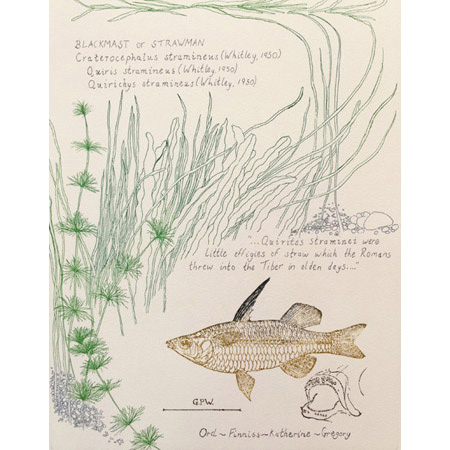

‘Dear Gilbert,…. ‘ (Song for the Ichthyologist) by Jacqueline Gribbin
01 May -
This is a continuation of a body of work by Darwin Printmaker Jacqueline Gribbin in which the artist has revived a collection of relief blocks created from scientific drawings by Gilbert Percy Whitley (Ichthyologist and Curator of Fishes, Australian Museum, 1922-1964). The blocks served as a means to print illustrations for Whitley’s many published papers, journals and books.
Through a series of prints, which incorporate the blocks, Gribbin has connected with Whitley’s cheeky humour and passion for all things fishes. The prints are a melding of Gribbin’s created marine environments with Whitley’s scientific work.
Recently researchers have expressed concern that some of the species depicted in Whitley’s blocks could be under threat due to habitat degradation and climate change, providing new perspective on Whitley’s work.
Relief printing blocks courtesy of the Australian Museum.

Ngani pek che durrmu – Our group of artists working together
In late 2017, the artists of Durrmu Arts at Peppimenarti in the Northern Territory collaborated with Jocelyn Tribe and Basil Hall to create this magnificent series of silkscreen prints. Established artists such as Regina Wilson and Kathleen Korda, lead a small group of emerging artists through the process of printmaking and the […]
Read More >
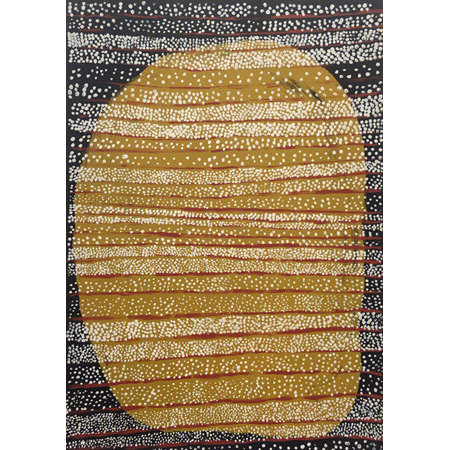
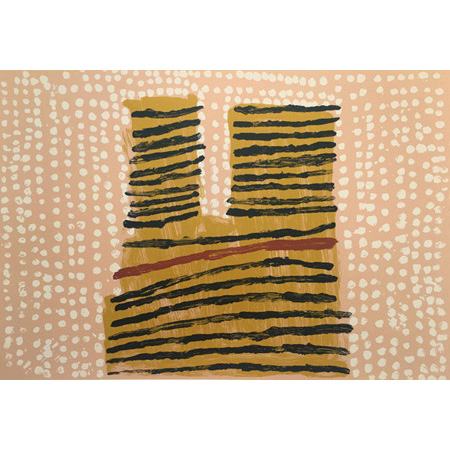


Ngani pek che durrmu – Our group of artists working together
14 April - 05 May 2018
In late 2017, the artists of Durrmu Arts at Peppimenarti in the Northern Territory collaborated with Jocelyn Tribe and Basil Hall to create this magnificent series of silkscreen prints.
Established artists such as Regina Wilson and Kathleen Korda, lead a small group of emerging artists through the process of printmaking and the exploration of tradition patterns, designs and basket stitch techniques.

Bark Paintings and Larrakitj from Yirrkala
Located at Yirrkala in north-East Arnhem Land, Buku Larrnggay Mulka has maintained its status as a leader in contemporary art for decades. Dating back beyond the Bark Petition, Yirrkala Church Panels and Saltwater Collection, Yirrkala artists continue an artistic legacy that extends over tens of thousands of years. More recently artists have embraced the […]
Read More >

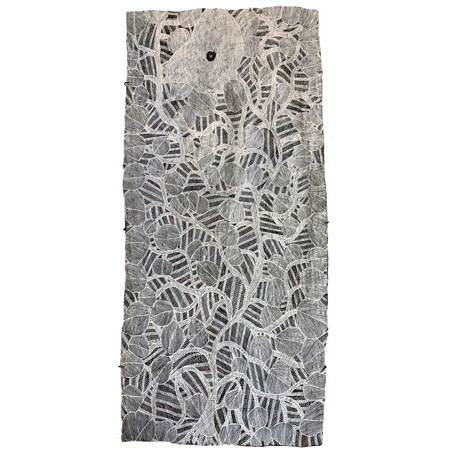


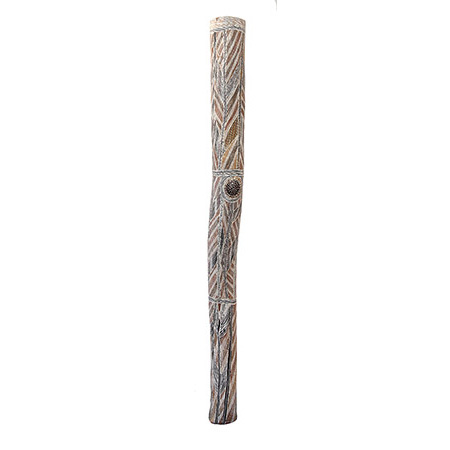
Bark Paintings and Larrakitj from Yirrkala
14 April - 05 May 2018
Located at Yirrkala in north-East Arnhem Land, Buku Larrnggay Mulka has maintained its status as a leader in contemporary art for decades. Dating back beyond the Bark Petition, Yirrkala Church Panels and Saltwater Collection, Yirrkala artists continue an artistic legacy that extends over tens of thousands of years. More recently artists have embraced the classical beauty of bark painting alongside stylistic and personal innovations.
Historically, Yolngu (Aboriginal people) passed on their creation stories and knowledge of country, through song, dance, ceremony and art. Clan designs called miny’tji represent the acts of the Wangarr (ancestral beings) and the laws they created. These designs are painted onto objects such as the larrakitj (ceremonial hollow log) and bark panels, using the fine hairbrush, marwat. Through the act of reproducing miny’tji, Yolngu are linked to their ancestors and reaffirm their identity and association with country.
Miny’tji designs are often geometric in style incorporating diamonds, triangles and lines. Each design relates to a story associated with particular clan groups and their Ancestral beings. Clan designs are part of the intellectual property rights of the clan and only those people with the rights to certain designs are allowed to paint them. In this way they can be seen as title deeds to country.
Ref: Balnhndhurr – A Lasting Impression – An Artback NT Touring Exhibition 2017-2019, Education Kit, Teachers Notes
https://artbacknt.com.au/wp-content/uploads/sites/31/Balnhdhurr-teachers-notes.pdf

Instability
2016 was an unusually cloudy and wet dry season. I began documenting the cloudy days from June to August by taking photographs and I did the same last year. The 2017 dry season was the warmest on record. These drawings are made using recycled photocopy toner. The composition of photocopy toner is generally […]
Read More >


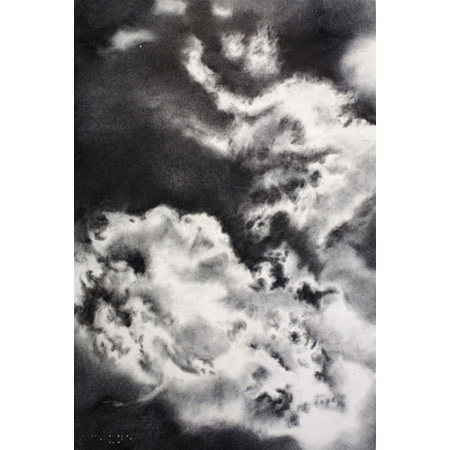
Instability
02 March - 07 April 2018
2016 was an unusually cloudy and wet dry season. I began documenting the cloudy days from June to August by taking photographs and I did the same last year. The 2017 dry season was the warmest on record.
These drawings are made using recycled photocopy toner.
The composition of photocopy toner is generally 60% heat-sensitive micro-plastic particles and the rest is iron oxide and pigment.
Clouds; beautiful, cottony, floating arrangements of water molecules. Cumulus clouds are the product of heat and convective air-mass instability that grow upward to form rain.
Water vapour has a strong effect on weather and climate. As the planet gets warmer, more water evaporates from the earth’s surface and becomes vapour in the atmosphere. Water vapour is a greenhouse gas, so more water vapour leads to even more warming. A hotter atmosphere is able to take up and retain more moisture – every degree of warming results in and average 1% increase in rainfall.
We are turning the natural world against itself and us!
As Tim Flannery says; ‘We are now the weather makers.’
The human impact on the natural world is central to my work and my materials always carry an intrinsic message……………………….an armature for ideas.
Winsome Jobling 2018

Tokapuwi – Big Mob of Birds
Tiwi Island artist, Janice Murray is renowned for her depictions of birdlife that inhabit the Tiwi Islands. This exhibition of etchings features her exceptional graphic interpretations of traditional cultural motifs, birds and ceremonial design. Birds include Pinjoma Jilamarini – Barn Owl, Muma – Torres Strait Pigeon, Kawukawunga – Female Bush Turkey, Jongijongini – Eastern Reef Egret and Wayayi – Bush Curlew. […]
Read More >


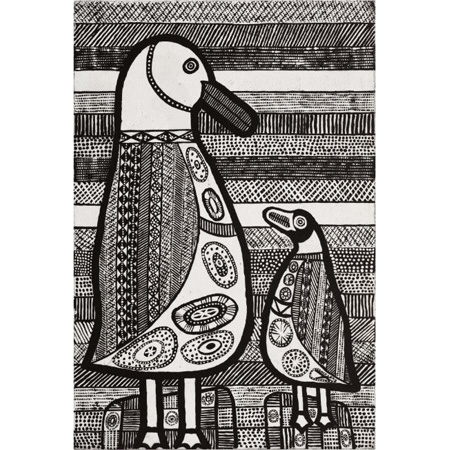
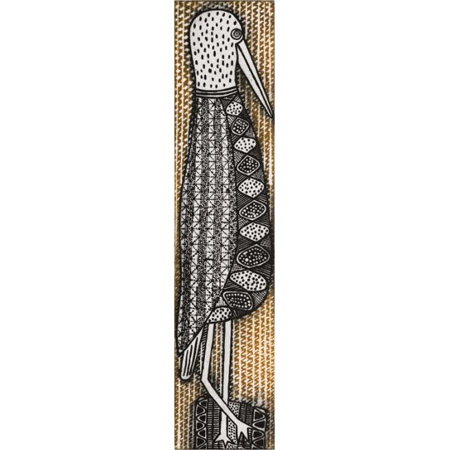

Tokapuwi – Big Mob of Birds
02 February - 24 February 2018
Tiwi Island artist, Janice Murray is renowned for her depictions of birdlife that inhabit the Tiwi Islands. This exhibition of etchings features her exceptional graphic interpretations of traditional cultural motifs, birds and ceremonial design. Birds include Pinjoma Jilamarini – Barn Owl, Muma – Torres Strait Pigeon, Kawukawunga – Female Bush Turkey, Jongijongini – Eastern Reef Egret and Wayayi – Bush Curlew.
In 2017 Janice Murray was awarded an Australian Print Workshop Collie Print Trust Fellowship to work in collaboration with printers Martin King and Simon White to produce ten new large format etchings.

In the Frame
Featuring new work by Anne McMaster, Jacqueline Gribbin and Winsome Jobling. Plus from the stockroom, a selection of framed prints reduced for the months of December and January and unframed prints from Northern Editions print making studio. Contact the Gallery for more information 08 8981 6382. View works on the online gallery: Anne […]
Read More >


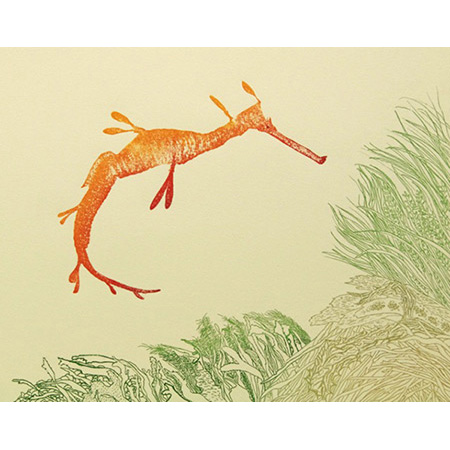


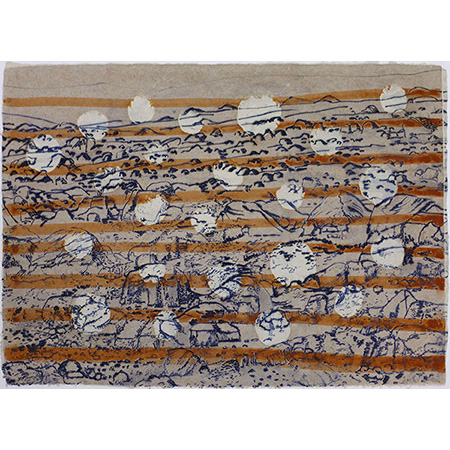
In the Frame
01 December - 27 January 2018
Featuring new work by Anne McMaster, Jacqueline Gribbin and Winsome Jobling. Plus from the stockroom, a selection of framed prints reduced for the months of December and January and unframed prints from Northern Editions print making studio. Contact the Gallery for more information 08 8981 6382.
View works on the online gallery:

Mayeng – Bush Tucker
An exhibition of ochre paintings, ceramics, prints and textiles by Miriwoong artist Gloria Mengil from Waringarri Arts in the Kimberly. The images represent her favourite bush tucker (bush plum and bush peanut), and evoke memories of the nostalgic joy of gathering these foods as a child with her family. In her work Gloria […]
Read More >


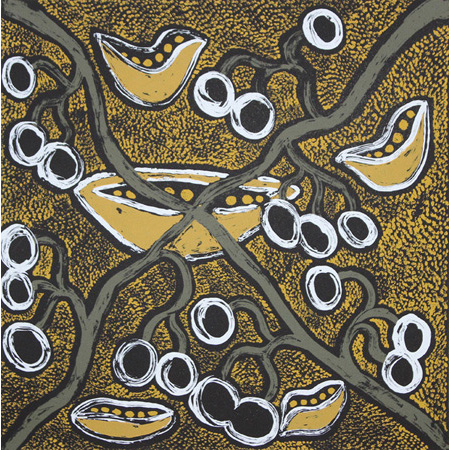


Mayeng – Bush Tucker
03 November - 25 November 2017
An exhibition of ochre paintings, ceramics, prints and textiles by Miriwoong artist Gloria Mengil from Waringarri Arts in the Kimberly. The images represent her favourite bush tucker (bush plum and bush peanut), and evoke memories of the nostalgic joy of gathering these foods as a child with her family.
In her work Gloria depicts ‘Bush Peanut’ and ‘Bush Plum’- a favourite bush tucker she gathered as a child. Bush peanuts are plentiful throughout the year, although “…you need to know where to find them… They are delicious when roasted on hot coals.” “Bush plums are everywhere during the wet season and are eaten raw…. They are also good for making into a bush jam.”
The abundance of bush foods, now compromised by agricultural expansion in the region, means Gloria now rarely eats these traditional bush tucker. Her lyrical, intricate depictions are a nostalgic celebration of bush tucker collecting and a hope that these nuts and fruits can be protected for future generations to enjoy.
In early 2016 Waringarri Aboriginal Arts embarked on a creative partnership with Jam Factory Contemporary Craft in Adelaide. These quality, hand thrown plates of terracotta and stoneware blend, glazed then fired with Gloria Mengil’s unique decal design, individually developed for each plate, are one of the fruitful results of this exciting collaboration. My Favourite Bush Tucker 2017 are microwave, dishwasher and oven safe.
Waringarri Aboriginal Arts, situated at the heart of Miriwoong Country in Kununurra, is the first wholly indigenous owned art centre established in the Kimberley and one of the oldest continuously operating art centres in Australia supporting economic independence for artists and their community.

New prints from Yirrkala Print Space: 2017
Buku Larrnggay Mulka at Yirrkala community in Arnhem Land has a long and proud history as one of Australia’s premier Aboriginal art centres and printmaking studios. The dedicated print studio was built in the Buku-Larrŋgay Mulka Centre in 1996. The space was established through collaboration between the Centre and master printer Basil Hall. […]
Read More >
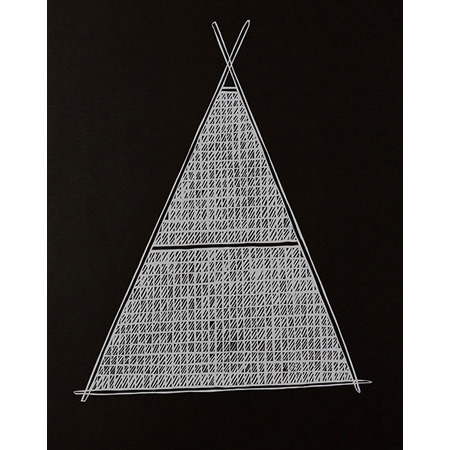


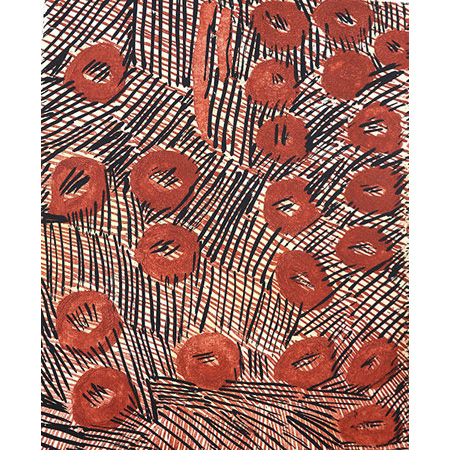
New prints from Yirrkala Print Space: 2017
06 October - 29 October 2017
Buku Larrnggay Mulka at Yirrkala community in Arnhem Land has a long and proud history as one of Australia’s premier Aboriginal art centres and printmaking studios.
The dedicated print studio was built in the Buku-Larrŋgay Mulka Centre in 1996. The space was established through collaboration between the Centre and master printer Basil Hall. Since its opening, Yolngu printmakers have been printing full time and passing down these skills to new generations of young Yolngu printmakers.
Yirrkala Print Space has fostered engagement with younger Yolngu print makers, particularly disengaged youth. The print studio continues to develop the skills for printmaking in these young emerging artists as well as established Yolngu artists of renown.
Yirrkala Print Space also continues to expand its collaborations with master printmakers from across Australia and around the world. Basil Hall has maintained his relationship with the artists at Yirrkala and has assisted and mentored its development and that of the artists. Examples of these are the recent Seven Sisters Project and The Djalkiri Project initiated by Nomad Art Gallery in 2010 and 2012.

Ngini Parlingarri Amintiya Ningani (past, present future)
New prints from Jilamara Arts and Crafts In April 2017 a group of younger and older generation artists visited the Museum and Art Gallery of the Northern Territory to view a selection of the Tiwi collection of objects and images, to garner inspiration for a major print workshop. Working in collaboration with senior printer […]
Read More >

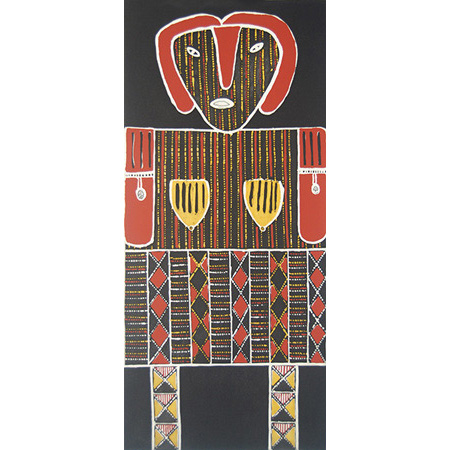
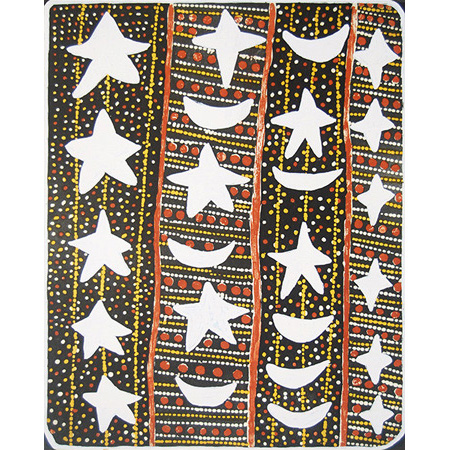
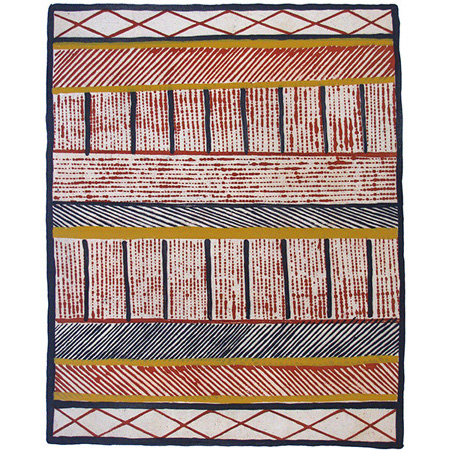


Ngini Parlingarri Amintiya Ningani (past, present future)
01 September - 30 September 2017New prints from Jilamara Arts and Crafts
In April 2017 a group of younger and older generation artists visited the Museum and Art Gallery of the Northern Territory to view a selection of the Tiwi collection of objects and images, to garner inspiration for a major print workshop. Working in collaboration with senior printer Basil Hall, Jilamara artists have created new limited edition prints that respond to artworks by Tiwi artists passed.
Jilamara artists are renowned for producing contemporary works based on ceremonial body painting designs, clan totems and Tiwi creation stories. Jilamara which roughly translates to design, is passed on by family and each artist develops their own particular jilamara.
The Tiwi palette of four colours, red, yellow, white and black, is made up of natural ochres to produce paintings on linen, canvas, paper, printmaking, weaving, bark and carved ironwood.

Karridjowkke Kunronj – Crossing Streams
Presented by Nomad Art in conjunction with Darwin Festival, Maningrida Arts and Culture and Bábbarra Women’s Centre. Opening 3.00pm, Thursday 10 August Karridjowkke Kunronj – Crossing Streams brings together five established female artists from the Kuninjku homelands of western Arnhem Land. The works integrate time-honoured traditions of art making with contemporary imagery. Deborah […]
Read More >
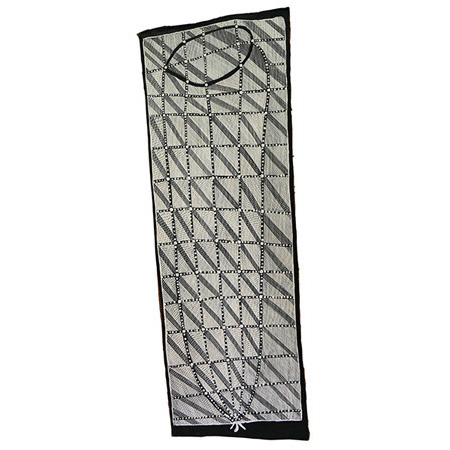
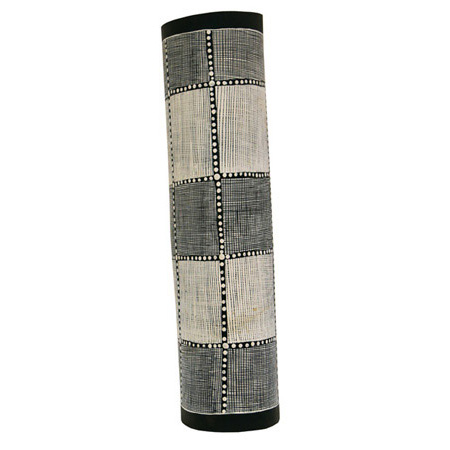

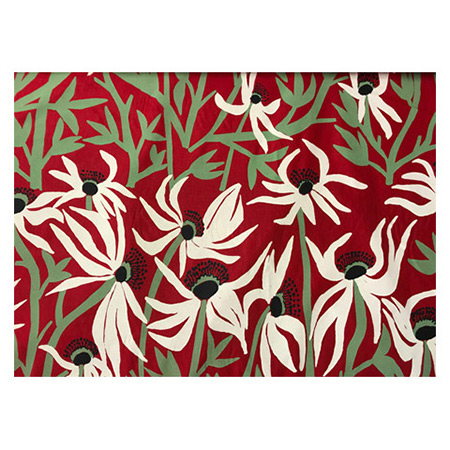
Karridjowkke Kunronj – Crossing Streams
04 August - 26 August 2017
Presented by Nomad Art in conjunction with Darwin Festival, Maningrida Arts and Culture and Bábbarra Women’s Centre.
Opening 3.00pm, Thursday 10 August
Karridjowkke Kunronj – Crossing Streams brings together five established female artists from the Kuninjku homelands of western Arnhem Land. The works integrate time-honoured traditions of art making with contemporary imagery.
Deborah Wurrkidj, Jennifer Wurrkidj, Susan Marawarr, Helen Lanyinwanga and Melba Gunjarrwanga, are women of the stone country surrounding the remote homeland of Mumeka, who work with both Babbarra Designs and Maningrida Arts & Culture.
These women have formed the backbone of a generation of Kunjinku artists since the 1990s. They continue to forge a path for women in their community and push the boundaries of their creative practice.
Featured in this exhibition are new fabric designs, bark paintings and lorrkon (hollow logs) and prints including the watershed Seasons Folio produced in 1999.

Seasons Folio
Presented by Nomad Art in conjunction with Darwin Festival, Maningrida Arts and Culture and Bábbarra Women’s Centre. An historic suite of nine silkscreen prints by: Sandra Milmilkama, Susan Marwarr, Leah Rostron Annie Mulunwanga, Jay Rostron, Barbara Kurrawalwal Vicky Brown, Helen Lanyinwanga, Lena Kuriniya. Produced in 1999, this series of nine silkscreen prints is […]
Read More >


Seasons Folio
04 August - 26 August 2017
Presented by Nomad Art in conjunction with Darwin Festival, Maningrida Arts and Culture and Bábbarra Women’s Centre.
An historic suite of nine silkscreen prints by:
Sandra Milmilkama, Susan Marwarr, Leah Rostron
Annie Mulunwanga, Jay Rostron, Barbara Kurrawalwal
Vicky Brown, Helen Lanyinwanga, Lena Kuriniya.
Produced in 1999, this series of nine silkscreen prints is inspired by the cycle of six seasons in the tropical climate of north central Arnhem Land where the artists live. The prints are depictions of specific places at specific times of year, showing the vegetation and animals which are associated with that time and place.
Sold

Before the Clearing by Simon Normand
Limited edition, hand bound artist’s book – $9,000 Edition of 10 Before the Clearing featuring 13 hand coloured etchings by Simon Normand and 13 corresponding maps and journal entries from Ludwig Leichhardt’s epic journey from Queensland through the gulf country and Kakadu to Port Essington in 1845. Ludwig Leichhardt was the first […]
Read More >
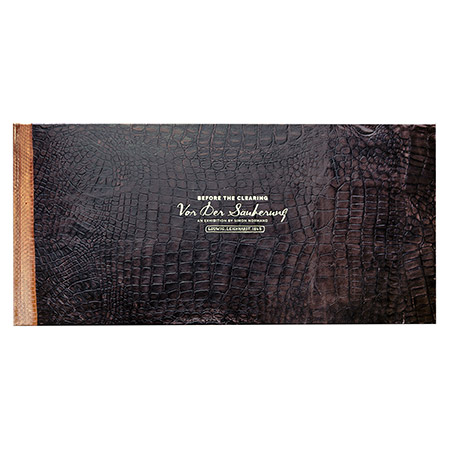
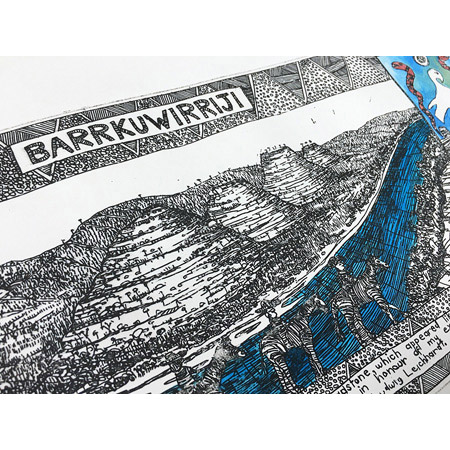
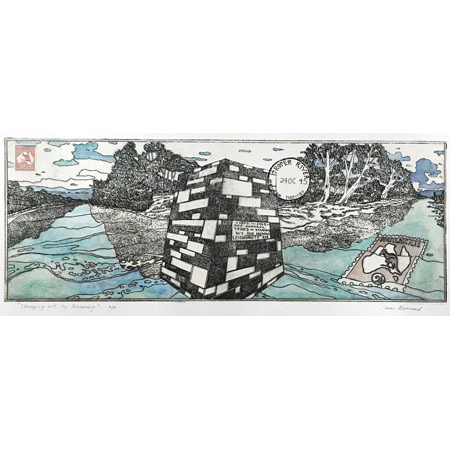


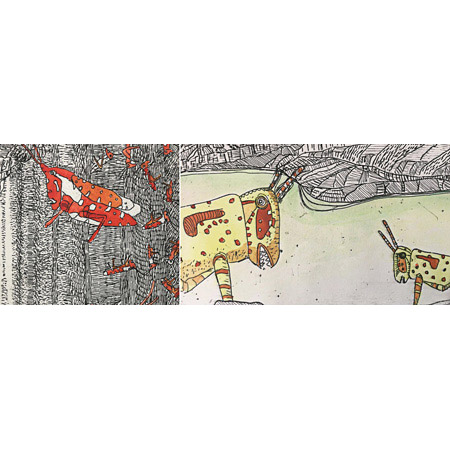


Before the Clearing by Simon Normand
19 July - 01 October 2017
Limited edition, hand bound artist’s book – $9,000
Edition of 10
Before the Clearing featuring 13 hand coloured etchings by Simon Normand and 13 corresponding maps and journal entries from Ludwig Leichhardt’s epic journey from Queensland through the gulf country and Kakadu to Port Essington in 1845.
Ludwig Leichhardt was the first European to explore this country, now known as the Savannah Way. He documented his journey through the remarkable, but now largely uninhabited landscape in carefully scripted field books, recording the botany, geology and the lie of the land.
“This book aims to acknowledge the descendants of people that still live along Leichardt’s path between the Gulf Country and Kakadu. It aims to show that, although so much has been taken away and lost, the country is far from empty.” Simon Normand, November 2016.
Before the Clearing is on show at the Northern Territory Library, Parliament House until 1 October. Simon Normand will be giving an artist’s talk at 6pm on August 9. The Parliament House exhibition features several artefacts which have been specially made by the artists at Ngukurr Arts and that the Limmen Rangers and elders from the roper region have provided special objects for the collection boxes in the library.

Mayhmayh – a suite of paintings by Graham Badari
This suite of 14 paintings illustrate Graham Badari’s forthcoming book Mayhmayh – Different Birds Mayh is the Kunwinjku generic word for birds and mayhmayh is the plural. When asked to provide a title for his forthcoming book featuring birds found in West Arnhem Land Graham Badari suggested Mayhmayh and explained it meant “different birds”. […]
Read More >
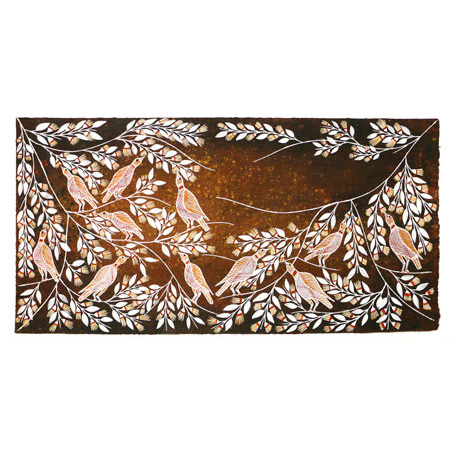
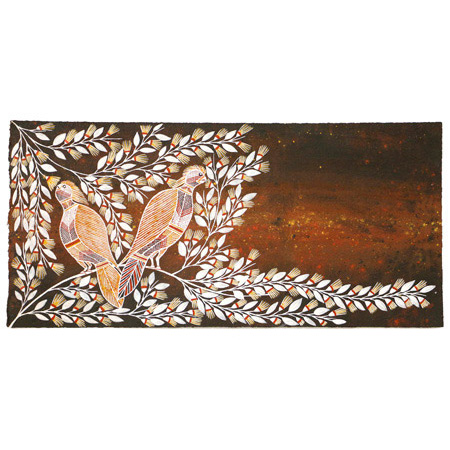

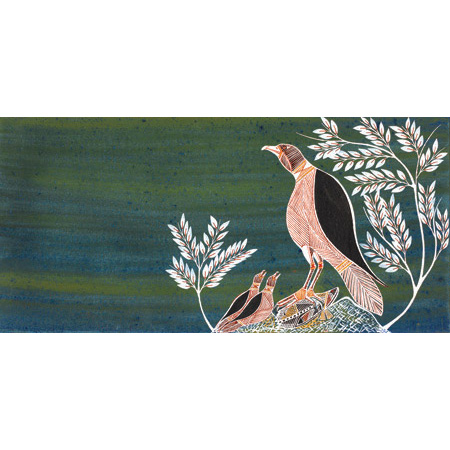
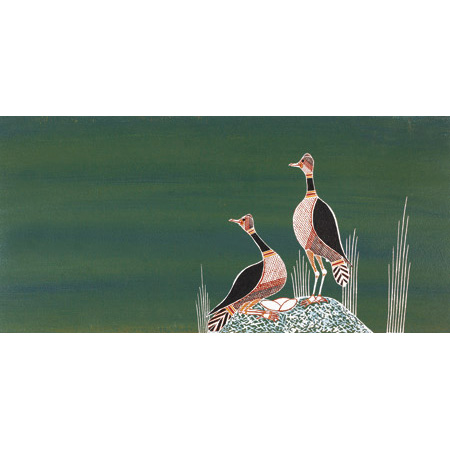

Mayhmayh – a suite of paintings by Graham Badari
01 July - 29 July 2017
This suite of 14 paintings illustrate Graham Badari’s forthcoming book Mayhmayh – Different Birds
Mayh is the Kunwinjku generic word for birds and mayhmayh is the plural. When asked to provide a title for his forthcoming book featuring birds found in West Arnhem Land Graham Badari suggested Mayhmayh and explained it meant “different birds”.

Mayhmayh – Different Birds
Selected works on paper, bark and hollow logs by Injalak artists including Graham Badari, Gabriel Maralngurra, Thompson Nganjmirra and Joe Guymala. All artworks depict species of birds commonly found in Western Arnhem Land going about their daily business. Many of the anecdotes the artists tell about the birds are quirky, explaining characteristics that […]
Read More >


Mayhmayh – Different Birds
01 July - 29 July 2017
Selected works on paper, bark and hollow logs by Injalak artists including Graham Badari, Gabriel Maralngurra, Thompson Nganjmirra and Joe Guymala.
All artworks depict species of birds commonly found in Western Arnhem Land going about their daily business. Many of the anecdotes the artists tell about the birds are quirky, explaining characteristics that can indicate a change of season, a good time to go hunting or can simply be inspired by the nature and character of the birds as they chattering amongst their favorite blossoms, go searching for their favorite foods or chase each across the open floodplains. Bird species can also have significant cultural meaning to the Kunwinkju and a number are active in ‘Djang’ (ancestral creation stories). These paintings allow us a rare birds’ eye view into the connection between people, birds, place, story and environment that is part of the cultural fabric of the Kunwinkju people.

Kieren Karritpul
Karritpul paints subjects associated with the traditional culture and knowledge of his clan. His work is an exploration of the woven line in painting and design. Karritpul grew up watching his mother and grandmother collecting, dyeing and weaving pandanus and sand palm (merrepen) fibre. As they worked he would listen to the stories they […]
Read More >
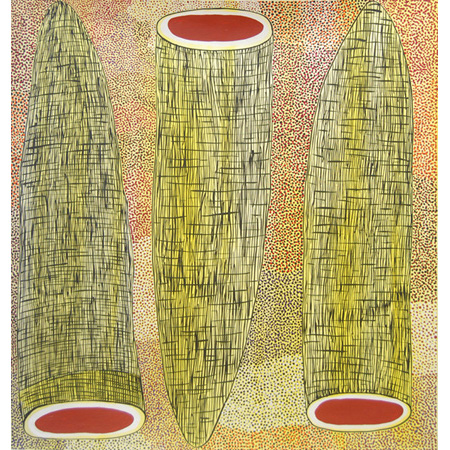

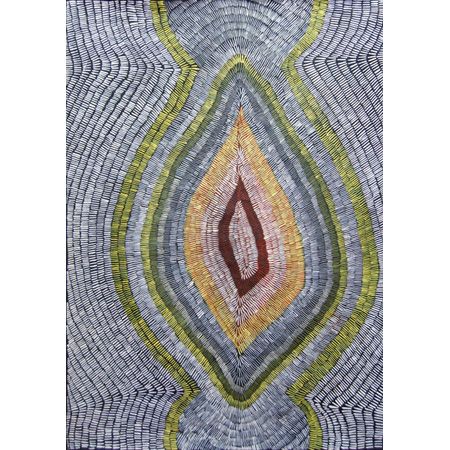
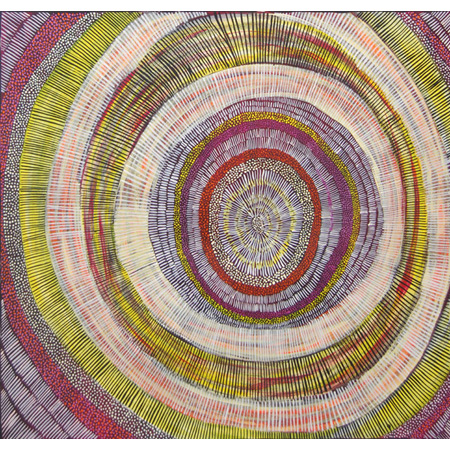
Kieren Karritpul
01 July - 29 July 2017
Karritpul paints subjects associated with the traditional culture and knowledge of his clan. His work is an exploration of the woven line in painting and design.
Karritpul grew up watching his mother and grandmother collecting, dyeing and weaving pandanus and sand palm (merrepen) fibre. As they worked he would listen to the stories they told about the traditional culture and heritage of his people.
As a young contemporary artist Karritpul has transformed his knowledge of weaving and dyeing into intricate and colourful paintings. His images incorporate the pattern of pandanus bundles, woven baskets, coolamon and fish traps, while the colours of his paintings emulate rich and beautiful natural fibre dyes. The works pay homage to his culture and heritage, yet extend its boundaries as contemporary visual expression.

Our Country in Clay
An exhibition of ceramic works by Ernabella’s leading women artists Tjunkaya Tapaya, Carlene Thompson and Niningka Lewis, alongside works by rising stars Elizabeth Dunn, Tjimpuna Williams, Janice Stanley and Lynette Lewis. Tjunkaya and Niningka have made a recent return to ceramics after focusing on painting and tjanpi weaving for several years. Created in […]
Read More >
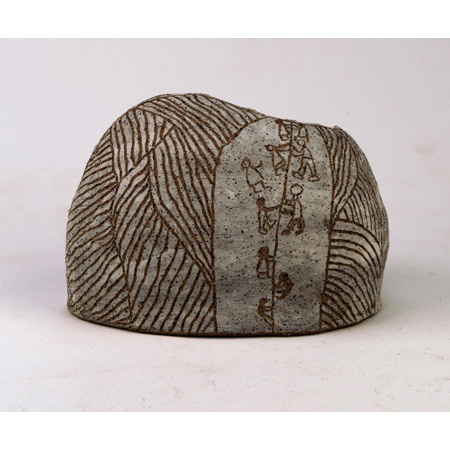


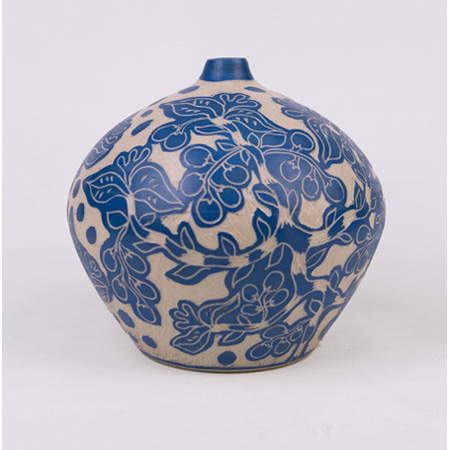
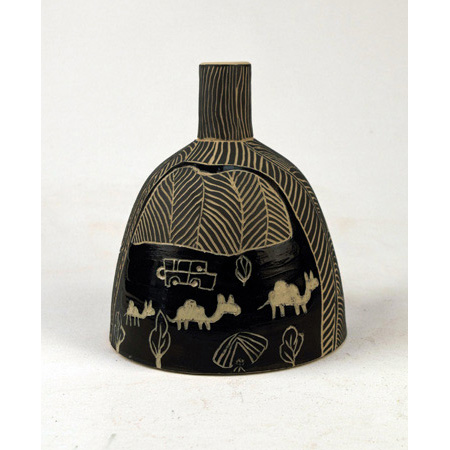

Our Country in Clay
02 June - 24 June 2017
An exhibition of ceramic works by Ernabella’s leading women artists Tjunkaya Tapaya, Carlene Thompson and Niningka Lewis, alongside works by rising stars Elizabeth Dunn, Tjimpuna Williams, Janice Stanley and Lynette Lewis. Tjunkaya and Niningka have made a recent return to ceramics after focusing on painting and tjanpi weaving for several years.
Created in the Pukatja Pottery Studio the works featured include both hand built and thrown forms and the use of terra sigillata (a locally collected unrefined clay slip). The works depict stories of tjukurpa (law) and ngura (country), including the important Seven Sisters dreaming, tjulpu (bird), tjala (honey ant) and kumparumpa (bush tomato) tjukurpa as well as depictions of mission days stories.
‘Ara irititja (long ago) we told our stories in the sand, women sitting down, sharing stories of law and country. Today we tell these stories through painting, weaving and also in clay. We mark our pots with tjukurpa, cultural stories that tell us of our ancestors and guide our way of life. We create walka (line, pattern/design) that celebrate our country, all the beautiful colours, animals and mai wiru (good food).’
Tjunkaya Tapaya, senior artist and Ernabella Arts Chair

Humilis By Winsome Jobling
Sand palm, Livistona humilis, (merrepen, wumberra) is the most widespread Northern Territory palm. These resilient little palms provide food, medicine, fibre and colour. The small slender palm grows in colonies as understory plants in the dry eucalyptus forests around Darwin. There is strength in numbers for plants as they communicate and nurture each other through […]
Read More >
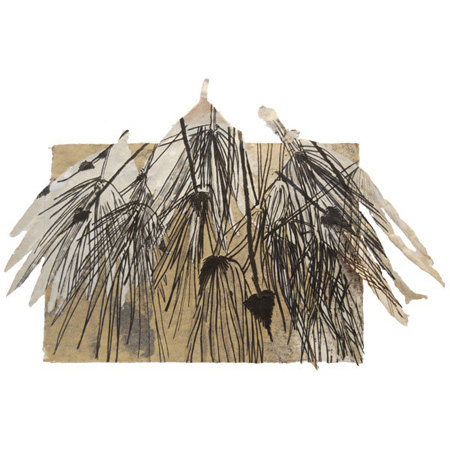

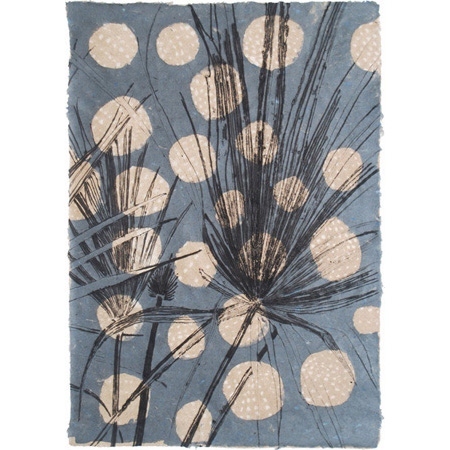
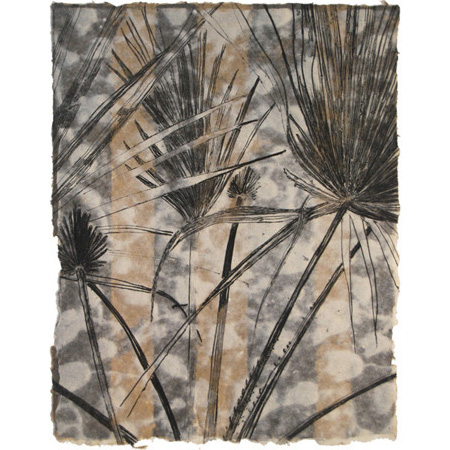


Humilis By Winsome Jobling
05 May - 27 May 2017
Sand palm, Livistona humilis, (merrepen, wumberra) is the most widespread Northern Territory palm. These resilient little palms provide food, medicine, fibre and colour.
The small slender palm grows in colonies as understory plants in the dry eucalyptus forests around Darwin. There is strength in numbers for plants as they communicate and nurture each other through their roots and by sending airborne signals.
There is constant chatter in the bush!
Winsome Jobling 2017
‘Plant gossip is not only spread on the breeze; the rhizosphere crackles with chatter too.’ Dan Cossins ‘Plant talk’ 2014

Where worlds come together
The art room gives us time to put down all the knowing we have in our hearts, this is where worlds can come together. It is good to be able to let the thinking come out so other people can share in the things we know. Making these etchings can make us think of […]
Read More >

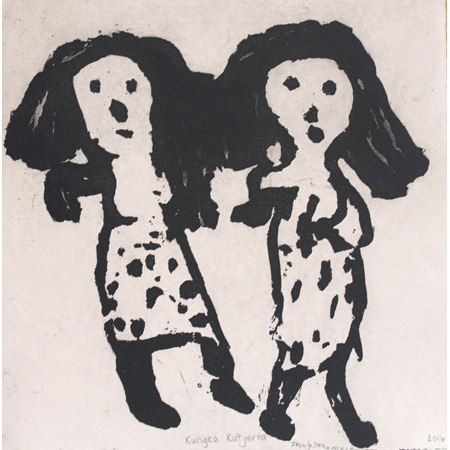
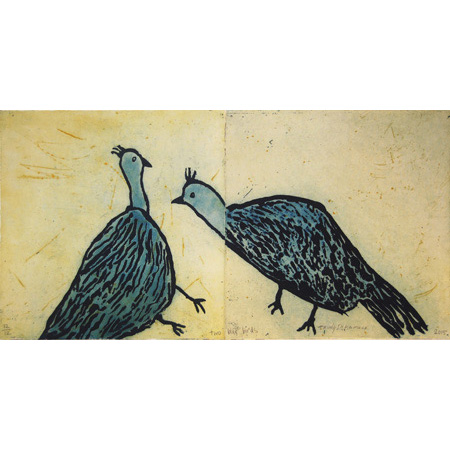


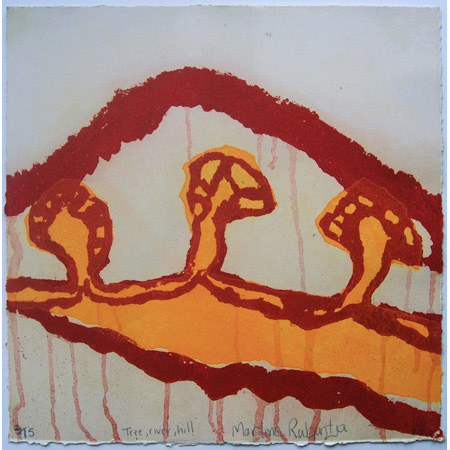

Where worlds come together
07 April - 29 April 2017
The art room gives us time to put down all the knowing we have in our hearts, this is where worlds can come together. It is good to be able to let the thinking come out so other people can share in the things we know. Making these etchings can make us think of different ways to tell our story. We are lucky to make art together. It makes you laugh, cry, talk, be quiet. It doesn’t take away the suffering- but it helps to know you can turn it into something else.
© Yarrenyty Arltere Artists, 2017

‘Dear Gilbert,…. ‘ (Song for the Ichthyologist) by Jacqueline Gribbin
Darwin Printmaker Jacqueline Gribbin has revived a collection of old and forgotten relief blocks created from scientific drawings by Gilbert Percy Whitley (Ichthyologist and Curator of Fishes, Australian Museum, 1922-1964). The blocks served as a means to print illustrations for Whitley’s many published papers, journals and books. Through a series of prints, which […]
Read More >


![Glaucostegus typus (Anonymous [Bennett], 1830) Giant shovelnose ray](https://www.nomadart.com.au/wp/wp-content/uploads/2017/02/Jacqueline-4-LR-1.jpg)


‘Dear Gilbert,…. ‘ (Song for the Ichthyologist) by Jacqueline Gribbin
02 March - 01 April 2017
Darwin Printmaker Jacqueline Gribbin has revived a collection of old and forgotten relief blocks created from scientific drawings by Gilbert Percy Whitley (Ichthyologist and Curator of Fishes, Australian Museum, 1922-1964). The blocks served as a means to print illustrations for Whitley’s many published papers, journals and books.
Through a series of prints, which incorporate the blocks, Gribbin has connected with Whitley’s cheeky humour, passion for all things fishy and his prodigious scientific output. The prints are a melding of Gribbin’s created marine environments with Whitley’s scientific work.
Relief printing blocks courtesy of the Australian Museum.

Saturation: Watercolours by Anne McMaster
These fluid watercolour paintings by Anne McMaster respond to the tactile and visual experience of living in tropical Australia. Colours bleed and blend in overlaying patterns representing the cycle of evaporation, condensation and precipitation during the monsoonal wet season. How do you communicate the experience and aesthetics of living in a humid climate? These […]
Read More >
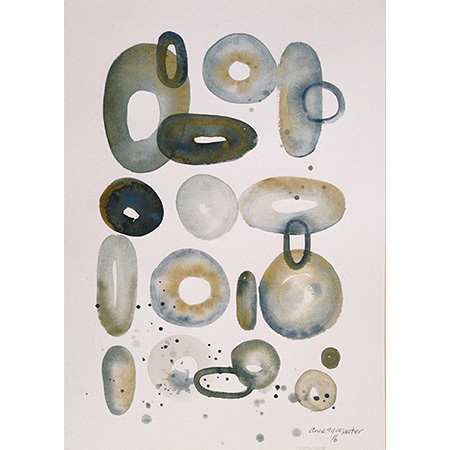


Saturation: Watercolours by Anne McMaster
02 March - 01 April 2017These fluid watercolour paintings by Anne McMaster respond to the tactile and visual experience of living in tropical Australia. Colours bleed and blend in overlaying patterns representing the cycle of evaporation, condensation and precipitation during the monsoonal wet season.
How do you communicate the experience and aesthetics of living in a humid climate?
These recent watercolours suggest my tactile and visual experience of living in tropical Australia. Watercolour materials and painting techniques allow puddles of colour to bleed and blend into overlaying circular patterns of saturated pigment on paper. As warm moisture is suspended and hangs in the air of the Tiwi Islands, my place of residence for the last 6 years, I imagine that I can float and drift in between large ephemeral loopy patterns of aquatic colours as the heat of the day evaporates a previous down pour of rain. The organic patterns give an added notion of the cyclical process of evaporation, condensation and precipitation prevalent to weather conditions of a Wet Season. The work may also been seen as an interpretation of the geography of a tropical island and its aquatic coastal parameters.
Anne McMaster, 2017

Ochre
Featuring paintings by Alfonso Puautjimi, Cecily Djandjomerr, Ruth Nalmakarra and artists from Turkey Creek in the Kimberley, this exhibition brings together artworks in ochre from four distinct regions of the Top End. Ochre has been collected and used as a natural medium for artistic expression for thousands of years. Traditionally used for creating […]
Read More >


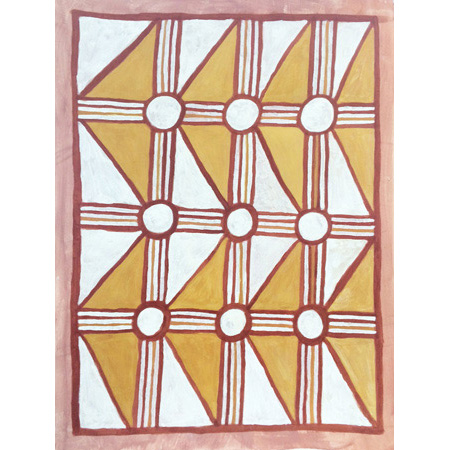
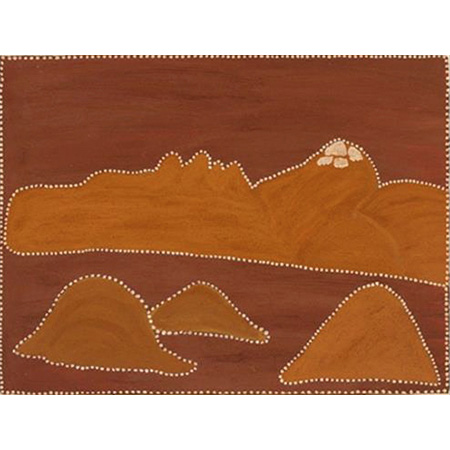


Ochre
03 February - 25 February 2017
Featuring paintings by Alfonso Puautjimi, Cecily Djandjomerr, Ruth Nalmakarra and artists from Turkey Creek in the Kimberley, this exhibition brings together artworks in ochre from four distinct regions of the Top End.
Ochre has been collected and used as a natural medium for artistic expression for thousands of years. Traditionally used for creating rock art, in ceremonial rituals and during mortuary rites, white, red and yellow ochre have been harvested from sacred sites around Australia for the last 60,000 years. Recent use of contemporary ochre colours such as pink, purple and olive (created by mixing traditional ochres with white clay and charcoal) have expanded the artists’ creative palette.
See works by Alfonso Puautjimi

In the Frame
From the stockroom, a selection of framed prints are reduced for the months of December and January, including discounted unframed prints from Pormpuraaw Arts, Warlukurlangu Artists and Northern Editions print making studio. Featured artists include Jean Baptiste Apuatimi (dec), Bardayal Nadjamerrek AO (dec), Judy Watson, Robyn Djunginy and others. Contact the Gallery for more information 08 8981 6382.
Read More >


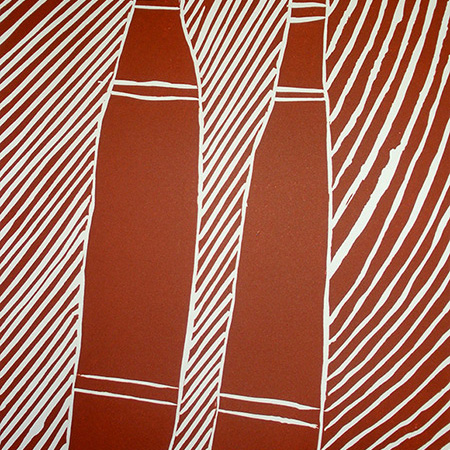

In the Frame
07 December - 28 January 2017From the stockroom, a selection of framed prints are reduced for the months of December and January, including discounted unframed prints from Pormpuraaw Arts, Warlukurlangu Artists and Northern Editions print making studio. Featured artists include Jean Baptiste Apuatimi (dec), Bardayal Nadjamerrek AO (dec), Judy Watson, Robyn Djunginy and others.
Contact the Gallery for more information 08 8981 6382.

New Collections
Nomad Art Gallery has an eclectic range of new artworks from across the Top End including small and large carvings from the Tiwi Islands, camp dog sculptures from Yuendumu, scarves and jewelry from Groote Eylandt and recent fabrics from Maningrida. For more information contact: gallery@nomadart.com.au
Read More >

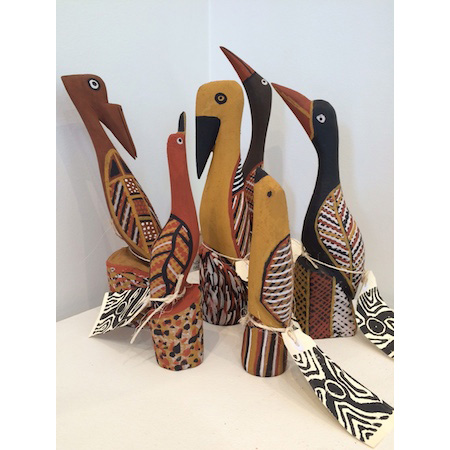

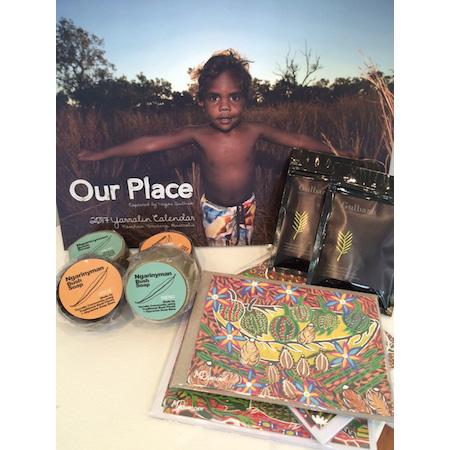

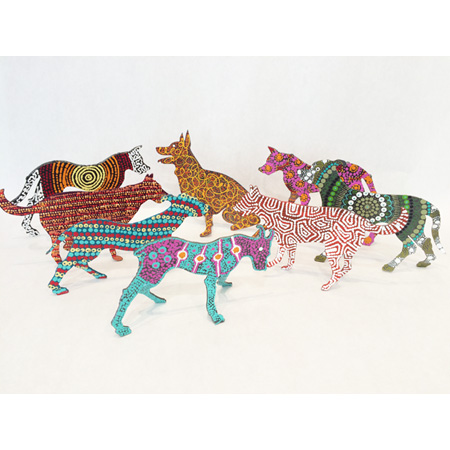
New Collections
-Nomad Art Gallery has an eclectic range of new artworks from across the Top End including small and large carvings from the Tiwi Islands, camp dog sculptures from Yuendumu, scarves and jewelry from Groote Eylandt and recent fabrics from Maningrida.
For more information contact: gallery@nomadart.com.au

Fabrics and Fibre by Bobbie Ruben and Peta Smith
Windows in the Wetland is a collection of recent fabrics by Bobbie Ruben depicting the wetland landscape of tropical Australia viewed through iconic Darwin louvre windows. The fabrics are digitally collaged photographs printed on 100% linen and compliment a beautiful new selection of woven woollen baskets by Darwin artist Peta Smith. For more information contact: gallery@nomadart.com.au
Read More >


Fabrics and Fibre by Bobbie Ruben and Peta Smith
07 October - 30 October 2016Windows in the Wetland is a collection of recent fabrics by Bobbie Ruben depicting the wetland landscape of tropical Australia viewed through iconic Darwin louvre windows. The fabrics are digitally collaged photographs printed on 100% linen and compliment a beautiful new selection of woven woollen baskets by Darwin artist Peta Smith.
For more information contact: gallery@nomadart.com.au

Gapan 2016: New prints from Yirrkala Print Space
Buku Larrnggay Mulka at Yirrkala community in Arnhem Land has a long and proud history as one of Australia’s premier Indigenous art centres and printmaking studios. These major artists have established a national reputation for their work, having won many of Australia’s Indigenous art prizes. Artists in this exhibition include: Djambawa Marawili AM, Nonggirrnga Marawili, Nyapanyapa Yunupingu, Mulkun […]
Read More >
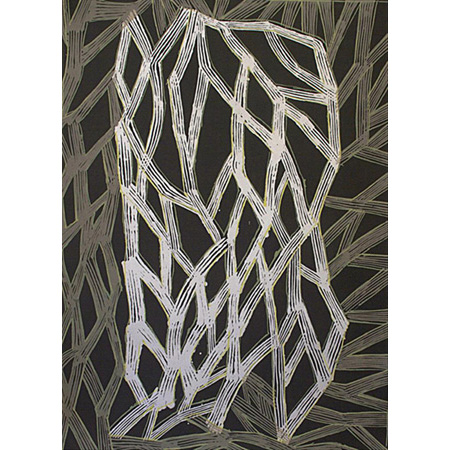
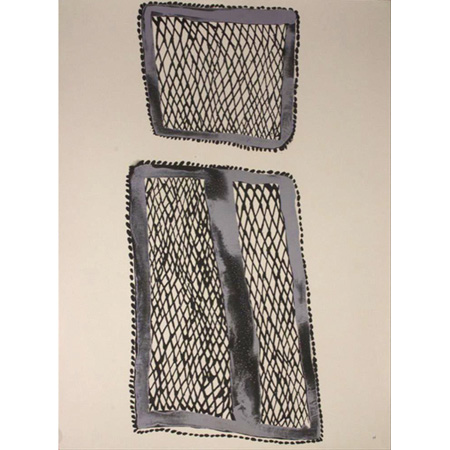


Gapan 2016: New prints from Yirrkala Print Space
03 September - 01 October 2016Buku Larrnggay Mulka at Yirrkala community in Arnhem Land has a long and proud history as one of Australia’s premier Indigenous art centres and printmaking studios.
These major artists have established a national reputation for their work, having won many of Australia’s Indigenous art prizes.
Artists in this exhibition include: Djambawa Marawili AM, Nonggirrnga Marawili, Nyapanyapa Yunupingu, Mulkun Wirrpanda, Garawan Wanambi, Marrnyula Mununggurr, Malaluba Gumana, Banduk Marika, Ishmael Marika and Dundiwuy #2 Mununggurr.
The 2016 Gapan print selection includes lithographs, screenprints, linocuts and etchings produced in collaboration with Sean Smith, The Ownership Project, Adrian Kellett and Virginia University as part of Artist in Residency Program at Kluge-Ruhe Museum of Aboriginal Art, Charlottesville, USA.

The Midawarr – Harvest Series
The Midawarr – Harvest Series suite of woodblocks is the outcome of collaboration between Mulkun Wirrpanda and John Wolseley. Wirrpanda is a senior female artist for the Dhudi-Djapu clan from Dhuruputjpi. Wirrpanda is a leader of her clan and has a lifetime’s knowledge of her country, which is distilled into her art. Wolseley […]
Read More >


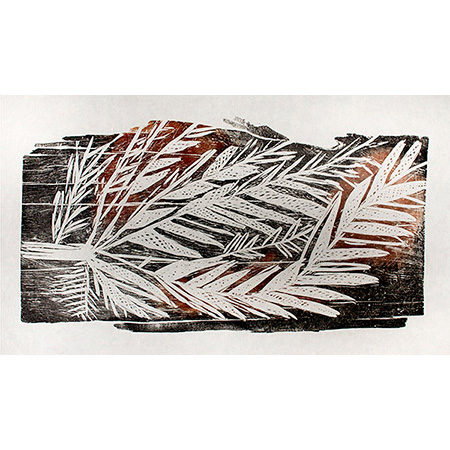


The Midawarr – Harvest Series
05 August - 24 August 2016
The Midawarr – Harvest Series suite of woodblocks is the outcome of collaboration between Mulkun Wirrpanda and John Wolseley. Wirrpanda is a senior female artist for the Dhudi-Djapu clan from Dhuruputjpi. Wirrpanda is a leader of her clan and has a lifetime’s knowledge of her country, which is distilled into her art.
Wolseley has lived and worked all over the continent and is known for his large scale works on paper which relate the minutiae of plant, bird and insect to the greater movements of the earth’s geological and ecological systems.
Wolseley and Wirrpanda first met in 2009 in Baniyala, east Arnhem Land. Both artists were part of a group of Yolngu and visiting artists working on the cross-cultural project and touring exhibition Djalkiri: we are standing on the their names – Blue Mud Bay organised by Nomad Art Productions in Darwin.
Since 2009 they have spent a week or two together each year in the Miwatj region in Midawarr, the harvest season. The two have hunted rare plants, painted them; and eaten the unique tropical yams and tubers. Wirrpanda has now compiled comprehensive series of barks and larrakitj about the poorly recognised food plants of northeast Arnhem Land. Her mission is to renew the knowledge of these plants for future generations. Since 2009 John Wolseley has also been making woodcuts and large works on paper about the same plants and landscape.

Kidin – Time of Plenty
Kidin – Time of Plenty combines both art and cultural knowledge with the rich natural heritage of the Ngan’gikurrungurr and Ngen’giwumirri (Ngan’gi) people of the Daly River region. The collection of images is a study of the relationships between plants and animals and Ngan’gi people who are intimately connected with their country. In March 2016 […]
Read More >

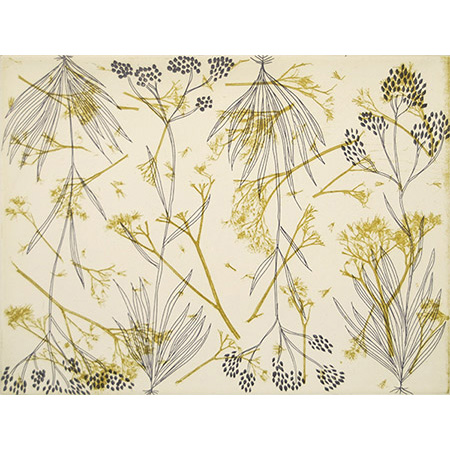
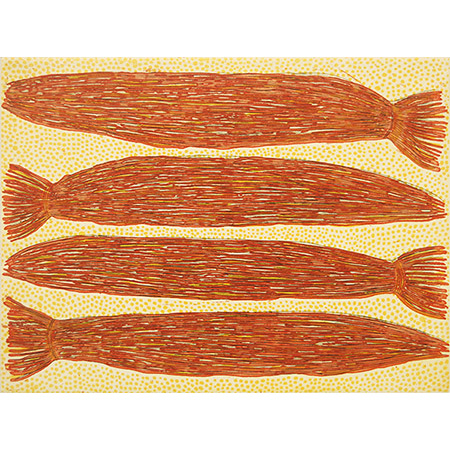


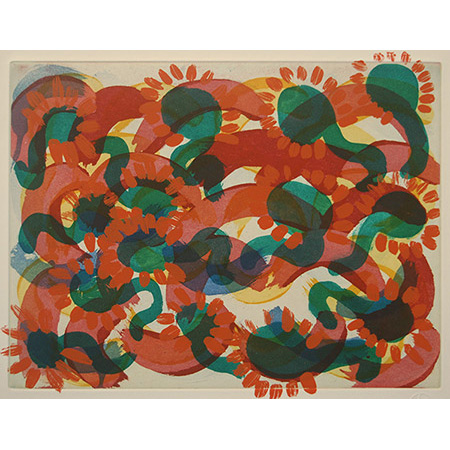

Kidin – Time of Plenty
04 August - 27 August 2016Kidin – Time of Plenty combines both art and cultural knowledge with the rich natural heritage of the Ngan’gikurrungurr and Ngen’giwumirri (Ngan’gi) people of the Daly River region. The collection of images is a study of the relationships between plants and animals and Ngan’gi people who are intimately connected with their country.
In March 2016 Merrepen artists participated in an innovative etching project with master print maker Basil Hall. The outcome is a collection of 18 beautiful images celebrating the biological diversity and cultural associations of the Daly River Region by: Aaron McTaggart, Kieren Karritpul, Patricia Marrfurra McTaggart AM, Christina Yambeing, Margaret Gilbert, Marita Sambono, Louise Pandella, Gracie Kumbi, Troy Madigan and Philip Wilson
The title Kidin (meaning the abundance of life after the wet season) is symbolic of life and nature of the tropical north of Australia. The collection of colour plate etchings creates a highly innovative and unique portrayal of both the environment and the traditional knowledge of the Ngan’gi people with an emphasis on traditional language and association with plants and animals.

The Kunwinjku Counting Book and other works of art from Gunbalanya
This exhibition focuses on paper and bark paintings by acclaimed Western Arnhem Land artists Gabriel Maralngurra, Roderick Maralngurra and Graham Badari and includes a set of 12 paintings that feature in a children’s book entitled The Kunwinjku Counting Book illustrated by Gabriel Maralngurra. The Kunwinjku Counting Book is published by Injalak Arts and launched by Nomad Art in July 2016. This book serves as a […]
Read More >


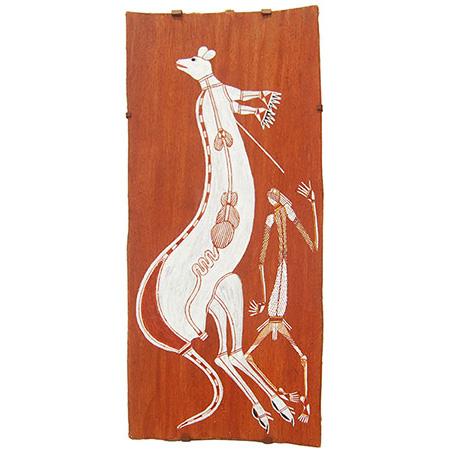
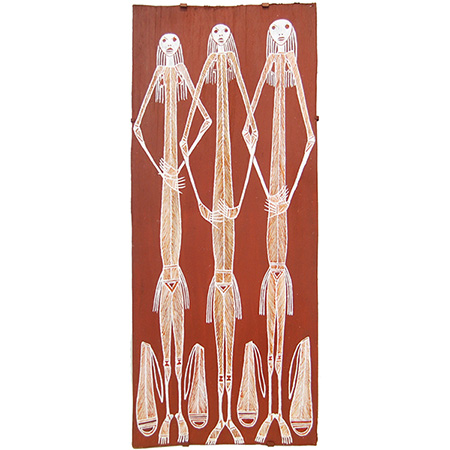


The Kunwinjku Counting Book and other works of art from Gunbalanya
01 July - 23 July 2016
This exhibition focuses on paper and bark paintings by acclaimed Western Arnhem Land artists Gabriel Maralngurra, Roderick Maralngurra and Graham Badari and includes a set of 12 paintings that feature in a children’s book entitled The Kunwinjku Counting Book illustrated by Gabriel Maralngurra. The Kunwinjku Counting Book is published by Injalak Arts and launched by Nomad Art in July 2016.
This book serves as a small window into the complex ecology of West Arnhem Land and the wholistic nature of Kunwinjku Aboriginal culture. The Kunwinjku Counting Book Suite provides a cross cultural dialogue, where traditions intersect in a spirit of respect and sharing. It involves the passing of knowledge from one generation to the next and from one cultural tradition to another, culminating in the preservation of a shared national heritage.
The works express the resilience and connections between people, stories, place, plants and animals that live and thrive in the Stone Country of Western Arnhem Land.
I really wanted to do this book to make children happy … to share my culture in Kunwinjku and English and help children learn how to count.
Gabriel Maralngurra, 2016.

Gulf Country: New screen prints from Waralungku Arts
Waralungku Arts represents the Yanyuwa, Garrwa, Mara and Gudanji peoples from the Borroloola Region in the Gulf of Carpentaria, Northern Territory. The Art Centre is set in an arresting landscape of rocky hills, cattle-grazed scrub, billabongs, and wide horizons. The screen prints depict both the life and the history of the community, as […]
Read More >


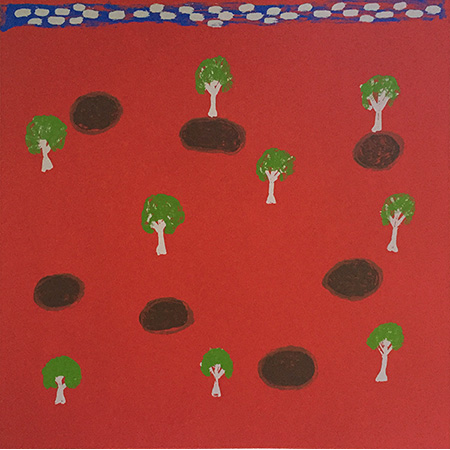
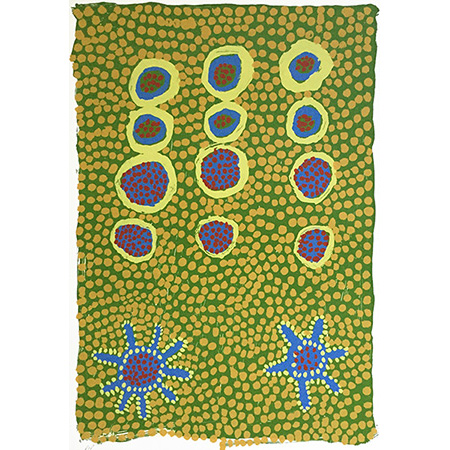
Gulf Country: New screen prints from Waralungku Arts
04 June - 25 June 2016
Waralungku Arts represents the Yanyuwa, Garrwa, Mara and Gudanji peoples from the Borroloola Region in the Gulf of Carpentaria, Northern Territory. The Art Centre is set in an arresting landscape of rocky hills, cattle-grazed scrub, billabongs, and wide horizons.
The screen prints depict both the life and the history of the community, as well as the distinctive beauty of the surrounding landscape with bright colours and a sense of past histories and continuing connections.
Gulf Country is the result of a print workshop facilitated by Cathy Cummins in 2015 and printed at Basil Hall Editions 2016.

Badem gooyarrg yirranyjende, goodoo yirranyjende – We collect ochre and grind it
This exhibition brings together new explorations of ochre to works on paper by emerging, mid career and establish Gija artists. Warmun art is a contemporary expression of land and culture central to Gija identity and has a national and international reputation. Artists draw on Ngarranggarni (Dreaming) stories and contemporary life.
Read More >


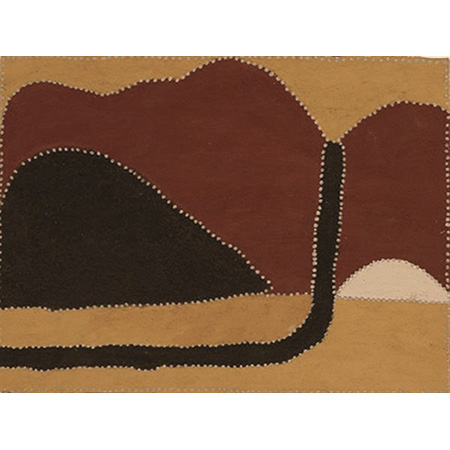
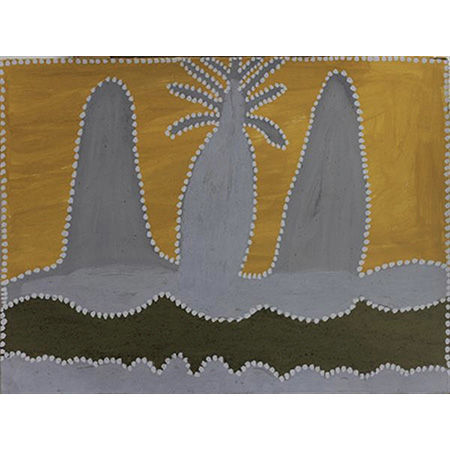

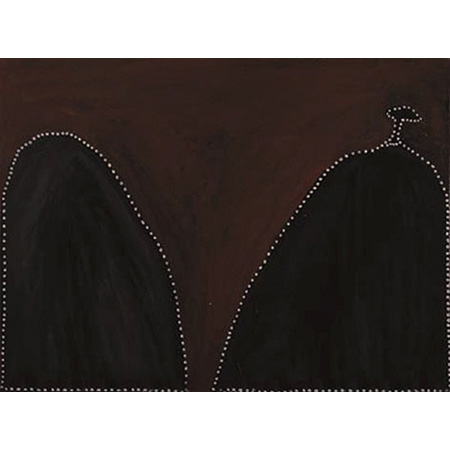
Badem gooyarrg yirranyjende, goodoo yirranyjende – We collect ochre and grind it
04 June - 25 June 2016
This exhibition brings together new explorations of ochre to works on paper by emerging, mid career and establish Gija artists. Warmun art is a contemporary expression of land and culture central to Gija identity and has a national and international reputation. Artists draw on Ngarranggarni (Dreaming) stories and contemporary life.

The Wealth of the Land
Chips Mackinolty celebrates the natural and cultural wealth of Sicilian horticulture through a new series of digital prints. Based in Vucciria, near the oldest market in the historic centre of Palermo, Mackinolty set about depicting the new seasons fruit and vegetables as they appeared in the market. The images represent centuries of agricultural practice and cuisine which are fundamental to the […]
Read More >
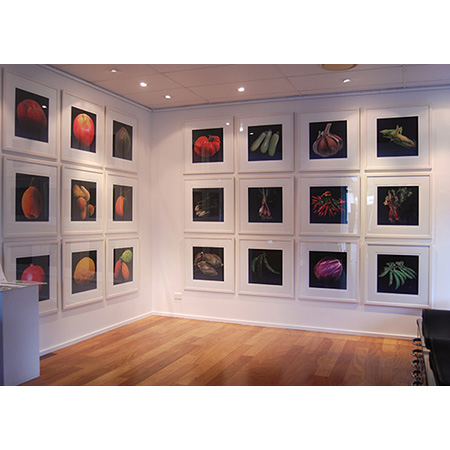


The Wealth of the Land
05 May - 28 May 2016Chips Mackinolty celebrates the natural and cultural wealth of Sicilian horticulture through a new series of digital prints. Based in Vucciria, near the oldest market in the historic centre of Palermo, Mackinolty set about depicting the new seasons fruit and vegetables as they appeared in the market. The images represent centuries of agricultural practice and cuisine which are fundamental to the cultural identity of Sicily and beyond.
The Wealth of the Land is an antidote to the sterile mass economy of the supermarket; it pays homage to the men and women who make a living from the soil, a reminder of things past and pointer to a good-natured and sustainable future. Above all they are images of luscious beauty and charm, reminding us of real natural wealth, the good food that emanates from the land.
As we face the potential disintegration of massive carbon intensive food distribution networks, and the ravages of climate change, it is likely that all of us will have to think about locally grown fresh foods, and the ways they get to the kitchen or restaurant table. Chips Mackinolty, 2016.
Hand drawn digital prints, editions of 19, available in the following sizes: 30 x 30 cm – $180, 45 x 45 cm – $250, 90 x 90 cm – $880 (unframed).
Download the exhibition catalogue (copies available $40).

The dark reactions
Michelle Culpitt is a photo media artist whose experimental methods include anthotypes, a pre-photographic process using photosensitive material from plants to create an image. Anthotypes were invented by Sir William Herschel in 1842. The process involves coating a sheet of paper with an emulsion that has been extracted from light-sensitive plant material. An object […]
Read More >


The dark reactions
08 April - 30 April 2016Michelle Culpitt is a photo media artist whose experimental methods include anthotypes, a pre-photographic process using photosensitive material from plants to create an image.
Anthotypes were invented by Sir William Herschel in 1842. The process involves coating a sheet of paper with an emulsion that has been extracted from light-sensitive plant material. An object such as a plant is then placed on the paper and exposed to sun-light until the background is bleached out. Color remains in the shaded or protected areas creating subtle, shadowy images.
Michelle Culpitt’s imagery explores organic elements of place, history and the environment. The dark reactions refer to a part of the photosynthesis process in plants that occurs in the second phase of photosynthesis that does not require the presence of light.
The works include native plants from Darwin, weeds from Castlemaine in Victoria and native plants in Carna and Anaghmakerrig in Ireland.
Read the opening speech by Dr Greg Leach

Ground: works in paper by Winsome Jobling
Winsome Jobling is one of Australia’s pre-eminent paper artists. Her work transcends notions of paper making into highly original works of contemporary art. Steeped in knowledge, intellect and beauty these works draw us deep within the natural environment, unveiling a hidden world and reminding us of the mysteries and wonder of nature. In this series of works in […]
Read More >

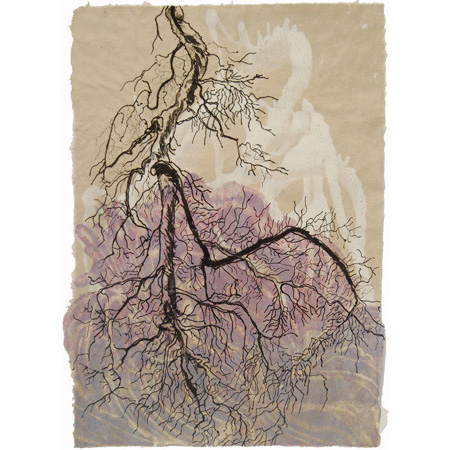
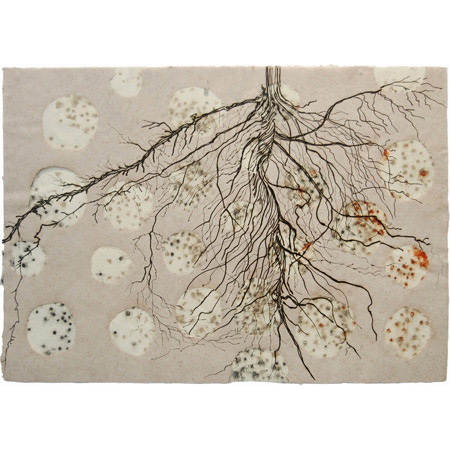
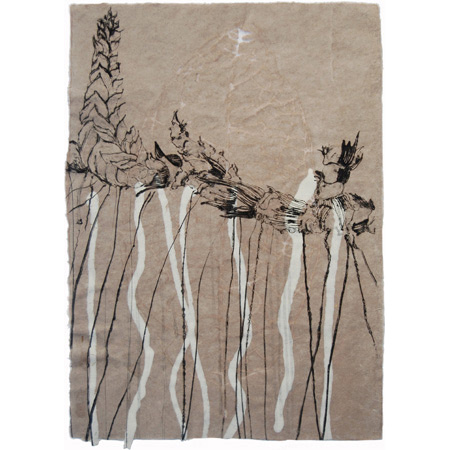


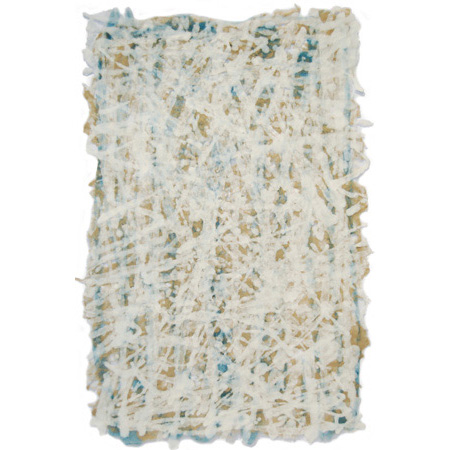
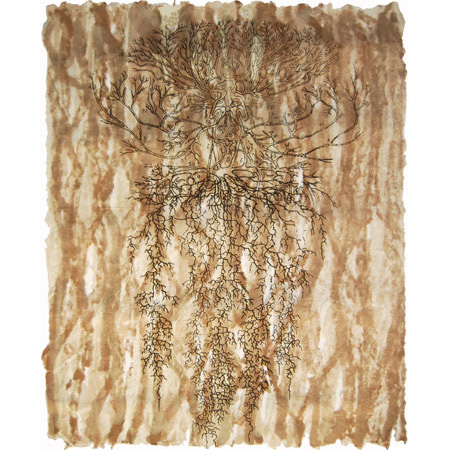
Ground: works in paper by Winsome Jobling
04 March - 02 April 2016Ground: works in paper by Winsome Jobling
Winsome Jobling is one of Australia’s pre-eminent paper artists. Her work transcends notions of paper making into highly original works of contemporary art.
Steeped in knowledge, intellect and beauty these works draw us deep within the natural environment, unveiling a hidden world and reminding us of the mysteries and wonder of nature.
In this series of works in handmade paper Winsome Jobling explores Ground as the surface of the earth, the roots, the soil, the substrate for plant growth, and life on the planet.
We stand on it, we own it, we grow food in it and we treat it like dirt.
Winsome Jobling 2016

The Mirrored Image: Ten years of prints at Nomad Art
This exhibition commemorates the 10th anniversary of Nomad Art Gallery, over 100 exhibitions and the numerous projects Nomad Art has facilitated or hosted since 2005. The ethos of Nomad Art is to explore and highlight the cross-cultural and collaborative nature of printmaking through the culturally rich and natural diversity of the Top End of Australia. […]
Read More >
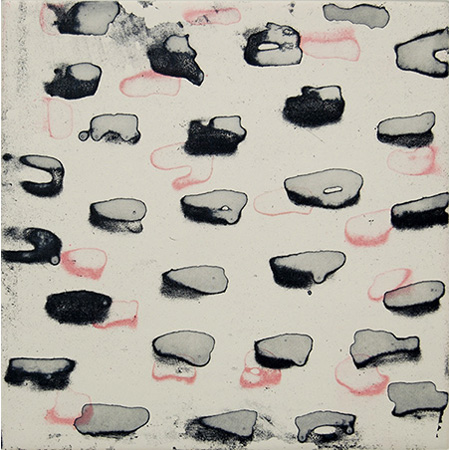

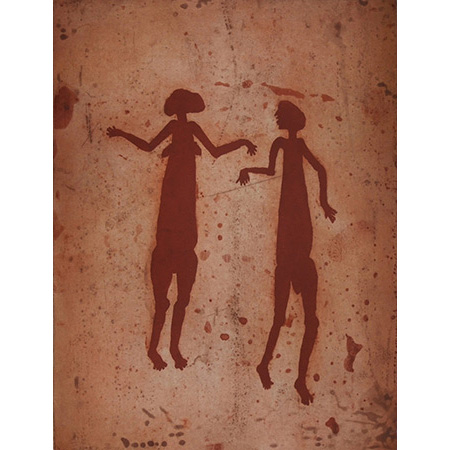


The Mirrored Image: Ten years of prints at Nomad Art
22 January - 27 February 2016This exhibition commemorates the 10th anniversary of Nomad Art Gallery, over 100 exhibitions and the numerous projects Nomad Art has facilitated or hosted since 2005. The ethos of Nomad Art is to explore and highlight the cross-cultural and collaborative nature of printmaking through the culturally rich and natural diversity of the Top End of Australia.
The prints selected for this exhibition are linked by subject matter, geography or aesthetic relationships which illustrate the diverse expression of Indigenous and non-Indigenous artists.
The prints have been produced by individual artists and printmakers working in the Northern Territory. Print studios represented include Yirrkala Print Studio, Basil Hall Editions, Northern Editions, Australian Print Workshop, AKS Studio and numerous independent artists’ studios.
Key Nomad Projects include Replant: a new generation of botanical art, 2006 and Djalkiri: we are standing on their names, Blue Mud Bay, 2010.

Curated by Eloise Baldwin and Clare Armitage.

Torres Strait Islander Prints from Badu Island
These beautiful linocuts reflect the artist’s love of the ocean, the strong cultural traditions and relationships they have with Badu Island through its creatures, the wind, rain, earth, sky, stars and the sun. ‘Reflecting our strong cultural traditions and our beautiful relationships with our world we carefully express our love and dedication to the ocean, to […]
Read More >

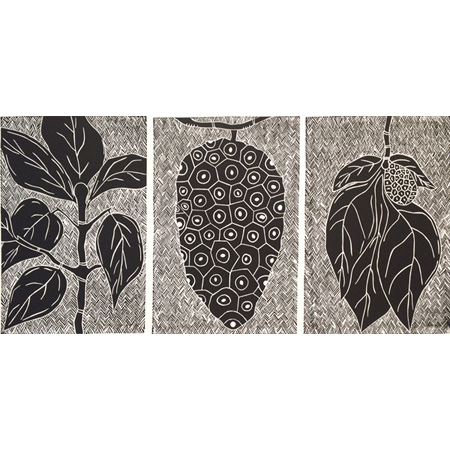

Torres Strait Islander Prints from Badu Island
04 December - 24 December 2015These beautiful linocuts reflect the artist’s love of the ocean, the strong cultural traditions and relationships they have with Badu Island through its creatures, the wind, rain, earth, sky, stars and the sun.
‘Reflecting our strong cultural traditions and our beautiful relationships with our world we carefully express our love and dedication to the ocean, to our island and all of its creatures and animals. We show our relationships with the wind, rain, earth, the skies, stars and the sun.
Our life cycle, is the same as the cycle of the world around us.
To see our art is to be delighted from another world, a world alive with myths and stories and ancient tradition, and one that is strong and with a clear and powerful voice.’
© Badu Art Centre

Secret World: Carnivorous plants of the Howard sand sheets
‘Secret World: Carnivorous plants of the Howard sand sheets’ is an art exhibition focusing on the unique Bladderworts that thrive on the Howard Sand Plains near Darwin. The Howard sand sheets host a number of unique and threatened plant and animal species including rare carnivorous plants (Utricularia species) and the Howard River Toadlet. […]
Read More >


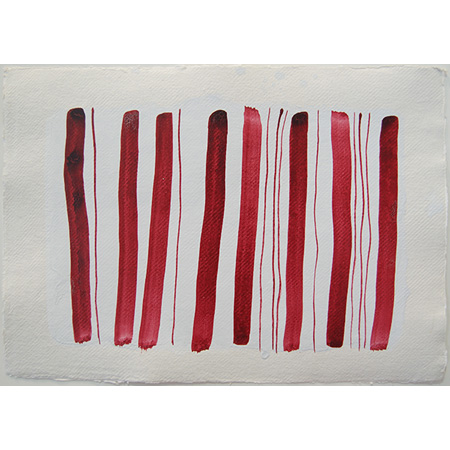
Secret World: Carnivorous plants of the Howard sand sheets
05 November - 28 November 2015
‘Secret World: Carnivorous plants of the Howard sand sheets’ is an art exhibition focusing on the unique Bladderworts that thrive on the Howard Sand Plains near Darwin.
The Howard sand sheets host a number of unique and threatened plant and animal species including rare carnivorous plants (Utricularia species) and the Howard River Toadlet.
In 2015 a group of artists and scientists gathered during peak flowering, near the end of the wet season, to investigate the complex species that flourish through their own ingenuity, yet are vulnerable to outside forces.
Darwin based artists Winsome Jobling, Sarah Pirrie, Jasmine Jan, Karen Mills, and Jacqueline Gribbin joined botanical specialists Dr Greg Leach and Emma Lupin from Greening Australia NT who explained the unique nature of the site, identified plants and lead field trips to key environmental hot spots.
The result is a deeply researched and highly creative artistic response to a rare and delicate environment on Darwin’s doorstep.
View the collaborative art work
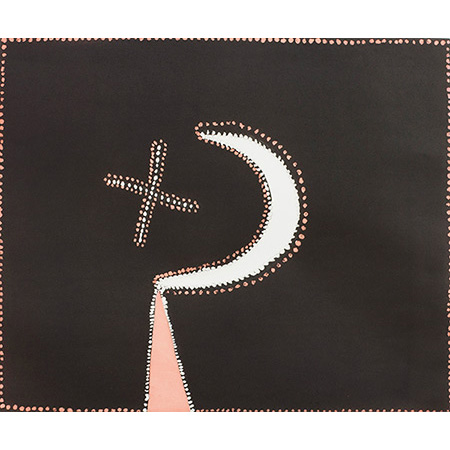
LIVELY: New Prints from Warmun Arts
Warmun Art Centre and Nomad Art present LIVELY—a new series of etchings by Gija artists produced with Basil Hall Editions. LIVELY is a term in Kimberley Kriol that describes an energetic way of doing something. It’s a boisterous and confident way of getting into it, getting something happening and getting going, with strong […]
Read More >
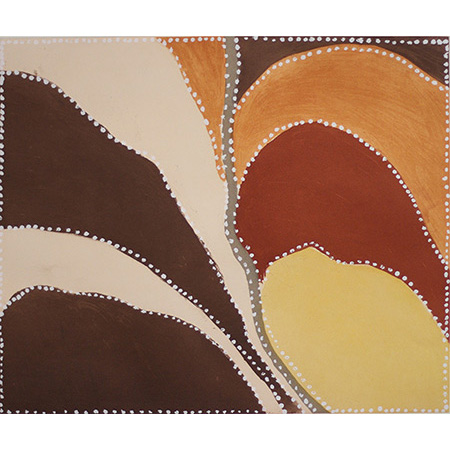

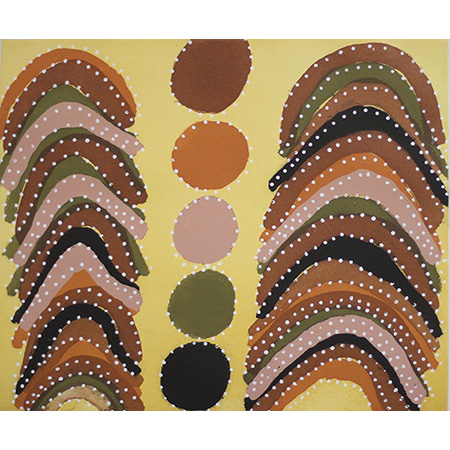

LIVELY: New Prints from Warmun Arts
02 October - 31 October 2015
Warmun Art Centre and Nomad Art present LIVELY—a new series of etchings by Gija artists produced with Basil Hall Editions.
LIVELY is a term in Kimberley Kriol that describes an energetic way of doing something. It’s a boisterous and confident way of getting into it, getting something happening and getting going, with strong connotations of happiness.
Lena Nyadbi, Mabel Juli, Peggy Patrick, Shirley Purdie and Gordon Barney and Sade Carrington are all artists whose personal characters and artistic practices are always lively. They are lively for art, language and story. They’re lively for flowing rivers, fishing and bush tucker. They’re lively for children, family and camping out under the winter stars. And they’re lively for song, dance and Country. This exuberance for life beams through in their most recent prints.

The Stone Dialogues
The Stone Dialogues are a series of etchings exploring the relationship we have with matter from deep time. Stones bear witness, of their formation, of events, of humans and non-humans tracking across the surface. What can they reveal to us as we caress them in their manifold shapes and sizes? In dialogue with this […]
Read More >


The Stone Dialogues
02 October - 31 October 2015
The Stone Dialogues are a series of etchings exploring the relationship we have with matter from deep time. Stones bear witness, of their formation, of events, of humans and non-humans tracking across the surface. What can they reveal to us as we caress them in their manifold shapes and sizes? In dialogue with this vibrant material I learn about presence, weight and gravity, edges and shadows, time and porousness, chance, and surprisingly, love. What is it about this material that pulls me to it?
From Mirima National Park in WA to Kunanyi/Mt Wellington in Hobart I explore the rock formations that lie at the edges of towns. The rocks were once a layer, a mark of an event in time, now broken and reformed. They reveal a history of form and formlessness, a continuous becoming and changing. They have been sea-beds, sand dunes, rock shelters and quarries, revealing multiple histories and possibilities. Stones fold and crack, revealing the pressures that push up from below whilst water ceaselessly erodes, finding pathways in irregularities. Touching a stone, be it a boulder or a pebble, brings into the present moment deep time, slowing us down and revealing our momentary passage on the track.
Jan Hogan 2015

Tropical Louvres – Anne McMaster
The images portrayed in this exhibition are inspired by the natural habitats of the Tiwi Islands including coastal mangroves and coral. Other elements that influence Anne McMaster’s art are the changing nature of the seasons, the beautiful Island light and the contemporary Island culture of AFL football. This body of work is the […]
Read More >


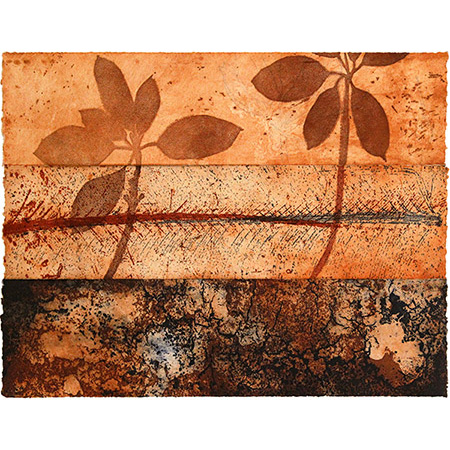
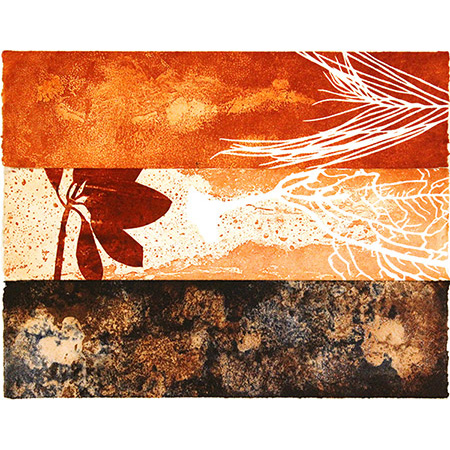
Tropical Louvres – Anne McMaster
04 September - 26 September 2015
The images portrayed in this exhibition are inspired by the natural habitats of the Tiwi Islands including coastal mangroves and coral. Other elements that influence Anne McMaster’s art are the changing nature of the seasons, the beautiful Island light and the contemporary Island culture of AFL football.
This body of work is the result of a Masters of Fine Art research through Monash University, carried out while living on Melville Island. McMasters exploration of the printmaking methodology has culminated with etched and stencilled images symbolising this environment as seen through the louvred windows of her studio.

Louvres and Floorboards – Bobbie Ruben
Digital designs on linen from Speargrass Textiles Bobbie Ruben captures the essence of Darwin’s elevated, tropical homes where intelligent design is paired with the beauty of horizontal, vertical and diagonal line. Delivering simple functionality with the elegance of frosted 1960’s louvres ensure these homes are a joy to live in. Their beauty and meaning are engrained […]
Read More >
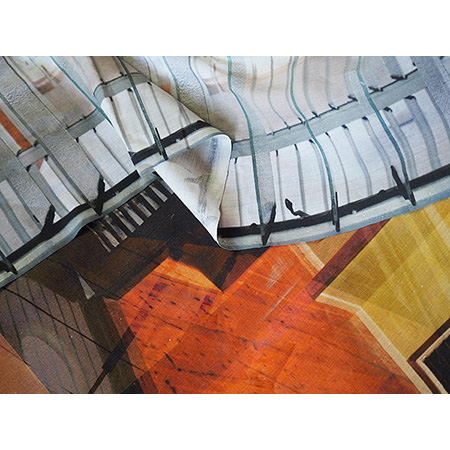


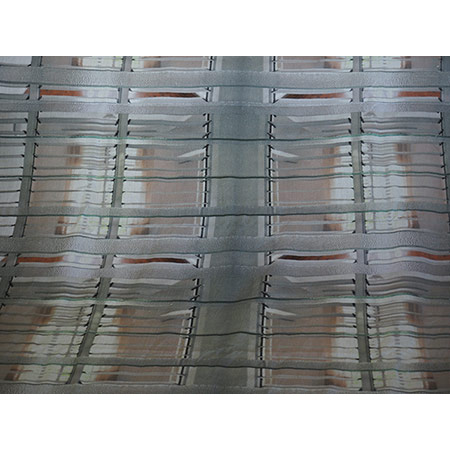

Louvres and Floorboards – Bobbie Ruben
04 September - 26 September 2015
Digital designs on linen from Speargrass Textiles
Bobbie Ruben captures the essence of Darwin’s elevated, tropical homes where intelligent design is paired with the beauty of horizontal, vertical and diagonal line. Delivering simple functionality with the elegance of frosted 1960’s louvres ensure these homes are a joy to live in. Their beauty and meaning are engrained in her textiles.
Bobbie Ruben is a practicing printmaker, lecturer and textile designer who consults, teaches and collaborates with Aboriginal and Torres Strait Islander artists and students in the development of textile designs, and limited edition prints on paper. She has a strong interest in the development and success of many remote textile operations in the Northern Territory and Far North Queensland and has worked with artists on high profile textile commissions, exhibitions and performances, which have achieved national and international recognition. Speargrass Textiles, formed in 2001, incorporates her distinctive textile designs.
For more information contact: gallery@nomadart.com.au

Children’s Ground: New prints by artists of Kakadu
From Jabiru in the heart of Kakadu National Park, this exhibition of lino-cuts, collographs, dry points and etchings features artists with cultural connections to the region spanning tens of thousands of years. The art work is based on rock art traditions and cultural and natural imagery. Printmaking workshops have been facilitated in Kakadu by the Gundjeihmi Aboriginal […]
Read More >

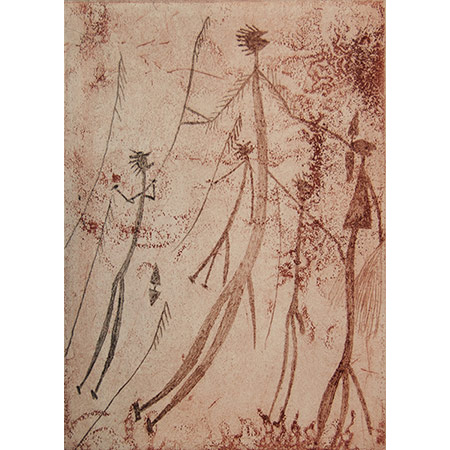
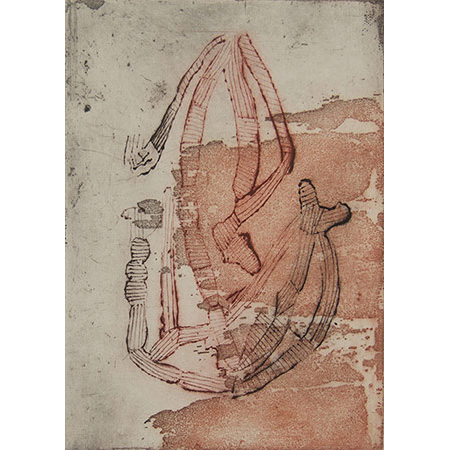


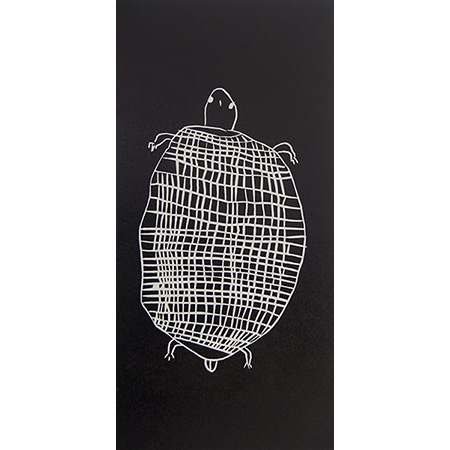
Children’s Ground: New prints by artists of Kakadu
04 September - 26 September 2015
From Jabiru in the heart of Kakadu National Park, this exhibition of lino-cuts, collographs, dry points and etchings features artists with cultural connections to the region spanning tens of thousands of years. The art work is based on rock art traditions and cultural and natural imagery.
Printmaking workshops have been facilitated in Kakadu by the Gundjeihmi Aboriginal Corporation since 2011. The aim of these workshops is for the skills learnt to stay within the community and enrich artistic practice. The print making is now being facilitated through Children’s Ground and is inclusive of artists from Djirrbiyuk, Madjinbardi and Manabadduma in Kakadu. Children’s Ground is an organisation that responds to the cultural, social and economic needs of the communities.
For more information contact: gallery@nomadart.com.au

Revolution: New work celebrating 20 years of printmaking at Yirrkala Print Space
In May 1995 a small revolution happened in far eastern Arnhem Land. The Yolngu artists of Buku-Larrnggay Mulka rose up and ‘seized the means of production’. Remote Indigenous printmakers began working on their own press to create limited edition fine art works on paper. Thus they began the Yirrkala Print Space. And now, […]
Read More >


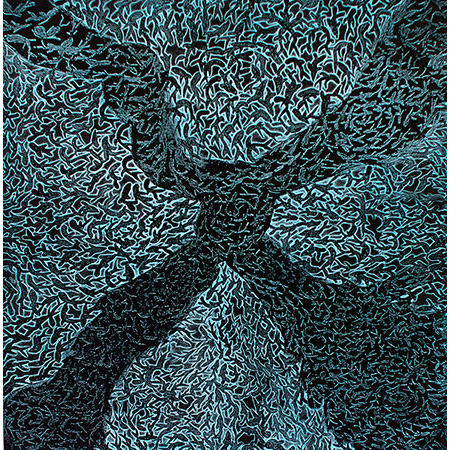


Revolution: New work celebrating 20 years of printmaking at Yirrkala Print Space
06 August - 29 August 2015
In May 1995 a small revolution happened in far eastern Arnhem Land. The Yolngu artists of Buku-Larrnggay Mulka rose up and ‘seized the means of production’. Remote Indigenous printmakers began working on their own press to create limited edition fine art works on paper. Thus they began the Yirrkala Print Space.
And now, twenty years later, the wheel of that etching press has turned full circle. Yirrkala Print Space is one of the country’s most highly respected independent print studios. Yolngu printmakers have editioned over 800 etchings, screenprints, woodblocks, linocuts and collagraphs created by 134 Yolngu artists. The space has never been idle over that twenty years and has at all times been staffed by Yolngu printmakers who have passed on their knowledge to new generations.
This exhibition of 20 new etchings honours the imagery and heritage of the artists. The works reflect the traditions and culture of their people yet is brimming with innovation and originality. Over 20 years the artists of Yirrkala Print Space have revolutionised the way art is made and the way knowledge is shared with the public. Their philosophy is highly democratic and the prints highly accessible, transforming art into new realms and creating a revolution in every sense.

Manme Mayh: Gardens of the Stone Country III
Manme Mayh: Gardens of the Stone Country III explores the links between Indigenous cultural heritage, environment and aesthetic traditions of artists from the Stone Country of western Arnhem Land through food and plants (manme) and animals (mayh). The artists in this exhibition represent a small and unique group of painters who are actively […]
Read More >


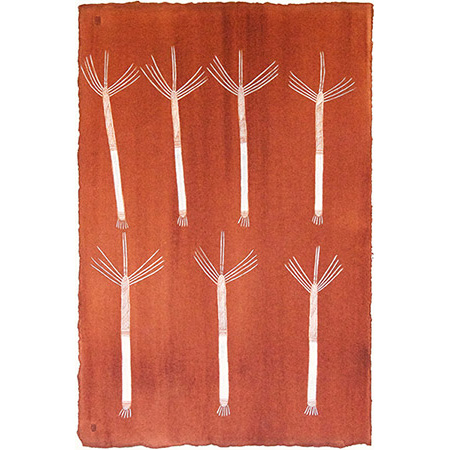
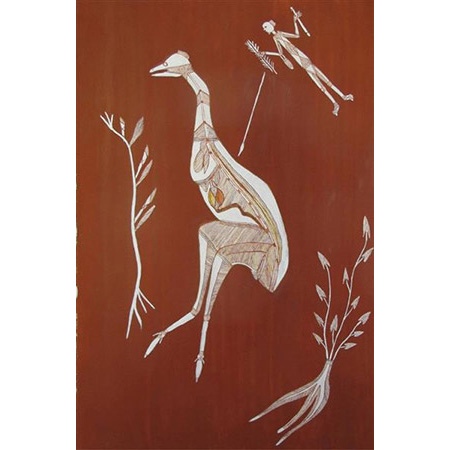

Manme Mayh: Gardens of the Stone Country III
03 July - 25 July 2015
Manme Mayh: Gardens of the Stone Country III explores the links between Indigenous cultural heritage, environment and aesthetic traditions of artists from the Stone Country of western Arnhem Land through food and plants (manme) and animals (mayh).
The artists in this exhibition represent a small and unique group of painters who are actively maintaining the distinctive practise associated with the traditions of rock art painting in western Arnhem Land and the knowledge it purveys. The artists are Allan Nadjamerrek, Lorraine Kabbindi White, Gavin Namarnyilk, Freddie Nadjawulu Nadjamerrek, Graham Badari and Don Namundja.
The Stone Country of western Arnhem Land also known as the plateau country adjoins Kakadu National Park. The rocky outcrops of the escarpment dominate the landscape while adjacent flood plains, permanent rivers and billabongs are abundant with life of countless species of animals and plants.
Manme Mayh: Gardens of the Stone Country III focuses on the native plants and animals integral to the culture and traditions of the Kunwinjku speaking people and the spirit figures associated with them. The exhibition highlights cultural associations the Kunwinjku people have with species that include the emu, fruit bats, the kangaroo, black wallaroo, Oenpelli python, water lilies, crocodiles, turtles, fishes, yams, and other plants that provide both food and tools.

The Secret Lives of Plants and Insects
In this exhibition John Wolseley explores complex life forces and leads the viewer into the umwelt or life world of plants and insects. The Secret Lives of Plants and Insects includes watercolours, etchings, wood blocks and nature prints that have been created over 20 years and thousands of kilometres. The exhibition features two series of […]
Read More >

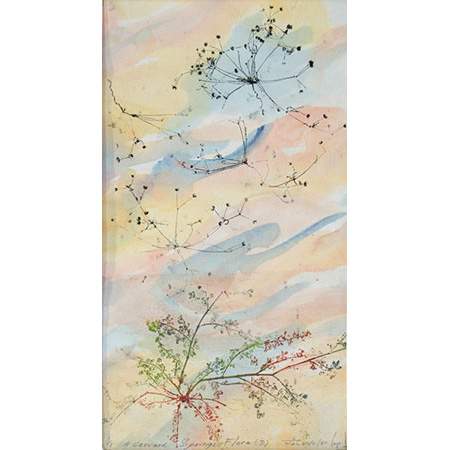


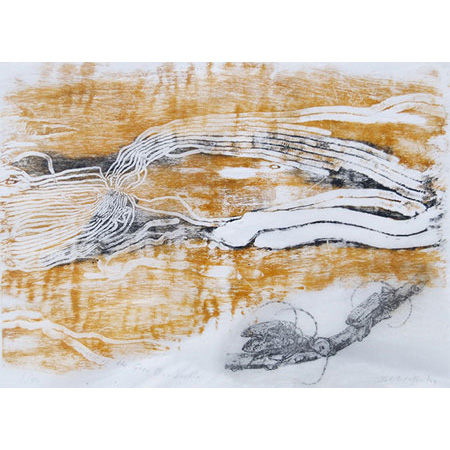


The Secret Lives of Plants and Insects
04 June - 27 June 2015In this exhibition John Wolseley explores complex life forces and leads the viewer into the umwelt or life world of plants and insects. The Secret Lives of Plants and Insects includes watercolours, etchings, wood blocks and nature prints that have been created over 20 years and thousands of kilometres.
The exhibition features two series of monoprints on mulberry and gampi paper in which Wolseley has taken prints of desert plants and the tracks of beetle larvae as they bore through the wood under the bark of trees. Wolseley uses an ancient Italian technique to print the complex tracks and journeys directly from the subjects, so revealing a whole life story. The works are influenced by Baltic German biologist Jakob von Uexkull’s theory that all life forms experience their umwelten or environments differently.
In the first series of monoprints we are led into the umwelt of the larvae of Longicorn beetles. The second series shows plants found in the desert dunes near Coward Springs in the southern reaches of the Simpson Desert. One of these, a Purslane (Portulaca oleracea) has seeds, which were an important food source for the Arrernte people. At first the plants are a bright green and then turn red, throw out clouds of tiny black seeds and finally wither into blackness.
The beetle and plant prints in this exhibition join with other images to take us on a journey through central and northern Australia and across to the Indonesian archipelago, as they celebrate the beauty and diversity of the secret world of plants and insects.
Plants and animals experience their own subjective worlds with different perceptual frameworks than ours. A swallow living on the wing and on the wind has its own particular ‘life world’. As has the beetle, which I found just hatched on a desert poplar among sand hills. By printing directly from the life histories which the beetle larvae have engraved under the bark, (with their own autobiographies as it were), I have tried to get nearer to the being of these mysterious creatures. Or I hope at least to limit the extent to which I impose my own structures on the insect in an anthropomorphic way. I once put my ear to the trunk of a tree and heard the sound of a witchetty grub gnawing its passage under the bark. So with these prints I am still learning from beetles. Or as Matsuo Basho put it – ‘Learn about pines from the pine, and about bamboo from the bamboo.’
John Wolseley 2015
The artist acknowledges the brilliant and skilled assistance of Kaitlyn Gibson and Cassandra Gill in the printing of the beetle biographies.

Not Waving…..Drowning
In this exhibition Merran Sierakowski continues to explore the notion of venomous sea creatures as a metaphor for the increasing ugliness displayed by our nation in the treatment of marginalised members of society. Not waving, but drowning in self-interest and the poison of intolerance. The creatures represent old prejudices and fears, much as images of monsters […]
Read More >
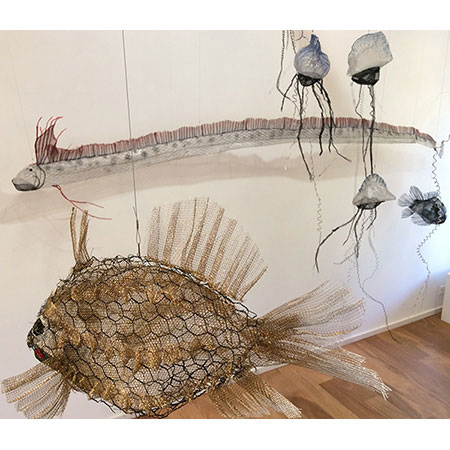

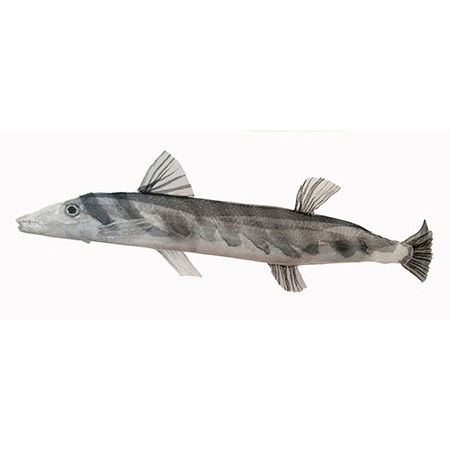

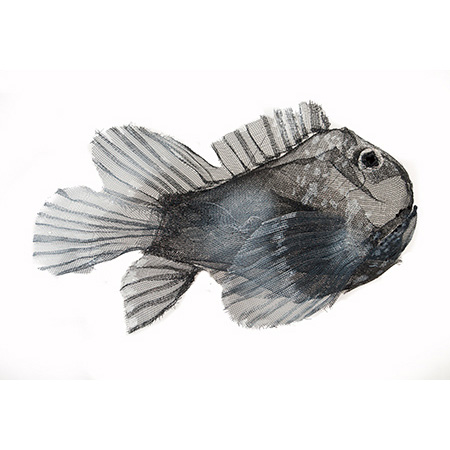


Not Waving…..Drowning
08 May - 30 May 2015
In this exhibition Merran Sierakowski continues to explore the notion of venomous sea creatures as a metaphor for the increasing ugliness displayed by our nation in the treatment of marginalised members of society. Not waving, but drowning in self-interest and the poison of intolerance. The creatures represent old prejudices and fears, much as images of monsters were depicted on medieval maps of imagined lands.
‘We Australians strangely maintain our belief in our manufactured national character of acceptance and a ‘fair go for all’ through increasingly nationalistic displays of flag waving and national pride. However this attitude is only an outward display. We are allowing ourselves to become mean spirited and intolerant. We are not waving and welcoming. We are not helping each other. We are drowning in self interest’.
Merran Sierakowski 2015

Kieren Karritpul: Woven Lines
Woven Lines is the second solo exhibition by this exciting young Northern Territory artist. At the age of 21 Kieren Karritpul is a highly talented emerging painter and designer from Merrepen Arts at Nauiyu Community on the Daly River. In Woven Lines Karritpul continues to explore the minutiae of his line and pattern- making […]
Read More >
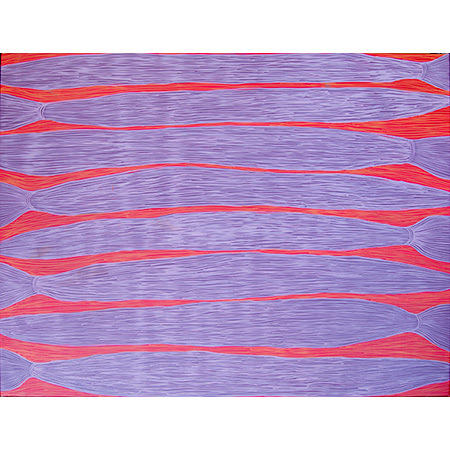

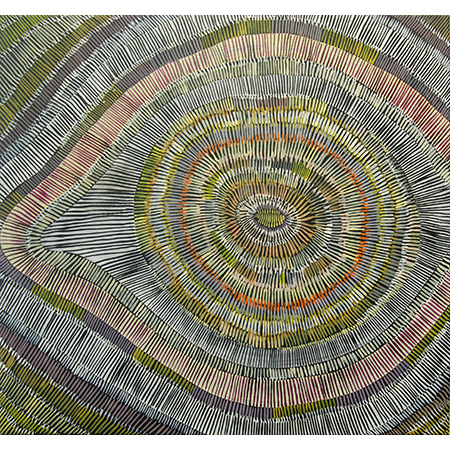


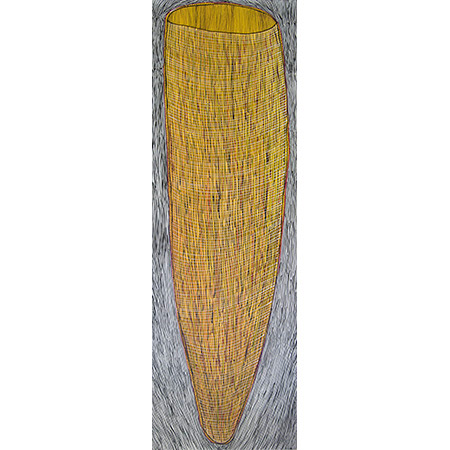


Kieren Karritpul: Woven Lines
10 April - 02 May 2015Woven Lines is the second solo exhibition by this exciting young Northern Territory artist. At the age of 21 Kieren Karritpul is a highly talented emerging painter and designer from Merrepen Arts at Nauiyu Community on the Daly River.
In Woven Lines Karritpul continues to explore the minutiae of his line and pattern- making with new complex compositional arrangements and bold synchronisations of colour.
Karritpul paints subjects associated with the traditional culture and knowledge of his clan. In this exhibition he extends his exploration of the woven line in painting and fabric design. Karritpul grew up watching his mother and grandmother collecting, dyeing and weaving pandanus and sand palm (merrepen) fibre. As they worked he would listen to the stories they told about the traditional culture and heritage of his people.
As a young contemporary artist Karritpul has transformed his knowledge of weaving and dying into intricate and colourful paintings. His images incorporate the pattern of pandanus bundles, woven baskets, coolamon and fish traps, while the colours of his paintings emulate rich and beautiful natural fibre dyes. The works not only pay homage to Karritpul’s culture and heritage, but extend boundaries of contemporary visual expression.
In 2014 Karritpul won the Youth Award for his screenprint on linen titled Yerrgi, at the National Aboriginal and Torres Strait Islander Art Award at the Museum and Art Gallery of the Northern Territory. In 2015 Karritpul was a finalist for the Northern Territory Young Achiever Awards, Charles Darwin University Arts Award.
Read the catalogue essay by Maurice O’Riordan

Everybody’s Prints – New Work from Mangkaja Arts
Nomad Art and Mangkaja Arts Resource Agency are proud to present a new body of prints created in partnership with Basil Hall Editions in 2014. These new etchings and screen prints represent traditional connections Mangkaja artists have to the Kimberley region. Typically diverse in style, the etchings are reminiscent of the seminal drypoint prints […]
Read More >


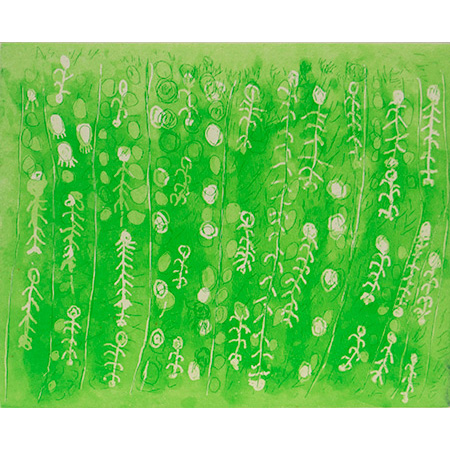
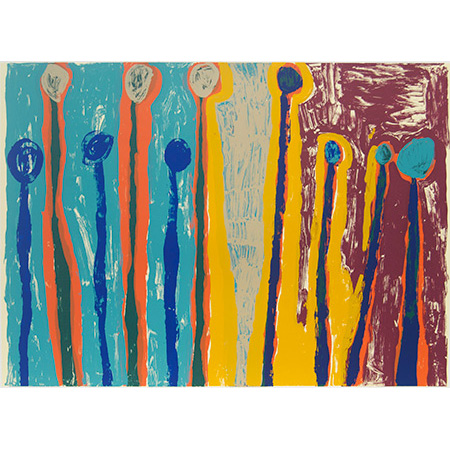


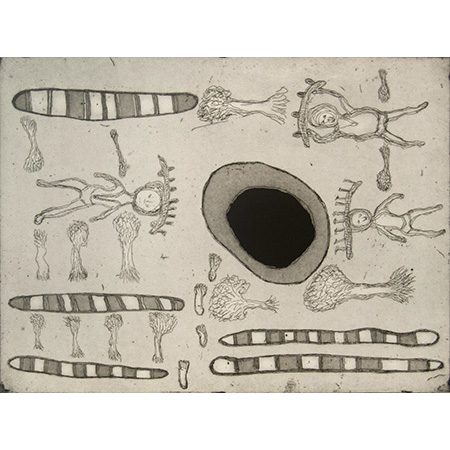
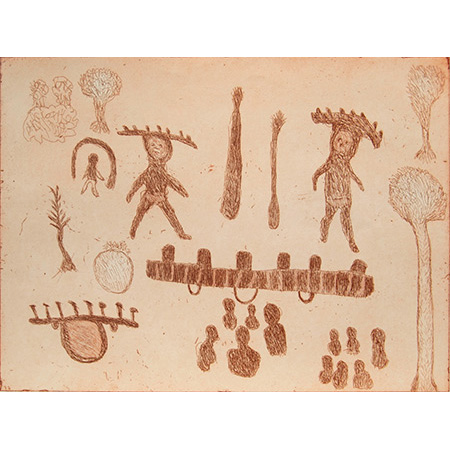
Everybody’s Prints – New Work from Mangkaja Arts
10 April - 02 May 2015Nomad Art and Mangkaja Arts Resource Agency are proud to present a new body of prints created in partnership with Basil Hall Editions in 2014. These new etchings and screen prints represent traditional connections Mangkaja artists have to the Kimberley region.
Typically diverse in style, the etchings are reminiscent of the seminal drypoint prints created by Mangkaja artists at Northern Editions with Basil and Leon Stainer during the Kaltja/Business Conference in 1996. Artworks depict important sites and natural resources including waterholes and many varieties of plant food.
Mangkaja artists began printmaking in 1994 with Martin King from the Australian Print Workshop (APW) in Melbourne. The artists produced a wide variety of images in the first workshop at Mangkaja Arts and have sustained a strong printmaking practice since, resulting in works being acquired by various public and private collections, including the British Museum and the National Gallery of Victoria.

EARTHworks
Earthworks is a continuation of Winsome Jobling’s 2014 exhibition titled Earth. It is a reflection upon the natural changes and movement of the Earth in tandem with human exploitation of natural resources. In Earthworks Jobling moves deeper into the geological transformation of the earth and how this influences our sense of identity, shaping our interactions with […]
Read More >


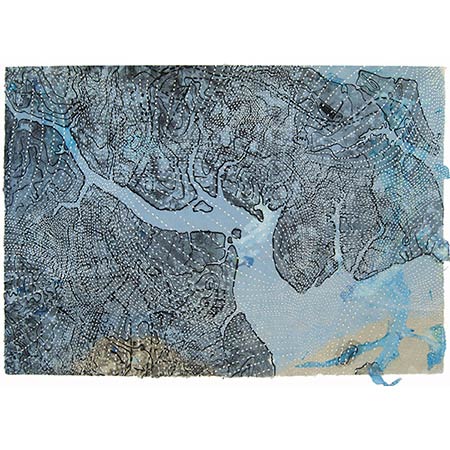


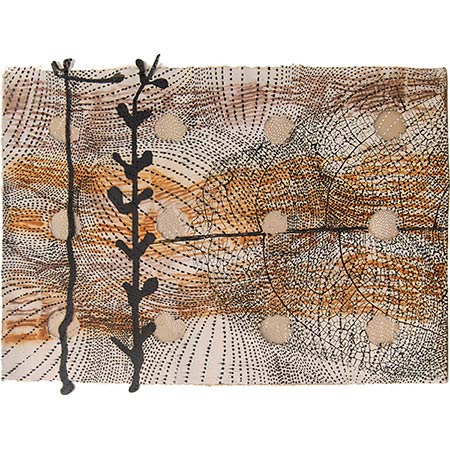


EARTHworks
13 March - 04 April 2015Earthworks is a continuation of Winsome Jobling’s 2014 exhibition titled Earth. It is a reflection upon the natural changes and movement of the Earth in tandem with human exploitation of natural resources. In Earthworks Jobling moves deeper into the geological transformation of the earth and how this influences our sense of identity, shaping our interactions with the environment. The works consist of handmade paper made from plant materials with earth pigments.
All around us invisible matter forms the visible. Whirling and colliding atoms, electrons, quarks and magnetic fields are the building blocks of everything.
All known things are made up of quarks and electrons tied together by strong magnetic fields.
Nothing is still.
The Earth’s tectonic plates move under our feet about as fast as our hair grows.
Earthworks continue throughout geologic time, constantly moving and changing.
Things collide, always cause and effect, the ceaseless gradual erosion or cataclysmic transformation.
The influence of the natural world on our sense of identity and place has changed and a more active engagement and greater understanding would challenge the complacency of familiarity where we now see the natural world as exploitable object.
By respecting the natural world our interactions might be tempered by a deeper empathy.
Materials
The earth pigments I use are sourced from all over the Northern Territory; red sand from Titjikala, grey mud from Cahills Crossing, purple/brown from an abandoned mine near Tennant Creek. All are the worn down remnants of ancient geology. The charcoal is from bushfires, the ‘bones’ of bushland.
Abaca is a fibre from the non-fruiting banana Musa textilis and is imported from the Philippines part processed, ready to be beaten and formed into paper.
The plant fibre papers using Phalsa (Grewiaasiatica), Stringybark (Eucalyptus tetradonta) and Kapok (Cochlospermumfraseri) are locally sourced and processed.
Winsome Jobling 2015

Cultural Ground: New prints from Jilamara Arts and Crafts
Nomad Art presents an exquisite collection of new etchings, linocuts and works on paper from Jilamara Arts and Crafts. Inspired by the rich cultural heritage and the island environment, the artworks represent the stories and customs of the Tiwi people. The prints were produced in collaboration with Martin King from the Australian Print Workshop […]
Read More >


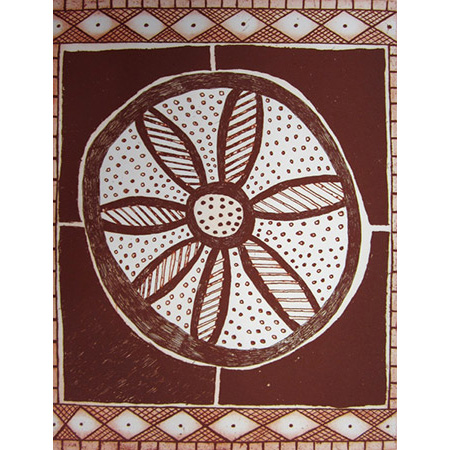


Cultural Ground: New prints from Jilamara Arts and Crafts
07 February - 07 March 2015Nomad Art presents an exquisite collection of new etchings, linocuts and works on paper from Jilamara Arts and Crafts. Inspired by the rich cultural heritage and the island environment, the artworks represent the stories and customs of the Tiwi people.
The prints were produced in collaboration with Martin King from the Australian Print Workshop in Melbourne and feature Raelene Kerinauia, Janice Murray, Pedro Wonaeamirri, Timothy Cook, Conrad Tipungwuti, Brian Farmer Illortaminii and Nicholas Mario as well as younger artists.
Australian Print Workshop (APW) has an ongoing relationship with Jilamara Arts & Crafts, which began in 1995. Since then APW has undertaken several return trips to the Island. These visits have been complemented by visits to the workshop in Melbourne by several of the Tiwi artists.
Jilamara Arts & Crafts was first established in 1989 as an adult education centre focusing on fabric printing. Today artists work from a palette of natural ochres to produce paintings on linen, canvas, paper and bark. Also renowned for sculptural works the tradition of carving has continued through the art centre.
Artists draw inspiration from ceremony, body paint (yirrinkiripwoja) and scarification designs (minga), clan totems and the Tiwi creation story. Designs passed on by family are also an inspiration to artists developing their own particular style – their own jilamara.
Jilamara Arts & Crafts is located at Milikapiti (Snake Bay) on Melville Island. The Tiwi word ‘Jilamara’, which roughly translates to ‘design’ refers to the intricate ochre patterning traditionally applied to the bodies of dancers and the surface of carved poles during the Pukumani funeral ceremony.
Prints produced by Jilamara artists have been acquired for major public collections including: the National Gallery of Australia, Art Gallery of New South Wales and the National Gallery of Victoria.

Jirrawun: A Legacy in Print
Nomad Art features the recent arrival of etchings by some of the key artists from the renowned Jirrawun Arts. Based in Wyndham, Western Australia from 1998 to 2010 Jirrawun Arts was a galvanising period in the history of East Kimberley art, helping to establish the careers of many of Australia’s leading contemporary Aboriginal artists. […]
Read More >


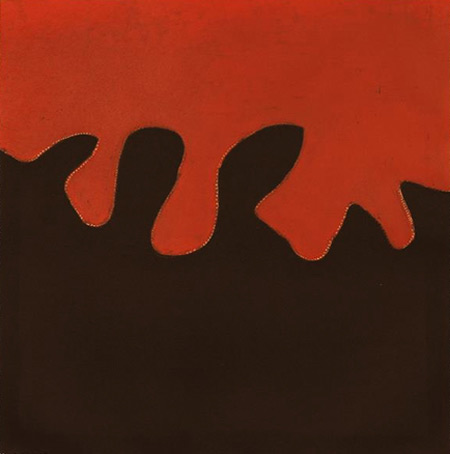
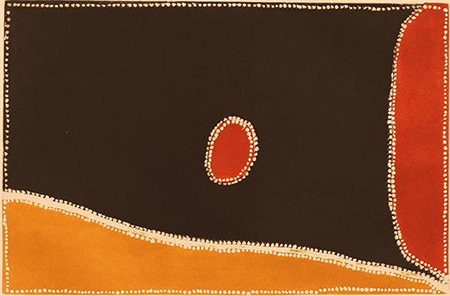

Jirrawun: A Legacy in Print
06 December - 31 January 2015Nomad Art features the recent arrival of etchings by some of the key artists from the renowned Jirrawun Arts. Based in Wyndham, Western Australia from 1998 to 2010 Jirrawun Arts was a galvanising period in the history of East Kimberley art, helping to establish the careers of many of Australia’s leading contemporary Aboriginal artists.
Created in a series of workshops between 2004-05, the works here by Rammey Ramsey, Phyllis Thomas, Freddie Timms and Rusty Peters depict ancestral stories and significant sites with their signature minimalist and striking compositions.
Now represented by Warmun Art Centre, works by these senior artists are held in most of Australia’s major public and private galleries. They are also represented in significant collections overseas. These early etchings were an important step in the development of the unique East Kimberley style, and represent a series of important historical moments in the development of their individual works.

Recent prints from Buku Larrnggay Mulka
Recent prints from Yirrkala Print Workshop feature etchings, lithographs, linocuts and screenprints by leading Yolngu artists which are a reflection of their culture, ingenuity, skill and artistic vision. Buku Larrnggay Mulka has a long and proud history as one of Australia’s premier Indigenous art centres and printmaking studios. The artists have established a national reputation […]
Read More >


Recent prints from Buku Larrnggay Mulka
07 November - 29 November 2014Recent prints from Yirrkala Print Workshop feature etchings, lithographs, linocuts and screenprints by leading Yolngu artists which are a reflection of their culture, ingenuity, skill and artistic vision.
Buku Larrnggay Mulka has a long and proud history as one of Australia’s premier Indigenous art centres and printmaking studios. The artists have established a national reputation for their work, having won many of Australia’s major Indigenous art prizes.
Buku Larrnggay Mulka is one of the few art centres in Australia to establish and maintain a dedicated print workshop, which is staffed by Indigenous printmakers. In the last fifteen years the Centre has produced a wide range of linocuts, screen prints, etchings, lithographs, and collographs. While the artists are respectful of the discipline of miny’tji (sacred design) the nature of the printmaking process has allowed them to experiment more freely with colour, imagery, concepts and design without compromising their spiritual identity. Many of the artists who have worked in the print workshop are women who have been leaders in innovation and change.

Terraforming
Down at Vesteys Beach, embedded in the sand and silt, is a collection of sedimentary rocks known as conglomerates. These conglomerates are the result of massive earth forming events across millenia. Consequently they have been deformed, metamorphosed and intruded by post-tectonic granitic and mafic rocks. Fragments of shells bear witness to habitation from a Precambrian […]
Read More >
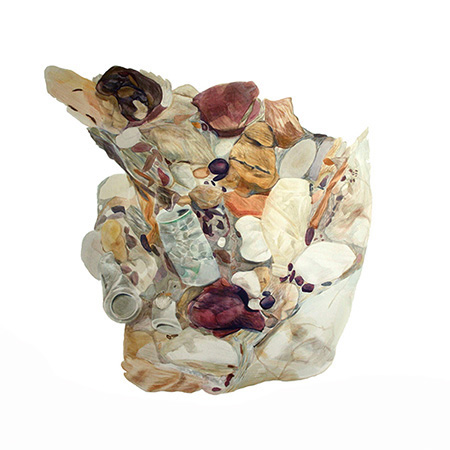


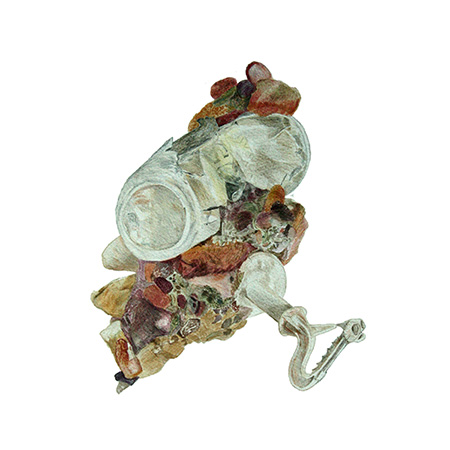

Terraforming
08 November - 30 October 2014Down at Vesteys Beach, embedded in the sand and silt, is a collection of sedimentary rocks known as conglomerates. These conglomerates are the result of massive earth forming events across millenia. Consequently they have been deformed, metamorphosed and intruded by post-tectonic granitic and mafic rocks. Fragments of shells bear witness to habitation from a Precambrian marine transgression.
Vesteys Beach conglomerates are time capsules that interact with the dynamics of present day conditions. These rocks gently release their particles undergoing transformation as waves and erosion free captured granite or shell to mingle with other shoreline debris.
Our shorelines today are littered with flotsam and jetsam: plastic bottles, aluminium cans, polystyrene, fishing wire, drinking straws, spent party poppers, weather balloons and the like.. The tide reveals their presence temporarily before they are impassively reclaimed. Debris is crushed and deformed, crumpled and pushed forward to settle on our ocean floors, be eaten by marine life or absorbed into the growth cycle of spongers, corals and molluscs. As sedimentary materials they express the intersection of human history and geological time. Marine transgressions made by us, washed ashore before forming part of our future cultural geology.
Sarah Pirrie 2014

Galico (Fabric)
Galico is the word for fabric in the Gupapuyngu language, one of the many languages and dialects used throughout Arnhem Land. Galico is derived from the word ‘calico’, which was bought to Arnhem Land by the Macassans from Indonesia – who visited and traded with the Yolngu for hundreds of years before white contact. […]
Read More >


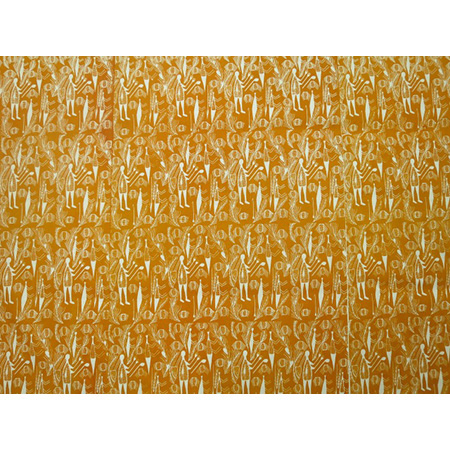


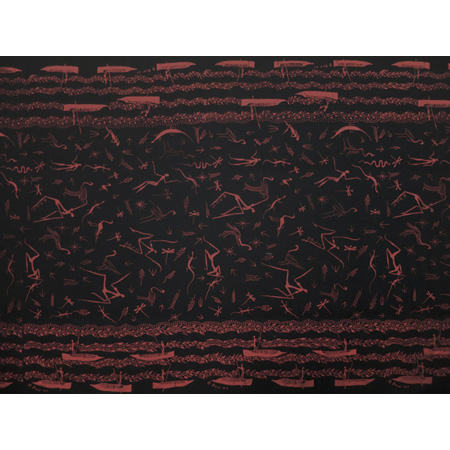
Galico (Fabric)
03 October - 01 November 2014
Galico is the word for fabric in the Gupapuyngu language, one of the many languages and dialects used throughout Arnhem Land. Galico is derived from the word ‘calico’, which was bought to Arnhem Land by the Macassans from Indonesia – who visited and traded with the Yolngu for hundreds of years before white contact.
This exhibition at Nomad Art will showcase reprinted designs from the long history of textile printing at Bula’bula Arts, and will also launch a range of new and innovative designs from the senior Artists of Ramingining. Luscious fabrics and opulent colourways will bring these sacred designs to life.
Contact the gallery for more information on fabrics.

Botany of the Heart
Inspired by the mangroves and tropical ecologies of Darwin, Talitha Kennedy has taken the aesthetic of fecundity to heart. Talitha’s drawings are elaborate ink on paper doodles, working between conscious thought and raw instinct to evoke intimate landscapes suggestive of plant, body and earth as transforming mass. Her artistic practice examines the human relationship […]
Read More >


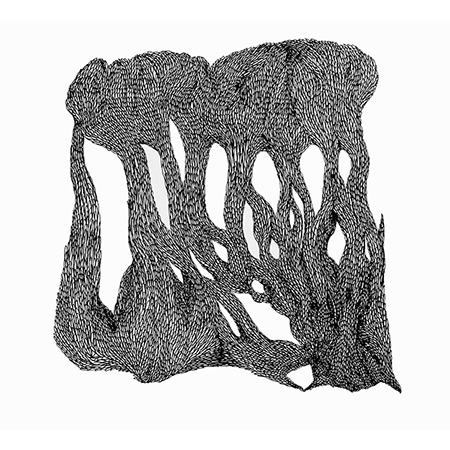
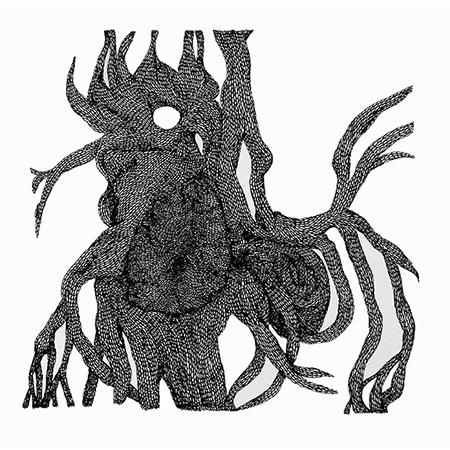
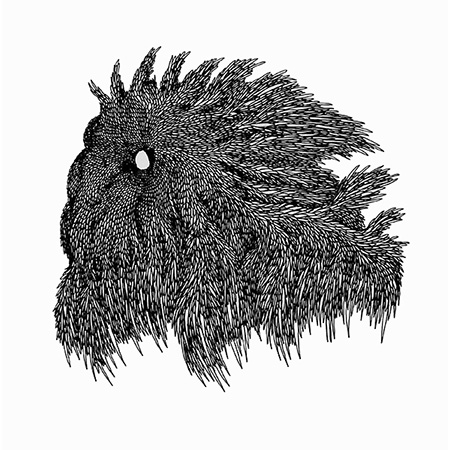


Botany of the Heart
05 September - 27 September 2014Inspired by the mangroves and tropical ecologies of Darwin, Talitha Kennedy has taken the aesthetic of fecundity to heart. Talitha’s drawings are elaborate ink on paper doodles, working between conscious thought and raw instinct to evoke intimate landscapes suggestive of plant, body and earth as transforming mass.
Her artistic practice examines the human relationship with wild nature. Living in the tropics has resulted in direct and tangible influence on her art. Drawings and sculptures interpret the aesthetics of fecundity and the tension between human culture and natural forces.

Bush Life
Bush Life is an exciting new exhibition by the Tjanpi Desert Weavers that explores elements of life in the remote communities of the Ngaanyatjarra Pitjantjatjara Yankunytjatjara (NPY) Lands of Central Australia. These quirky grass sculptural works are a physical representation of the everyday items that hold significance to the artists including motorcars, helicopters, guitars, […]
Read More >

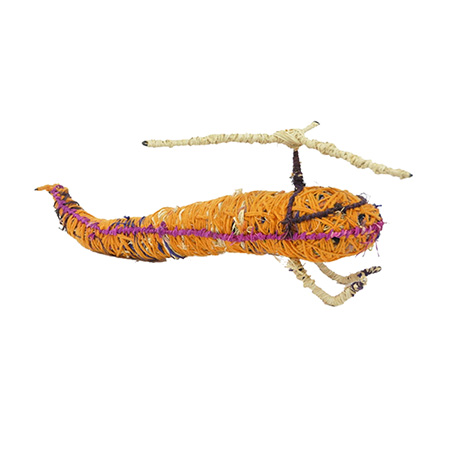


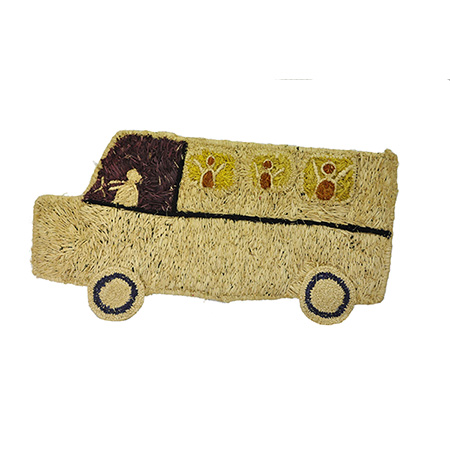
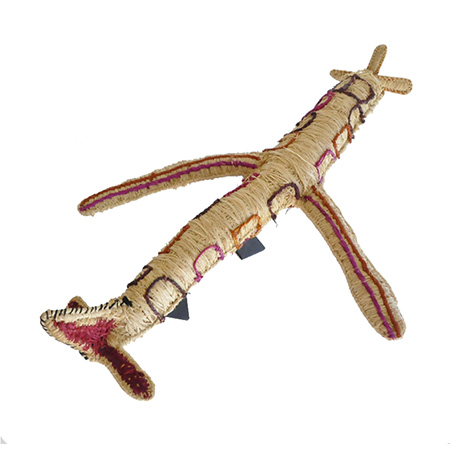
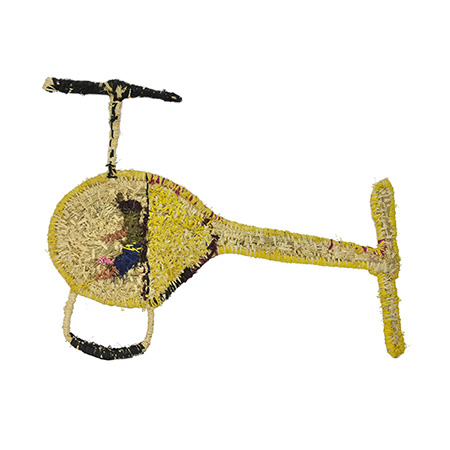


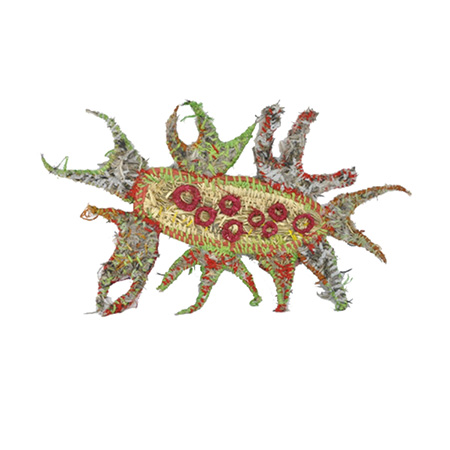


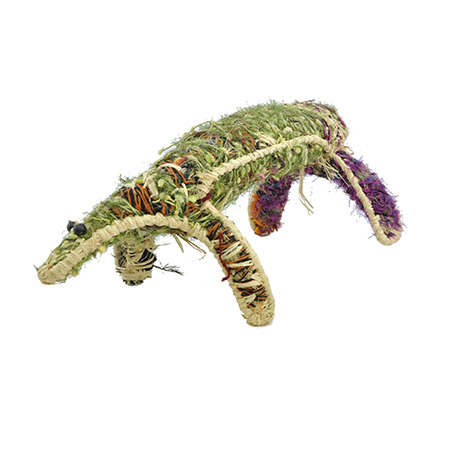
Bush Life
07 August - 30 August 2014Bush Life is an exciting new exhibition by the Tjanpi Desert Weavers that explores elements of life in the remote communities of the Ngaanyatjarra Pitjantjatjara Yankunytjatjara (NPY) Lands of Central Australia.
These quirky grass sculptural works are a physical representation of the everyday items that hold significance to the artists including motorcars, helicopters, guitars, camp dogs and native animals of the Lands.
Bush Life features both three dimensional and flat sculptures that resonate with the spirit of the Country and the artists who wove them. Physical elements of the Country are incorporated into the weaving through the use of wild-harvested grasses while contemporary life is acknowledged in the use of found objects sourced from community settlements. Works are made from a combination of Tjanpi (wild-harvested grasses), date palm, raffia, acrylic yarn, plastic-coated wire; and emu feathers.
Through this exhibition Tjanpi artists celebrate life in remote communities, creativity and Country.

Yuta (New): a continuing tradition of youth art from Yirrkala
In 2014 the print studio at Buku-Larrnggay Mulka began with an influx of new emerging artists and young trainee printmakers. The print space has always maintained a policy to employ and train local Yolngu in the art of printmaking to ensure that Yolngu printmakers edition the prints created by Yolngu artists. This year Munuy’ngu […]
Read More >


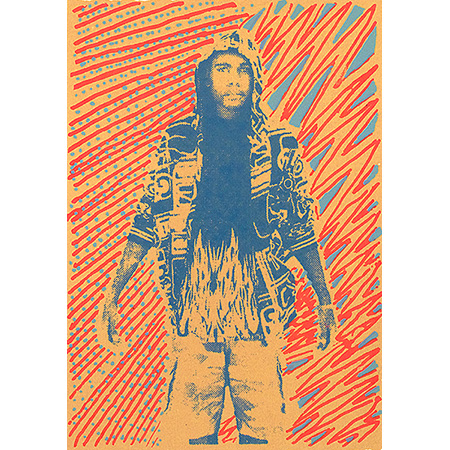


Yuta (New): a continuing tradition of youth art from Yirrkala
07 August - 30 August 2014In 2014 the print studio at Buku-Larrnggay Mulka began with an influx of new emerging artists and young trainee printmakers. The print space has always maintained a policy to employ and train local Yolngu in the art of printmaking to ensure that Yolngu printmakers edition the prints created by Yolngu artists.
This year Munuy’ngu Marika, Bawu Gurruwiwi, Godut Ganambarr, Dhalmula Burarrwanga and Burrthi Marika, all aged between 18 – 20 years old, began full time work at the print studio alongside existing printers Paula Gumana and Annie Studd. All of these young artists created and editioned their own linocuts which are part of the exciting Yuta (New) exhibition at Nomad Art.
The print studio has always been a place of activity but for 2014 these young Indigenous people have created a working environment where their music, their aesthetic and their world enlivens and spreads joy and hope through the daily operations of the gallery.
The prints at Yuta ‘New’ have all been editioned by the hands of these and other young printmaker artists over the last three years at Buku-Larrnggay Mulka and reflect the environment from which they came, a place of newness, laughter, learning and the future grown from the foundations of culture and tradition.

Prints and fabrics from Far North Queensland
Tropical Northern Queensland is an environment rich in cultural and natural diversity where tropical rain forests, wetlands and estuarine mangroves meet the Torres Strait. Likewise Aboriginal and Torres Strait Islander art is rich and symbolic. Diversity and artistic innovation abounds through contemporary artworks, including etchings, linocuts, ceramics, textiles and ghost net weavings. Artists […]
Read More >

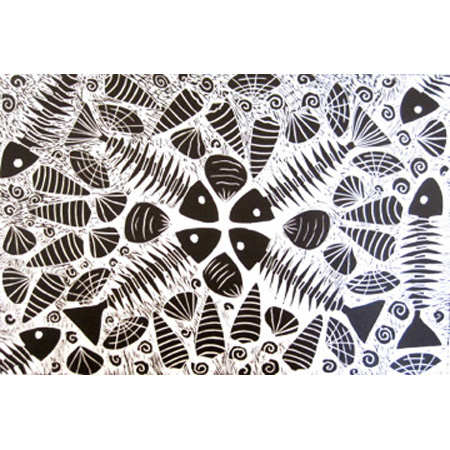


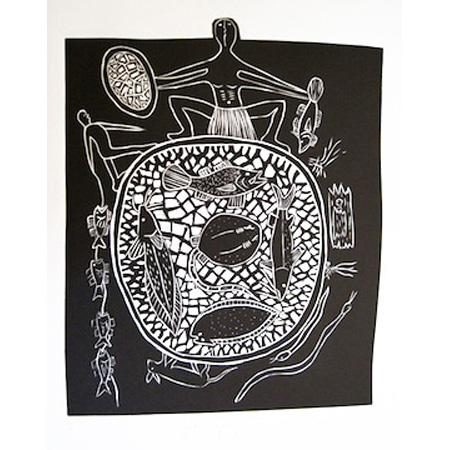

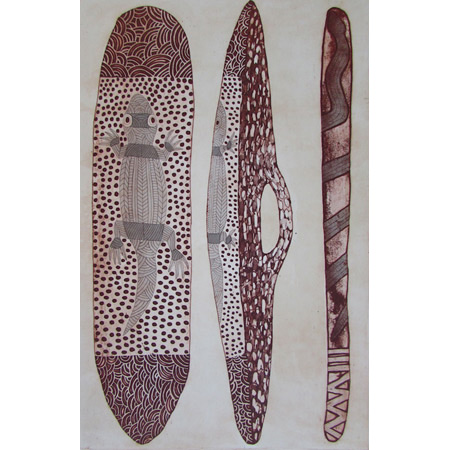
Prints and fabrics from Far North Queensland
05 July - 26 July 2014Tropical Northern Queensland is an environment rich in cultural and natural diversity where tropical rain forests, wetlands and estuarine mangroves meet the Torres Strait.
Likewise Aboriginal and Torres Strait Islander art is rich and symbolic. Diversity and artistic innovation abounds through contemporary artworks, including etchings, linocuts, ceramics, textiles and ghost net weavings.
Artists from Erub Erwer Meta (Darnley Island) produce contemporary ghost net weavings, sculptures and vibrant screenprinted fabrics. The work celebrates island life and culture by translating traditional stories to a modern medium.
Surrounded by wetlands on the east coast of the Gulf of Carpentaria, artists from Pormpuraaw are accomplished printmakers who produce traditional images as contemporary etchings and linocut prints. Their sculptural ghost net works have quirky characteristics, often with aquatic themes.
Etchings and drypoint prints by artists from Yarrabah Arts and Culture were completed during a visit in 2013 from Paul Machnick, from Studio PM in Montreal who has collaborated at length with Inuit artists. In this series artists explore the local traditions of pandanus and cabbage palm weaving through the medium of print. Similar themes are explored in a series of coil pots, which are inspired by the natural environment and country.

Yaninpala Yirwarrawanna Kutjupa Ngurrarrakutu – Walking the Path
Warlayirti Artists are well known for their beautiful, high quality artworks including limited edition prints. Since 2002, there has been a long-standing collaboration between the Balgo artists and the printers from Northern Editions in Darwin. This partnership has resulted in numerous editions of etchings and screenprints and in more recent times has expanded to include […]
Read More >


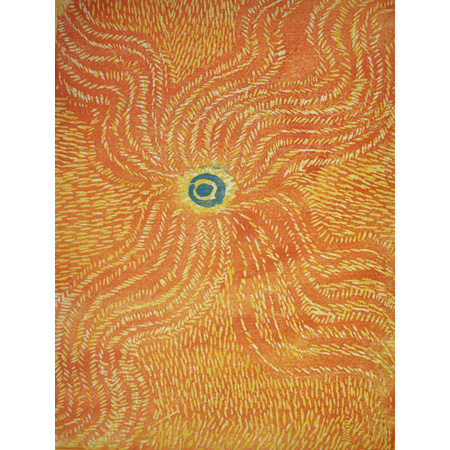

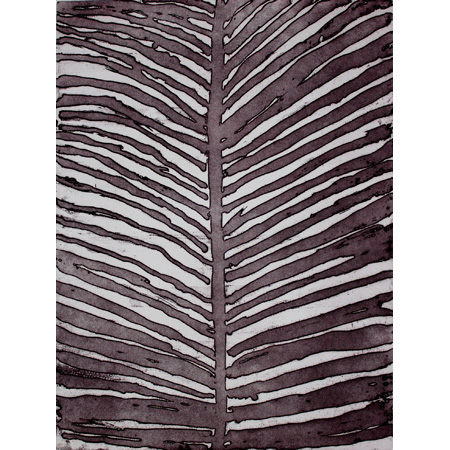
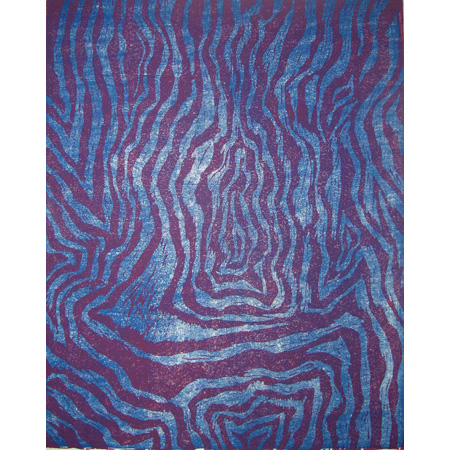


Yaninpala Yirwarrawanna Kutjupa Ngurrarrakutu – Walking the Path
07 June - 28 June 2014Warlayirti Artists are well known for their beautiful, high quality artworks including limited edition prints. Since 2002, there has been a long-standing collaboration between the Balgo artists and the printers from Northern Editions in Darwin. This partnership has resulted in numerous editions of etchings and screenprints and in more recent times has expanded to include Japanese woodblock printing for the men.
The new etchings feature work by senior women artists Eubena Nampitjin, Elizabeth Nyumi, Ningie Nanala and Bai Bai Napangarti and are the first prints created by these artists since 2006. As senior custodians from Balgo, Lake Mackay, Canning Stock Route, Billiluna, Tanami and Great Sandy Deserts, the artists hold a unique position in Indigenous and artistic history.
The Japanese woodblock prints involve the male artists carving designs onto woodblocks which are printed onto Japanese rice paper. The artists include skilled wood carvers Helicopter Tjungurrayi, Bonnie James, Larry Gondora, Quinton Milner and David Mudgedell. The woodcuts are in response to an existing but not regularly practised carving tradition upon sandstone and soapstone, as well as wood for boomerangs, shields and spears. These prints retell traditional tjukurrpas (Dreamings) and knowledge in an alternative medium, so important stories are retained for perpetuity.
The title of the exhibition Yaninpala Yirwarrawanna Kutjupa Ngurrarrakutu – Walking the Path, is based around the idea of a pathway from old and moving to the new. The works encapsulate old traditions and stories, which are transformed into a different model of representation.

Karritpul
Kieren Karritpul is a highly talented emerging artist from Merrepen Arts at Nauiyu Community on the Daly River. Karritpul paints subjects associated with the traditional culture and knowledge of his family heritage. This exhibition includes recent paintings, prints and fabric designed by this exciting new artist in his first solo exhibition. I have grown […]
Read More >


Karritpul
09 May - 31 May 2014Kieren Karritpul is a highly talented emerging artist from Merrepen Arts at Nauiyu Community on the Daly River. Karritpul paints subjects associated with the traditional culture and knowledge of his family heritage. This exhibition includes recent paintings, prints and fabric designed by this exciting new artist in his first solo exhibition.
I have grown up watching my grandmother, mother and aunties all collect yerrgi (pandanus) for weaving of baskets and mats. We search for many different plants, roots and berries which we use to dye the yerrgi to create beautiful colours.
The yerrgi is bunched as it is in my painting after the dyeing process and ready to use by the women for weaving. The inspiration for my painting has come from the many bundles of yerrgi I watched being made by my mother and grandmother as a young child. This was always a time when my elders would pass on old stories and teach me important knowledge about my Aboriginal culture.
My love of painting and textile design comes from being able to tell really old stories passed down to me from my elders and telling these stories in a whole new way by placing these on textiles and paintings.
Kieren Karritpul

Lorna Naparulla Fencer (dec)
Yulyurlu Lorna Fencer Napurrurla was a Warlpiri artist from Lajamanu in the Tanami Desert of the Northern Territory. Born in the 1920’s, she began painting in 1986 and quickly developed a signature style of vivid colour and liberal use of paint. She soon became one of the most sought after artists in the region, with […]
Read More >

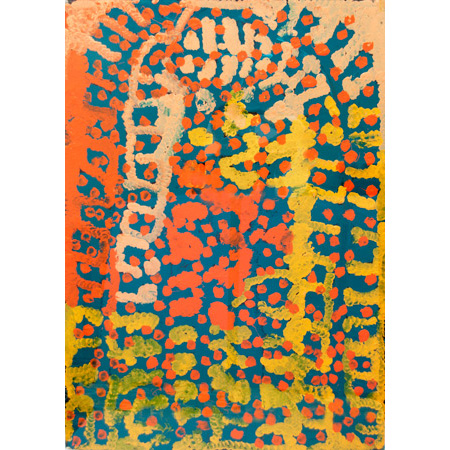


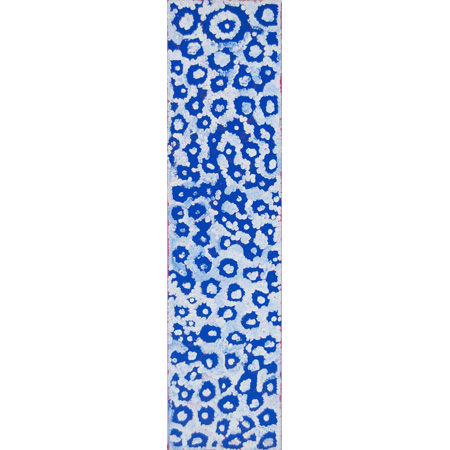
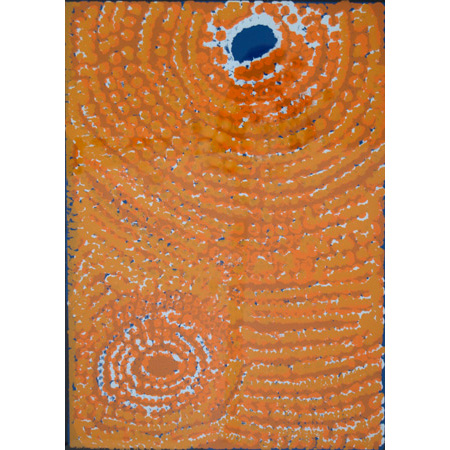

Lorna Naparulla Fencer (dec)
09 May - 31 May 2014Yulyurlu Lorna Fencer Napurrurla was a Warlpiri artist from Lajamanu in the Tanami Desert of the Northern Territory. Born in the 1920’s, she began painting in 1986 and quickly developed a signature style of vivid colour and liberal use of paint. She soon became one of the most sought after artists in the region, with her paintings included in exhibitions and her work acquired by prominent international and Australian collections.
Napurrurla first began painting in the classic style of Warlpiri art with symbols often distributed amongst fields of dots. Over time Napurrurla moved away from these classic abstract elements to more descriptive interpretations of her Dreaming by painting foliage, flowers, tubers and root structures. This form of ‘stylised naturalism’ executed with energetic, painterly layers also gave rise to her ability as a gifted colourist to combine vibrant colour combinations and create successful compositions.
Napurrurla was custodian for the sacred country of Yumurrpa, and for the Yarla-Pama (Caterpillar), Ngarlajiyi (Pencil Yam) and Yarla (Bush Potato) Dreamings of this site. She passed away in 2006, aged in her eighties.
Naparrulla was celebrated with a major retrospective exhibition which commenced as part of the Darwin Festival in 2011 and toured nationally for several years. It received great critical acclaim highlighting the importance of the artist and her contribution to the central desert art movement.
Contact the gallery for more information and prices.

Printmaking at Maningrida
Maningrida Arts and Culture is a community of artists from approximately 34 outstations in East Arnhem Land. The Art Centre was established in the early 1970’s and is continually on the forefront of innovation and artistic endeavor reflecting the diversity of languages and cultures of the region. Maningrida artists first made prints in the […]
Read More >


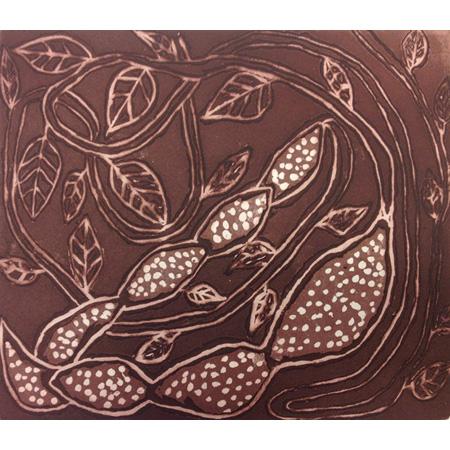
Printmaking at Maningrida
11 April - 03 May 2014Maningrida Arts and Culture is a community of artists from approximately 34 outstations in East Arnhem Land. The Art Centre was established in the early 1970’s and is continually on the forefront of innovation and artistic endeavor reflecting the diversity of languages and cultures of the region.
Maningrida artists first made prints in the late 1970’s and early 1980’s, when the late Johnny Bulunbulun, David Milaybuma and other artists visited Port Jackson Press and the Canberra School of Art.
Printmaking was fully incorporated at the Art Centre in 1997 with a series of etching, lithography and screenprinting workshops and projects through Charles Darwin University’s Northern Editions, initiated by printmaker Basil Hall. The new wave of printmakers included women and the exploration of colour and a contemporary expression of their culture. In the mid 2000’s French printmaker Jean Kohen worked with a range of artists to produce this series of etchings.
These workshops and collaborations have enabled both male and female artists to discover and experiment with the print medium. The process has stimulated new interpretations of subject matter found in rock art throughout the Arnhem Land escarpment such as weaving, plant and animal motifs. It has also enabled artists such as Kate Miwulku a physical and emotional expression of her culture.

What Lies Beneath
In this exhibition Merran Sierakowski presents hostile fishes that surround the Australian coastline. The fishes are a metaphor for the unwelcoming treatment of refugees to our shores; they represent old prejudices and fears, much as images of monsters were depicted on medieval maps of imagined lands. Merran Sierakowski is a prolific artist who consistently […]
Read More >


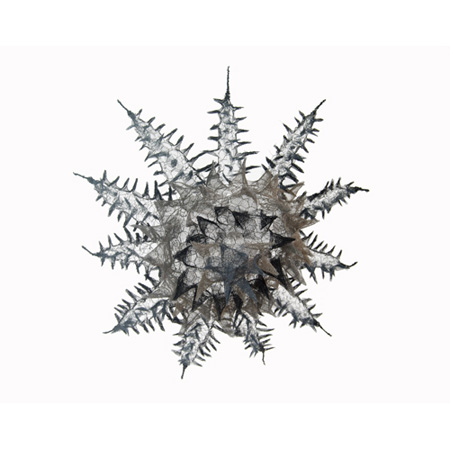
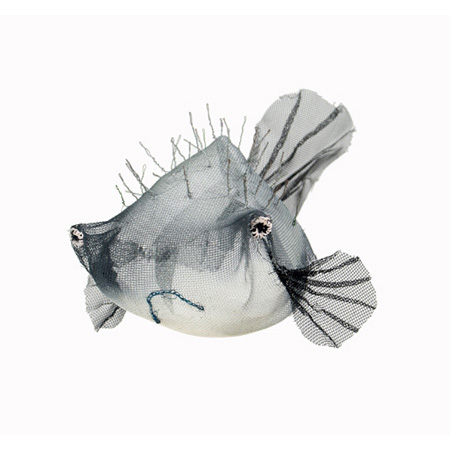


What Lies Beneath
07 March - 05 April 2014In this exhibition Merran Sierakowski presents hostile fishes that surround the Australian coastline. The fishes are a metaphor for the unwelcoming treatment of refugees to our shores; they represent old prejudices and fears, much as images of monsters were depicted on medieval maps of imagined lands.
Merran Sierakowski is a prolific artist who consistently addresses social, political and environmental issues. Her creative, ironic and whimsical art works reflect on human rights, cultural identity and sense of place.
Merran’s art practice encompasses limited edition prints, digital imagery, sculpture and installations. She uses a variety of techniques incorporating fabric, paper, metal, stone, wire, wood and found objects.
As an artist I keep coming back to ideas about fear and rejection, modern interpretations and historical links are a constant theme of my practice. The ideas that are exemplified in these works can also be applied to many other less enlightened attitudes that persist in our community. The sculptures serve as a catalyst for the viewer to recognise their own fears and monsters. Merran Sierakowski 2014

Earth: works in paper
In this exhibition, Winsome Jobling reflects upon the exploitation of Earth and questions the increasing imbalance of the human – nature relationship. Through rich organic images Jobling explores the nature of landscapes that have been disemboweled by human activity, leaving scars and exit wounds that may never be healed. The works consist of handmade paper […]
Read More >


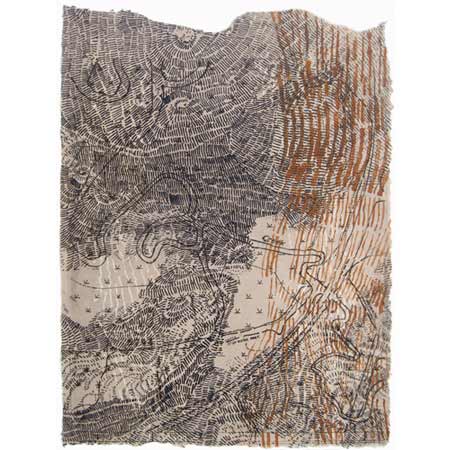
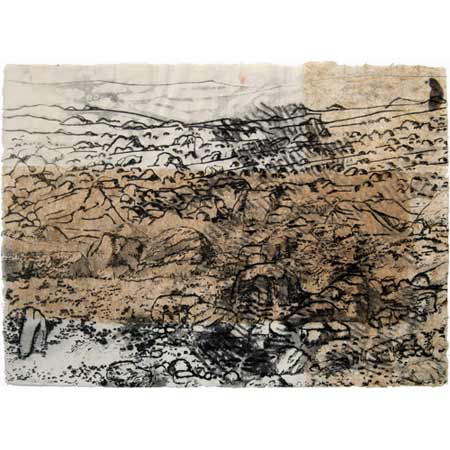
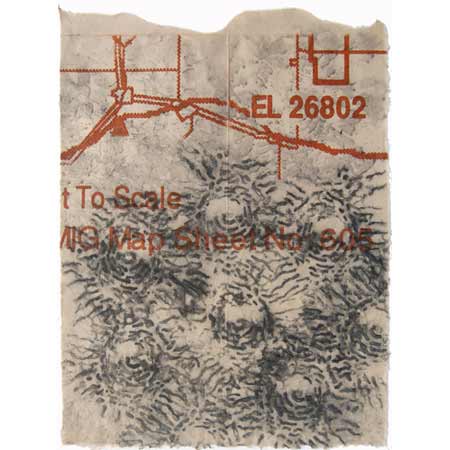


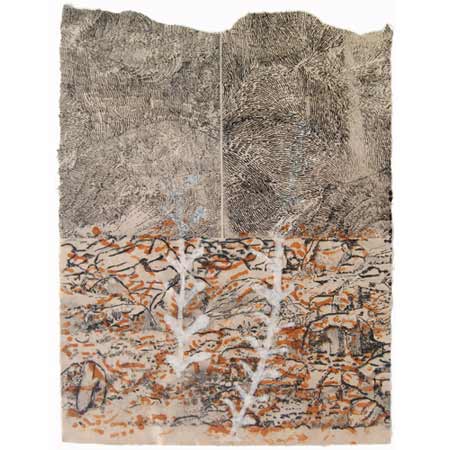
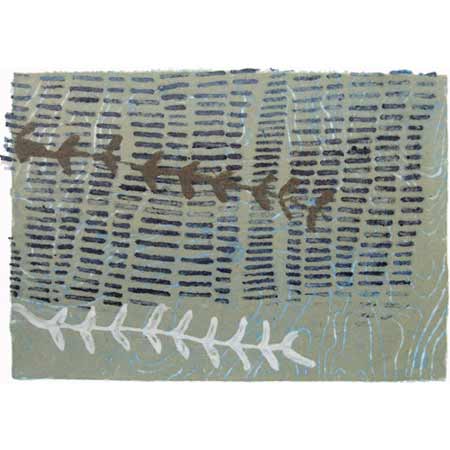
Earth: works in paper
07 February - 01 March 2014In this exhibition, Winsome Jobling reflects upon the exploitation of Earth and questions the increasing imbalance of the human – nature relationship. Through rich organic images Jobling explores the nature of landscapes that have been disemboweled by human activity, leaving scars and exit wounds that may never be healed. The works consist of handmade paper made from plant materials and earth pigments.
What is our relationship to the earth?
We disembowel the earth of resources; minerals, oil and gas leaving scars and exit wounds that may never be healed. Constantly taking and using what the earth has to offer. Geologists look for tell-tale signatures of minerals in rock types, strata, electromagnetics, geochemical patterns, and recently botanic research. There is gold in the leaves of the Eucalyptus trees around Kalgoorlie. Our need is insatiable. Is Mine the appropriate word? Would Ours be more mindful and humble?
The earth is a system of moving gas, liquid and solids, all part of much bigger interconnected and interdependent components and we are part of this dynamic. Our domination and exploitation of nature may alienate us from the earth we stand on. Is there an increasing imbalance of the human – nature relationship? Certainly our pristine ‘white’ goods, fuelled by industrialism, technology and consumerism, are the antithesis of the dirt and ore they come from, helping us forget their earthly origins. Winsome Jobling 2014
Download the Earth Catalogue PDF (1.9 mb) >
Further Reading
Recognising Indigenous Knowledge PDF (.5 mb) >
(Winsome Jobling – Hand Papermaking, Vol 28, no 2, 2013)

Alfonso and Jane
Alfonso Puautjimi & Jane Tipuamantumirri from the Tiwi Islands in the Northern Australia, portray aspects of Tiwi life, ranging from quirky fish, magpie geese and ceremonial life, to houses, cars, planes and portraits. These richly painted ochres on paper feature bold brush strokes and a generous application of paint. Ngaruwanajirri (meaning helping one another in Tiwi) was […]
Read More >
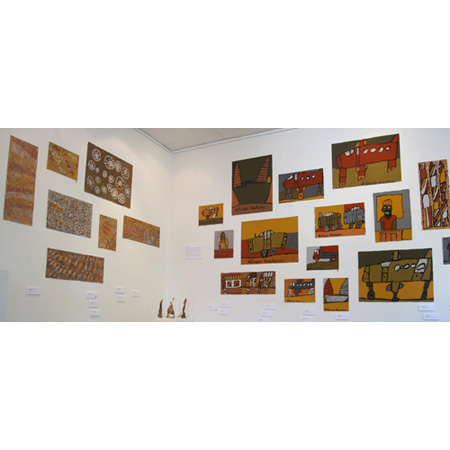

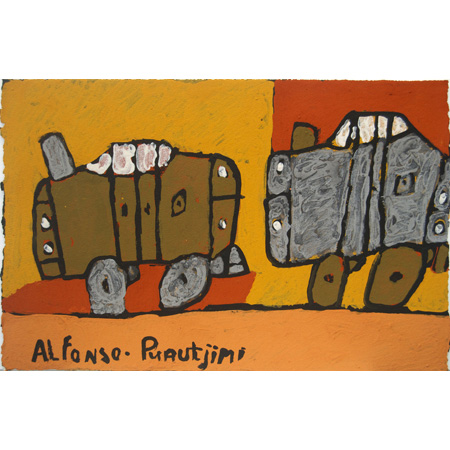


Alfonso and Jane
08 October - 29 October 2013
Alfonso Puautjimi & Jane Tipuamantumirri from the Tiwi Islands in the Northern Australia, portray aspects of Tiwi life, ranging from quirky fish, magpie geese and ceremonial life, to houses, cars, planes and portraits. These richly painted ochres on paper feature bold brush strokes and a generous application of paint.
Ngaruwanajirri (meaning helping one another in Tiwi) was established in 1994 as a cooperative to support local Tiwi artists with disability and to provide employment for people at Wurrumiyanga (formally Nguiu) on Bathurst Island . The artists work in a wonderful open and airy workspace called the ‘Keeping House’.
Ngaruwanajirri artists create highly individual works in a range of art forms including batik and painted silk scarves, lino block printing, ironwood carving, water colour and acrylics on paper and natural ochres on paper and canvas.
The natural ochres (white and yellow) are collected from two beaches on Bathurst Island and burning the yellow ochre over a fire produces a third colour, red. These colours are still used by the Tiwi in different ceremonies and cultural events on both Melville and Bathurst Island (the Tiwi Islands).
Art from Ngaruwanajirri has been exhibited in galleries throughout Australia and is held in public and private collections.

New Etchings from Yirrkala Print Workshop
These etchings from Yirrkala Print Workshop feature prints by leading Yolngu artists which are a reflection of their culture, ingenuity, skill and artistic vision. The etchings were editioned at Buku-Larrnggay Mulka Centre in 2013. Buku Larrnggay Mulka has a long and proud history as one of Australia’s premier Indigenous art centres and printmaking […]
Read More >


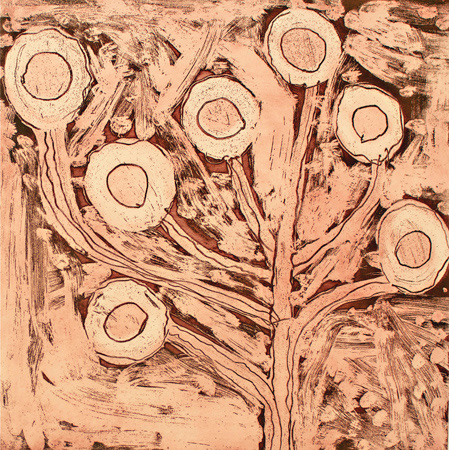
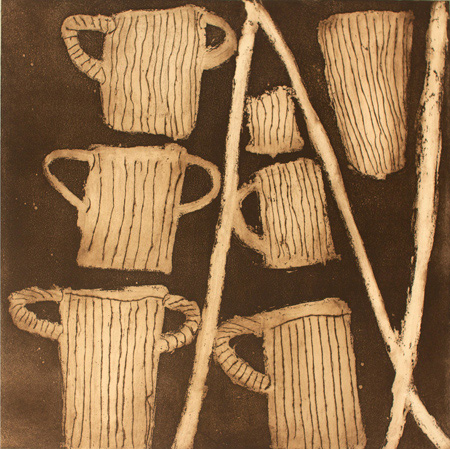

New Etchings from Yirrkala Print Workshop
05 October - 26 October 2013
These etchings from Yirrkala Print Workshop feature prints by leading Yolngu artists which are a reflection of their culture, ingenuity, skill and artistic vision. The etchings were editioned at Buku-Larrnggay Mulka Centre in 2013.
Buku Larrnggay Mulka has a long and proud history as one of Australia’s premier Indigenous art centres and printmaking studios. The artists have established a national reputation for their work, having won many of Australia’s major Indigenous art prizes.
Buku Larrnggay Mulka is one of the few art centres in Australia to establish and maintain a dedicated print workshop, which is staffed by Indigenous printmakers. In the last fifteen years the Centre has produced a wide range of linocuts, screen prints, etchings, lithographs, and collographs. While the artists are respectful of the discipline of miny’tji (sacred design) the nature of the printmaking process has allowed the them to experiment more freely with colour, imagery, concepts and design without compromising their spiritual identity. Many of the artists who have worked in the print workshop are women who have been leaders in innovation and change.

Mimili Maku
This collection of limited edition screen prints is the result of a print making workshop at the Mimili Maku with Basil Hall in 2012. During the workshop emerging and established artists created a stunning selection of prints based on imagery, symbols and narrative of the region made with a vibrant application of colour. The community of […]
Read More >


Mimili Maku
06 September - 28 September 2013
This collection of limited edition screen prints is the result of a print making workshop at the Mimili Maku with Basil Hall in 2012. During the workshop emerging and established artists created a stunning selection of prints based on imagery, symbols and narrative of the region made with a vibrant application of colour.
The community of Mimili is in the far north west of South Australia, at the base of the Everard Ranges, in the Anangu Pitjantjatjara Yankunytjatjara (APY) Lands. It is 645km south of Alice Springs which is the nearest large town.

PRIZED: Yirrkala Artists
Artists from Buku Larrnggay Mulka in eastern Arnhem Land have featured prominently in the Telstra National Aboriginal and Torres Strait Islander Art Award over its 30-year history. Since 1994 there have been 22 winners from Buku Larrnggay Mulka, of those 12 have been selected for Prized: Yirrkala Artists. Djambawa Marawili AM Gulumbu Yunupingu […]
Read More >


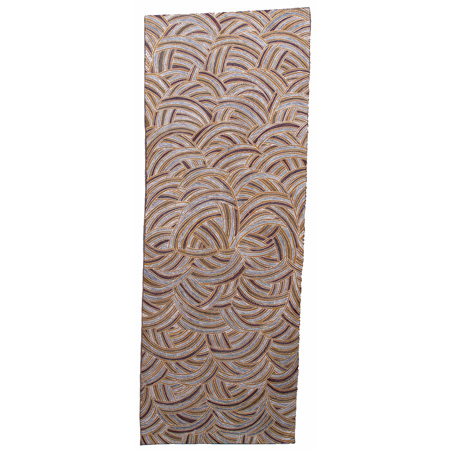


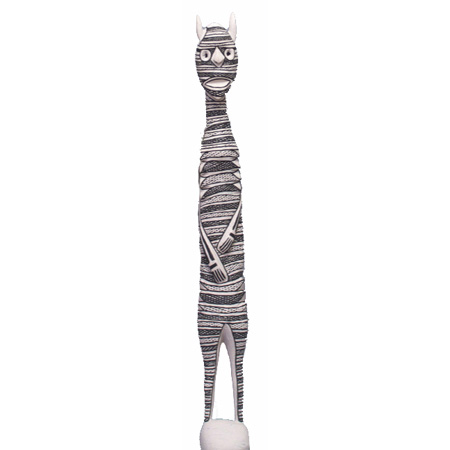
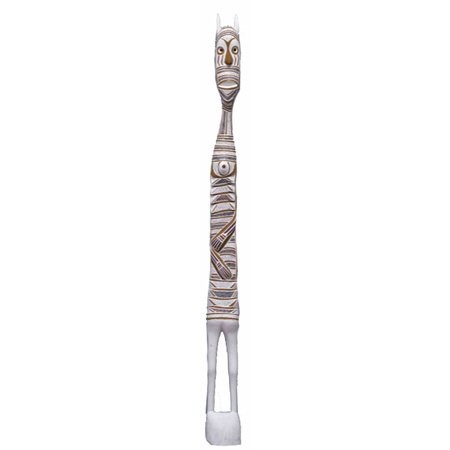
PRIZED: Yirrkala Artists
08 August - 31 August 2013
Artists from Buku Larrnggay Mulka in eastern Arnhem Land have featured prominently in the Telstra National Aboriginal and Torres Strait Islander Art Award over its 30-year history. Since 1994 there have been 22 winners from Buku Larrnggay Mulka, of those 12 have been selected for Prized: Yirrkala Artists.
Djambawa Marawili AM
Gulumbu Yunupingu
Nawurapu Wunungmurra
Rerrkirrwanga Mununggurr
Naminapu Maymuru-White
Nyapanyapa Yunupingu
Djirrirra Wunungmurra
Galuma Maymuru
Gawirrin Gumana AO
Wukun Wanambi
Baluka Maymuru
Banduk Marika

Traveling with a plate – journeys to the north
By Jörg Schmeisser (dec) Master printmaker and artist Jörg Schmeisser first visited Arnhem Land in 1976. As part of the journey he facilitated some of the first etchings to be made with Indigenous artists of the region. He again visited the Top End in 2009 as part of the Nomad Art Djalkiri project. […]
Read More >


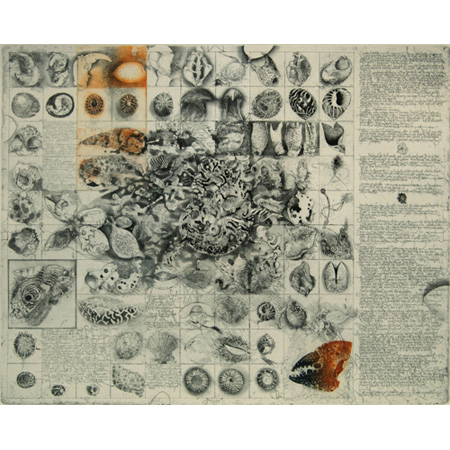

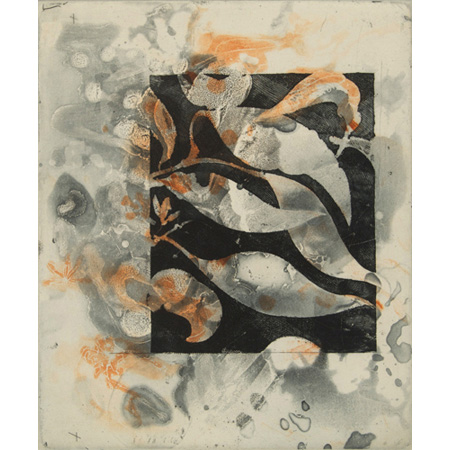


Traveling with a plate – journeys to the north
05 July - 03 August 2013By Jörg Schmeisser (dec)
Master printmaker and artist Jörg Schmeisser first visited Arnhem Land in 1976. As part of the journey he facilitated some of the first etchings to be made with Indigenous artists of the region. He again visited the Top End in 2009 as part of the Nomad Art Djalkiri project.
This body of etchings represents both his visits to the Northern Territory and subjects related to the region. The exhibition features prints of Arnhem Land, Katherine Gorge, central Australia, south east Asia and Australian plants and marine life.
Of German descent Schmeisser’s distinguished printmaking career was informed by a restless curiosity of the visual world. From the beginning, he was inspired by travel, his imagination fired by regular experiences of the unfamiliar and unknown.
Jörg Schmeisser died in 2012.
Essay by Professor Howard Morphy

Manme Mayh: Gardens of the Stone Country II
Manme Mayh: Gardens of the Stone Country II continues to explore the links between Indigenous cultural heritage, environment and aesthetic traditions of artists from the Stone Country of western Arnhem Land through food and plants (manme) and animals (mayh). The artists selected for this project represent a small and unique group of young […]
Read More >


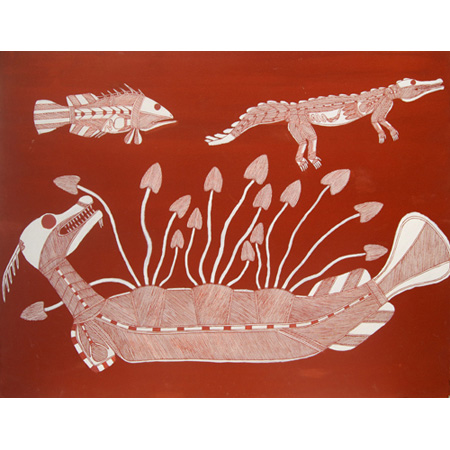

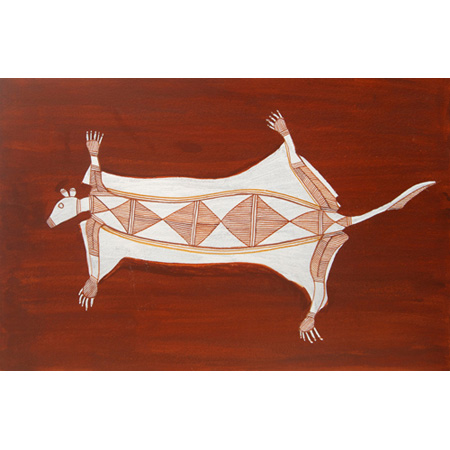


Manme Mayh: Gardens of the Stone Country II
05 July - 27 July 2013
Manme Mayh: Gardens of the Stone Country II continues to explore the links between Indigenous cultural heritage, environment and aesthetic traditions of artists from the Stone Country of western Arnhem Land through food and plants (manme) and animals (mayh).
The artists selected for this project represent a small and unique group of young artists who are actively maintaining the distinctive practise associated with the traditions of rock art painting in western Arnhem Land and the knowledge it purveys. The artists are Allan Nadjamerrek, Namarnyilk (Gavin) Nadjamerrek and Samson Namundja.
The Stone Country of Western Arnhem Land also known as the plateau country adjoins Kakadu National Park. The rocky outcrops of the escarpment dominate the landscape while adjacent floodplains, permanent rivers and billabongs are abundant with life of countless species of animals and plants.
The exhibition highlights cultural associations the Kunwinjku people have with species that include the fruit bats, kangaroos, Oenpelli python, water lilies, crocodiles, turtles, fishes, yams, and other plants and animals that provide both food and tools.

Desert Drypoints, Wetland Woodcuts and the Magnificent Mangrove Lithograph Series
John Wolseley returns to Darwin in June as part of his continuing exploration of the Daly River and Blue Mud Bay in East Arnhem Land. Immersed in swamps, wetlands, tidal mangroves and the life forms that inhabit them, his work is a search to discover how we coexist within the landscape. Wolseley’s paintings […]
Read More >

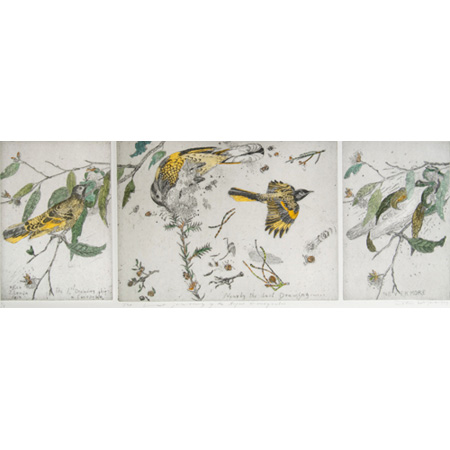
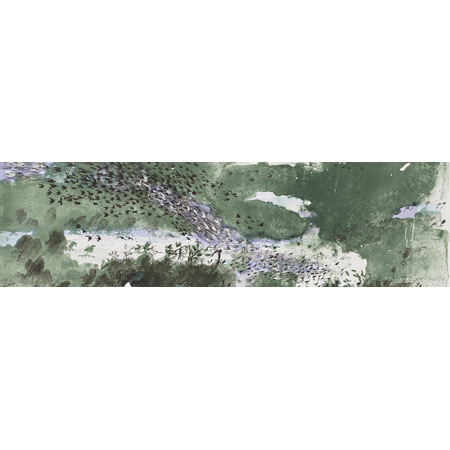


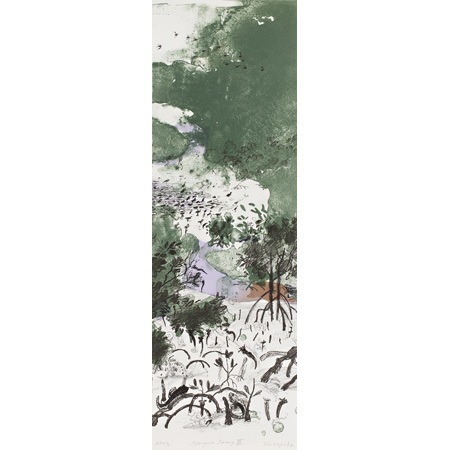

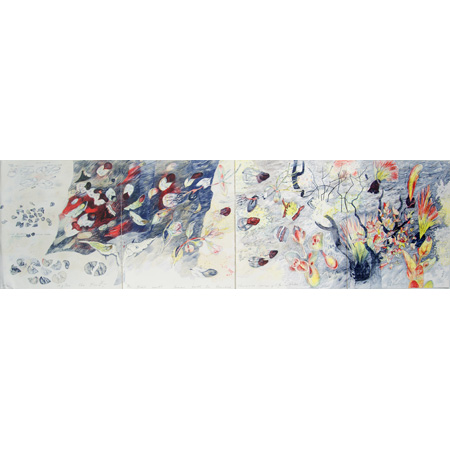
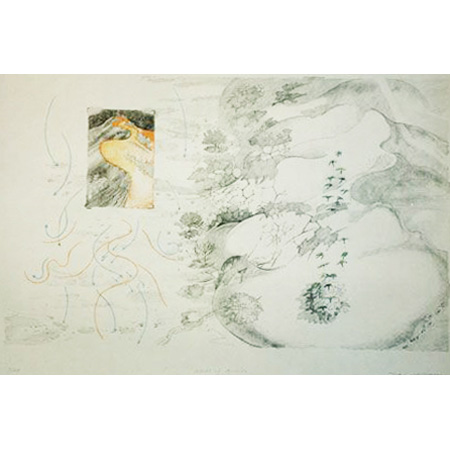
Desert Drypoints, Wetland Woodcuts and the Magnificent Mangrove Lithograph Series
31 May - 29 June 2013
John Wolseley returns to Darwin in June as part of his continuing exploration of the Daly River and Blue Mud Bay in East Arnhem Land. Immersed in swamps, wetlands, tidal mangroves and the life forms that inhabit them, his work is a search to discover how we coexist within the landscape.
Wolseley’s paintings are a study of the inner workings of living organisms, an idea that has emerged out of the rivers and swamps of the Top End environment. While the compositions can be thought of as figurative, they also go beyond to a combination of stylised dynamic abstraction and rhythmic energy and still further to the exploration of hidden dimensions of being.
While primarily an artist John Wolseley brings to his work a deep sense of philosophy, research, ethno-biology, botany, zoology and humanitarianism coupled with acute observation. His exhibition Desert Drypoints, Wetland Woodcuts and the Magnificent Mangrove Lithograph Series is on show at Nomad Art from 31 May – 29 June, 2013

New Fabrics from Merrepen Arts
These beautiful new hand printed fabrics from Merrepen Arts on the Daly River in Northern Territory are the result of a recent fabric printing workshop with Bobby Ruben. Merrepen artists are renowned for their stylised designs, which have traditional associations to the plants and animals of the Daly River region. The New fabrics […]
Read More >


New Fabrics from Merrepen Arts
31 May - 29 June 2013
These beautiful new hand printed fabrics from Merrepen Arts on the Daly River in Northern Territory are the result of a recent fabric printing workshop with Bobby Ruben.
Merrepen artists are renowned for their stylised designs, which have traditional associations to the plants and animals of the Daly River region. The New fabrics feature work highly regarded artists Marita Sambono and Kieren Karritypul.
Contact the gallery for more information about these fabrics.
gallery@nomadart.com.au
08 89482178
Or go to the online textile store to look at other

New fabric from Babbarra Designs
New fabrics from Maningrida feature hand printed designs on fine quality hand woven quilting fabrics and shot cottons. The women’s designs depict their landscape, dreaming stories, bush foods and bush activities. The exhibition will feature new and exciting screen prints and lino block printing. Proudly owned by Bawinanga Aboriginal Corporation, Babbarra Designs is […]
Read More >


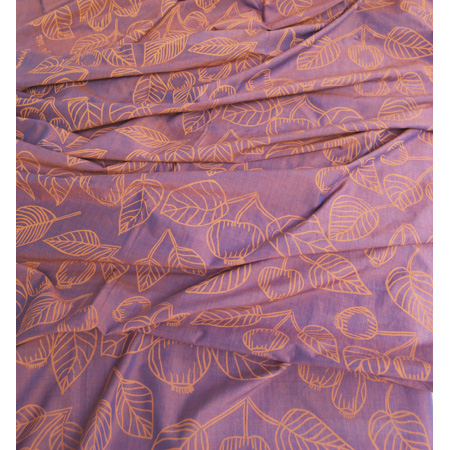

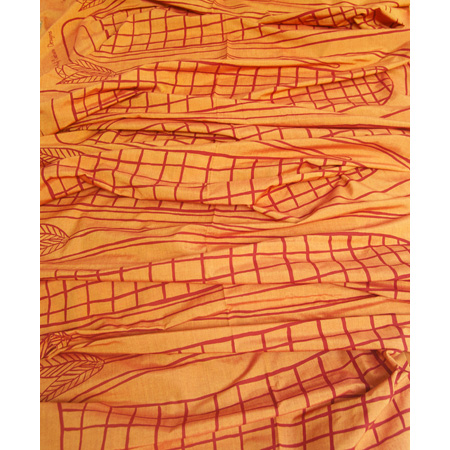
New fabric from Babbarra Designs
04 May - 25 May 2013
New fabrics from Maningrida feature hand printed designs on fine quality hand woven quilting fabrics and shot cottons. The women’s designs depict their landscape, dreaming stories, bush foods and bush activities. The exhibition will feature new and exciting screen prints and lino block printing.
Proudly owned by Bawinanga Aboriginal Corporation, Babbarra Designs is a creator of fine indigenous textile art. They are based at Maningrida in central Arnhem Land and operate out of the Babbarra Women’s Centre. The Maningrida region of central Arnhem Land is one of immense cultural and linguistic diversity. The work of our textile artists depicts the landscape, dreaming stories, spirit beings, bush foods and bush crafts from their country surrounding Maningrida. The variation in subject matter reflects the cultural identity of women from the different language groups.

Flowing From the Roper
Our art comes from the Roper, that’s what connects us here, the river. The river is the source of our creativity and energy and our art flows like the river. The artists called this exhibition ‘Flowing from the Roper’, because they see it as a journey where the art has flown from the […]
Read More >


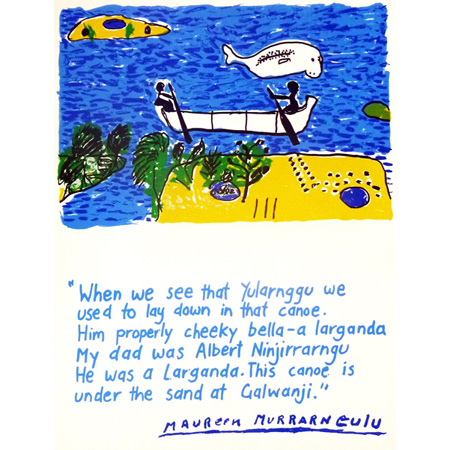

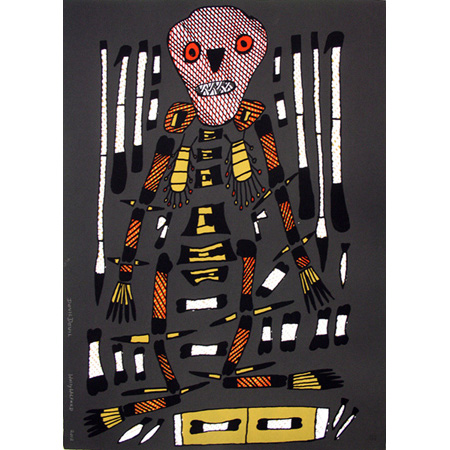
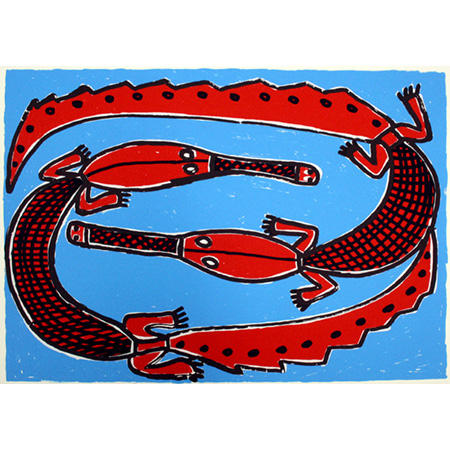
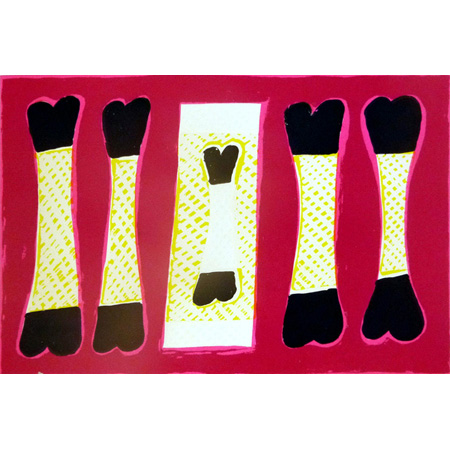

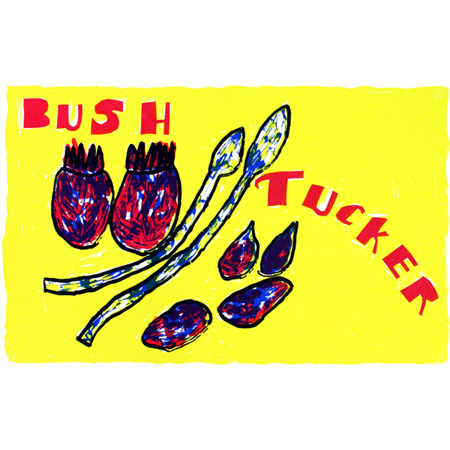
Flowing From the Roper
04 May - 25 May 2013
Our art comes from the Roper, that’s what connects us here, the river. The river is the source of our creativity and energy and our art flows like the river.
The artists called this exhibition ‘Flowing from the Roper’, because they see it as a journey where the art has flown from the Roper to Melbourne, back to the Roper.
In 2012 seven Ngukurr artists were invited to develop new work in collaboration with Melbourne-based printmaker Rebecca Mayo. The artists explored the medium of screen-printing and produced exciting new work that complemented their own arts practice. The project has been made possible through the generous support of the Methodist Ladies’ College (MLC), Friends of Ngukurr, who raised over $35,000 through various fundraising events. The positive response to this project has reinvigorated and nourished the vibrant arts community in Ngukurr and will continue to foster the special relationship between Ngukurr and MLC.
Ngukurr community lies at the very South Eastern edge of Arnhem Land. The town is perched on a rise above a bend in the mighty Roper River, with heavily wooded country stretching away to the distance. The Roper River country, with its wild escarpments and dense woodlands, billabongs full of lillies, magpie geese, crocodiles and rock formations is as diverse as the people and art from the area.

A Dogs Life II
Dion Beasley loves to draw dogs, their interactions and the world around them. Dion’s humorous observations capture the character and relationships of the animals and situations he draws. ‘A Dogs Life II’ is the latest body of prints produced by this unique Tennant Creek artist, editioned by Franck Gohier, Red Hand Studios, Darwin. […]
Read More >
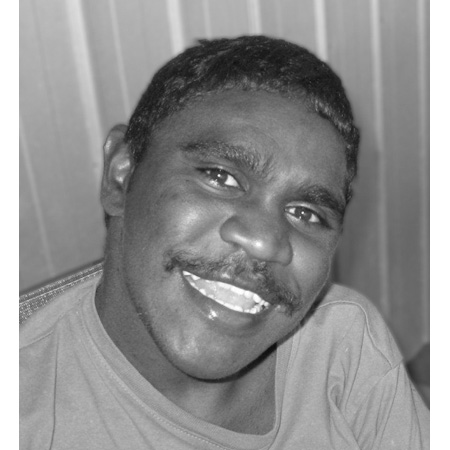


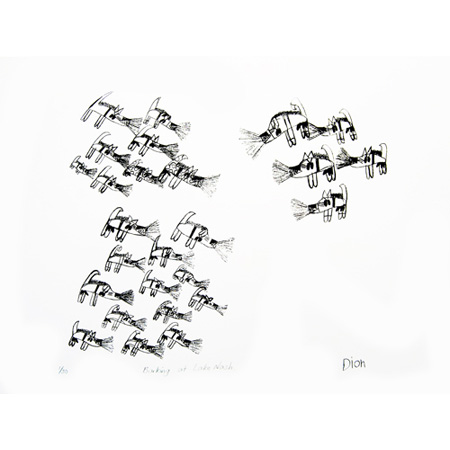
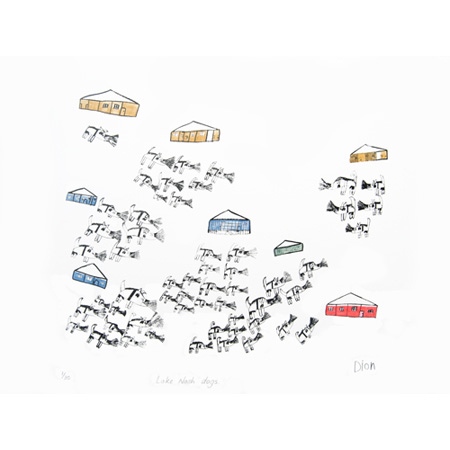
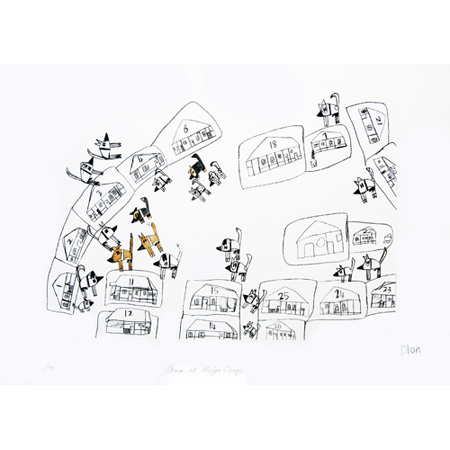
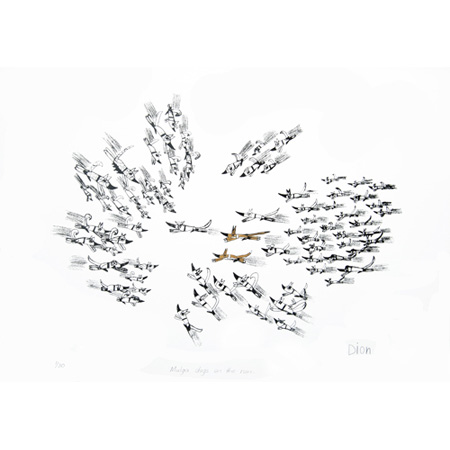

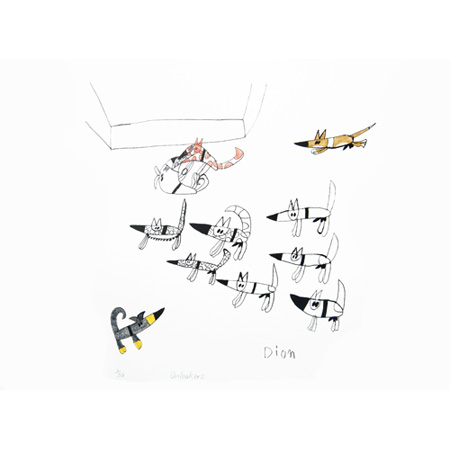
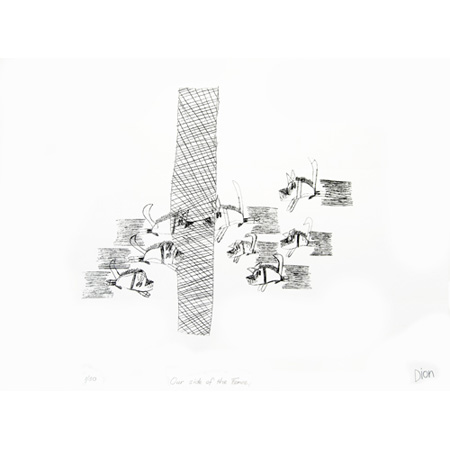


A Dogs Life II
04 May - 25 May 2013
Dion Beasley loves to draw dogs, their interactions and the world around them. Dion’s humorous observations capture the character and relationships of the animals and situations he draws. ‘A Dogs Life II’ is the latest body of prints produced by this unique Tennant Creek artist, editioned by Franck Gohier, Red Hand Studios, Darwin.

Hand Held Lands
Drawings and sculpture by Talitha Kennedy. In this body of work Darwin based artist Talitha Kennedy examines the human relationship with nature in small sculptures and drawings. Talitha Kennedy’s small hand-stitched sculptures are inspired by the idea of holding a mini-world in your hands. ‘Humans have the power to make big […]
Read More >

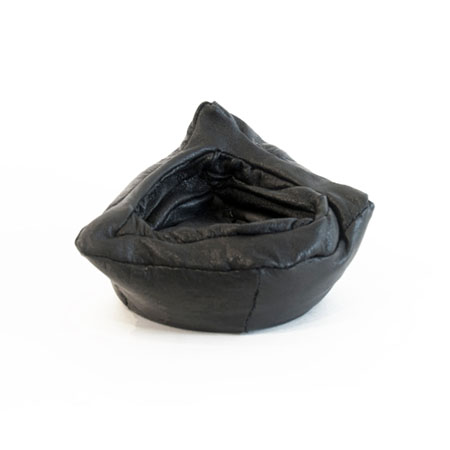

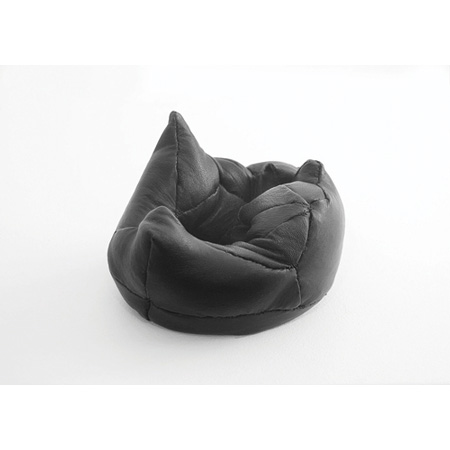
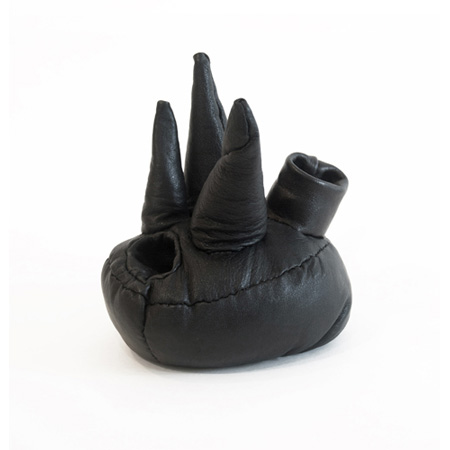
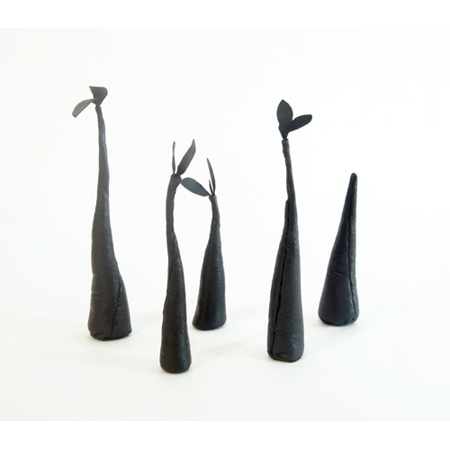
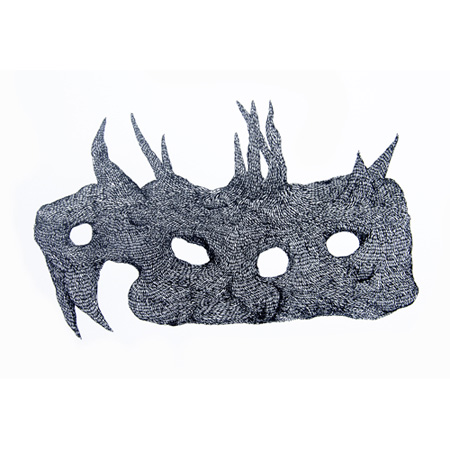

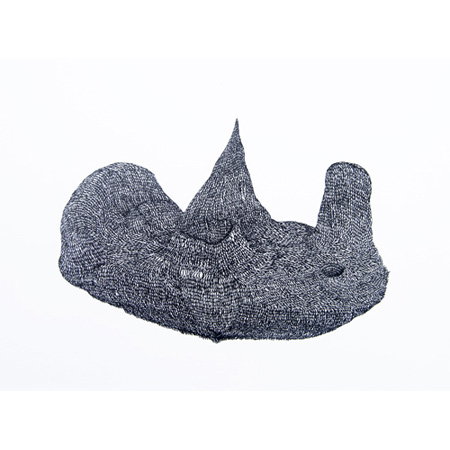
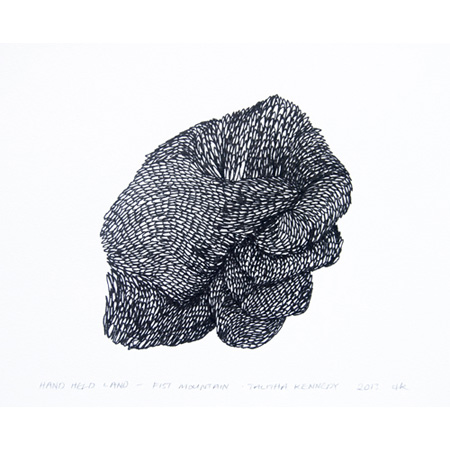
Hand Held Lands
05 April - 27 April 2013
Drawings and sculpture by Talitha Kennedy.
In this body of work Darwin based artist Talitha Kennedy examines the human relationship with nature in small sculptures and drawings.
Talitha Kennedy’s small hand-stitched sculptures are inspired by the idea of holding a mini-world in your hands.
‘Humans have the power to make big changes to the world. The capability of our technologies give us the power to destroy the land –deforest, make a huge hole in the ground for mining, avert rivers to dam, move mountains for roads. Geographic forms are themselves in transition, formed by moving tectonic plates in constant states of erosion as everything transforms by entropy.
The land as a body, an organism –alive and with spirit’
Talitha Kennedy 2013

Fabrics from Injalak Arts
A selection of beautiful new screen printed fabric designs from Injalak Arts in Western Arnhem Land. Screen printing is an important part of art centre activities creating employment for artists and a alternate way to express traditional motifs. The designs were created by Injalak artists under the direction of Tim Growcott. Visit […]
Read More >
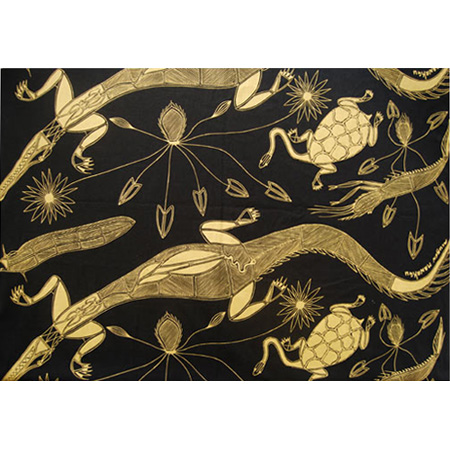


Fabrics from Injalak Arts
05 April - 27 April 2013
A selection of beautiful new screen printed fabric designs from Injalak Arts in Western Arnhem Land.
Screen printing is an important part of art centre activities creating employment for artists and a alternate way to express traditional motifs. The designs were created by Injalak artists under the direction of Tim Growcott.

Recent Fabrics from Wadeye Women’s Centre
The Wet Season reinvigorates the landscape and brings new life across the Top End. As you fly into the community of Wadeye at this time of year, you see vast stretches of green – brilliant carpets of light and dark punctuated by mirror-like giant ribbons of water stretching across the land and isolating the […]
Read More >


Recent Fabrics from Wadeye Women’s Centre
08 March - 30 March 2013
The Wet Season reinvigorates the landscape and brings new life across the Top End. As you fly into the community of Wadeye at this time of year, you see vast stretches of green – brilliant carpets of light and dark punctuated by mirror-like giant ribbons of water stretching across the land and isolating the communities beyond them. ‘The Wet’ brings new growth, new ideas and inspiration. Palngun Wurnangat Association Inc (which translates to ‘women working together’ in Murrinhpatha ) is proud to share with you, the designs and first-time screened fabrics of new young artists of the Wadeye region , along with some of the traditional designs that are well known and loved.
Design is sometimes literal and sometimes conceptual – drawing reference from the hint of a shape or the idea of movement. This exhibition includes the work of several younger artists of the Wadeye region, who’s work represents the beginning of that contemporary line of thought in the artist’s mind – sometimes it’s a story, sometimes it’s just a feeling.

Good people, strong people, made this art
This exhibition features powerful images of the Arrernte homelands west of Alice Springs by artists from Yarrenyty-Arltere. The Centre is a family resource and learning centre located in Alice Springs which aims to improve the social, health, environmental and economic well being of the community in a way that strengthens and respects culture.
Read More >

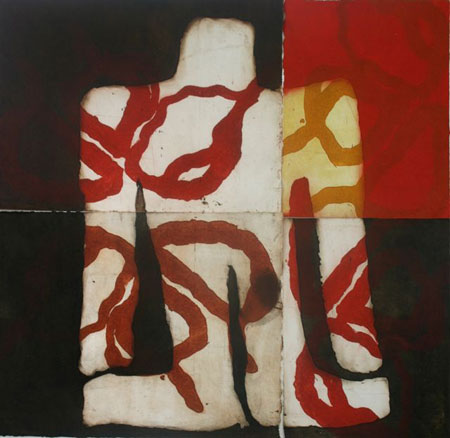


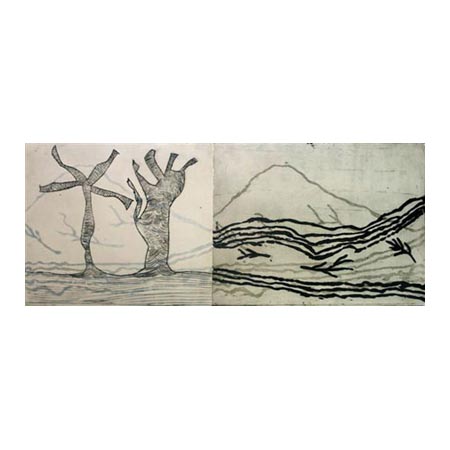

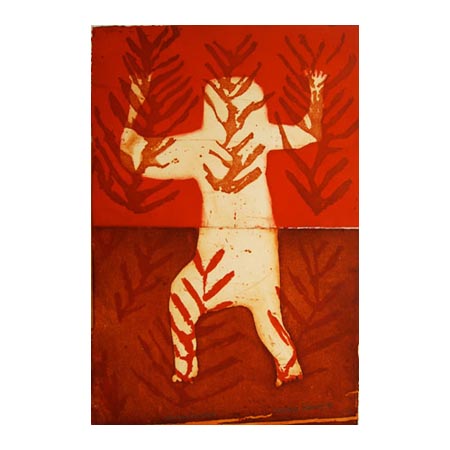
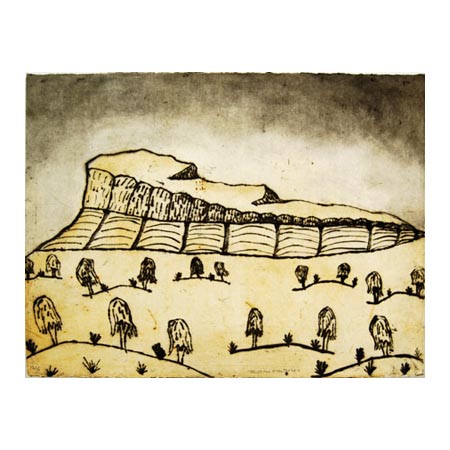
Good people, strong people, made this art
08 March - 30 March 2013
This exhibition features powerful images of the Arrernte homelands west of Alice Springs by artists from Yarrenyty-Arltere. The Centre is a family resource and learning centre located in Alice Springs which aims to improve the social, health, environmental and economic well being of the community in a way that strengthens and respects culture.

Build Up: More works in paper
Build Up is an exhibition of handmade paper by Darwin artist Winsome Jobling. Winsome Jobling makes works in paper, which are linked to the environment on both political and physical grounds. Winsome’s art is tactile and sensual, often contrasting elements of texture, translucence, fragility and strength. She creates images by pouring thin layers of coloured pulp one […]
Read More >

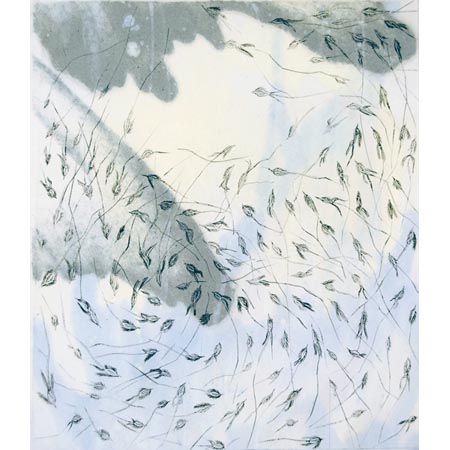
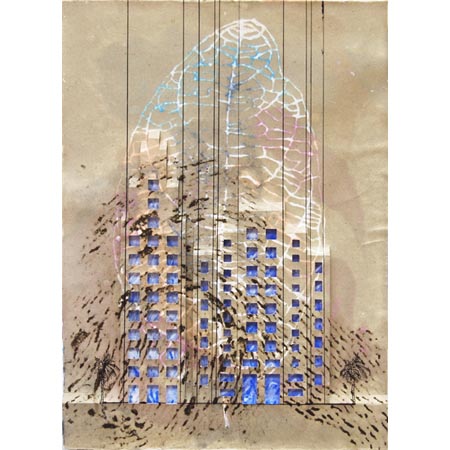
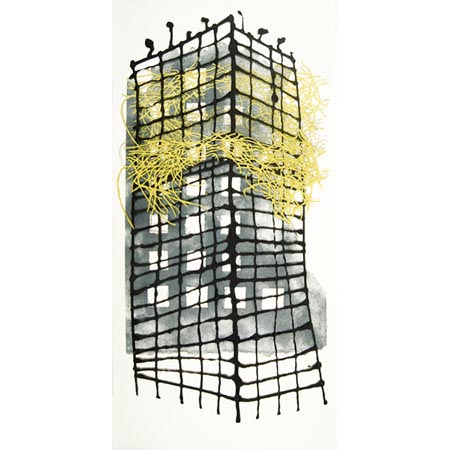

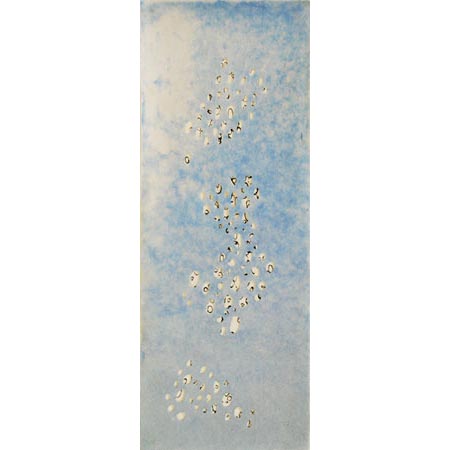
Build Up: More works in paper
08 February - 02 March 2013Build Up is an exhibition of handmade paper by Darwin artist Winsome Jobling.
Winsome Jobling makes works in paper, which are linked to the environment on both political and physical grounds. Winsome’s art is tactile and sensual, often contrasting elements of texture, translucence, fragility and strength. She creates images by pouring thin layers of coloured pulp one on top of the other; they are then pressed into beautiful contemporary watermark papers.
Jobling has an international reputation as a paper maker and recently returned from the Watermarks 2 conference in Cleveland USA, where she presented a workshop to a highly appreciative audience of paper makers.
Build Up
‘It’s the wet, your underwear is clingy; it may be all you have on. Mould is growing on the walls and your clothes. The air-conditioners are heaving and gasping on sweaty high rises. The city is ugly. Focus is here and now, built environment, build-up and rain.’ Winsome Jobling 2013

New prints from Mardbalk Arts and Craft
Mardbalk Arts and Crafts Centre was established in February 2009 and represents the Warruwi and Minjiland communities in west Arnhem Land. The art centre has nine permanent and 55 casual artists and is run by the West Arnhem Shire Council – a local board consisting of traditional owners, elders, artists and various clan members. The […]
Read More >


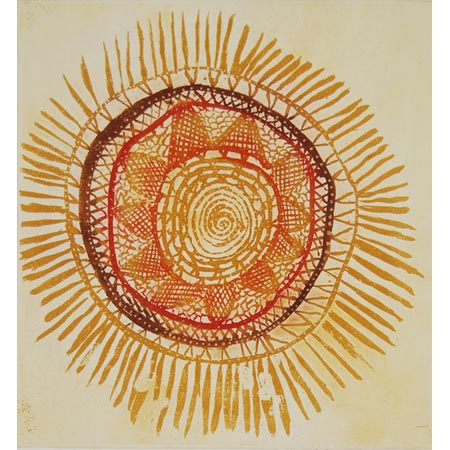


New prints from Mardbalk Arts and Craft
08 February - 02 March 2013Mardbalk Arts and Crafts Centre was established in February 2009 and represents the Warruwi and Minjiland communities in west Arnhem Land. The art centre has nine permanent and 55 casual artists and is run by the West Arnhem Shire Council – a local board consisting of traditional owners, elders, artists and various clan members.
The name Mardbalk refers to the name of the bay where the Warrawi community is located. The prints are the result of a workshop with Melbourne based printmaker Andrew Sinclair during a workshop on the Island in 2012.

Comes with the Territory
Comes with the Territory is an exhibition of new work from Darwin artist Merran Sierakowski. The exhibition features small sculptures and woodblock prints with uniquely local (Northern Territory) themes. ‘The creatures depicted in this exhibition are an opinionated lot and express themselves loudly and often on subjects they may or may not know […]
Read More >


Comes with the Territory
22 November - 22 December 2012
Comes with the Territory is an exhibition of new work from Darwin artist Merran Sierakowski. The exhibition features small sculptures and woodblock prints with uniquely local (Northern Territory) themes.
‘The creatures depicted in this exhibition are an opinionated lot and express themselves loudly and often on subjects they may or may not know anything about. In a uniquely Territorian way they examine what means to be part of their community, part of the rest of Australia and part of the rest of the world.’ Merran Sierakowski 2012.
Merran Sierakowski has lived and worked in the Northern Territory since the 1980’s, exhibiting regularly in group shows in Australia and overseas. Merran is a prolific artist who consistently addresses social, political and environmental issues, human rights, cultural identity and sense of place. Her art consists of limited edition wood cut prints, sculpture and installations which are often ironic and whimsical. She uses a variety of techniques incorporating fabric, paper, metal, stone, wire, wood and found objects.

From Yirrkala: saltwater, freshwater flow
An exhibition of etchings and bark paintings by Naminapu Maymuru White and etchings by Heather Burness The confluence of freshwater and saltwater is important for the Yolngu people of east Arnhem Land. The ebb and flow between these waters shifts and changes through the cycle of seasons and tides. The meeting point is a fertile zone […]
Read More >


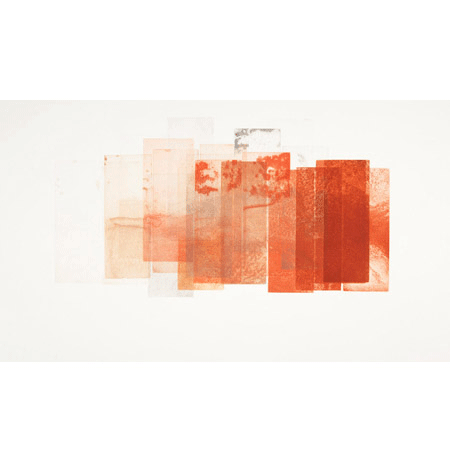

From Yirrkala: saltwater, freshwater flow
05 October - 20 October 2012An exhibition of etchings and bark paintings by Naminapu Maymuru White and etchings by Heather Burness
The confluence of freshwater and saltwater is important for the Yolngu people of east Arnhem Land. The ebb and flow between these waters shifts and changes through the cycle of seasons and tides. The meeting point is a fertile zone for plants and animals. It is also a phenonomon that symbolises the mediation of difference.
In this exhibition, Canberra based artist Heather Burness has worked with Yirrkala artist Naminapu Maymuru White both in Canberra and in eastern Arnhem Land. Through the exchange Heather taught Naminapu the intricacies of multi-plate colour etching and recently editioned a colour plate etching for Naminapu.

Manme Mayh: Gardens of the Stone Country
Manme Mayh: Gardens of the Stone Country explores the links between Indigenous cultural heritage, environment and aesthetic traditions of artists from the Stone Country of western Arnhem Land through food and plants (manme) and animals (mayh). The artists selected for this project represent a small and unique group of senior and emerging and artists […]
Read More >
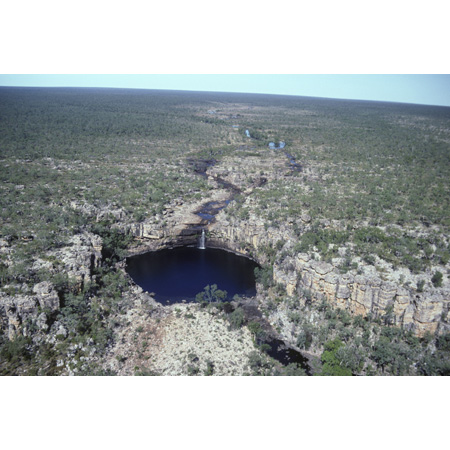

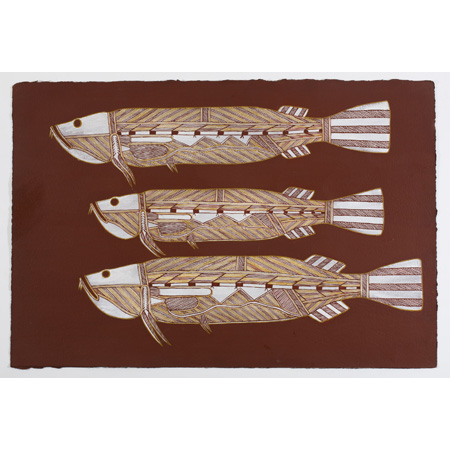
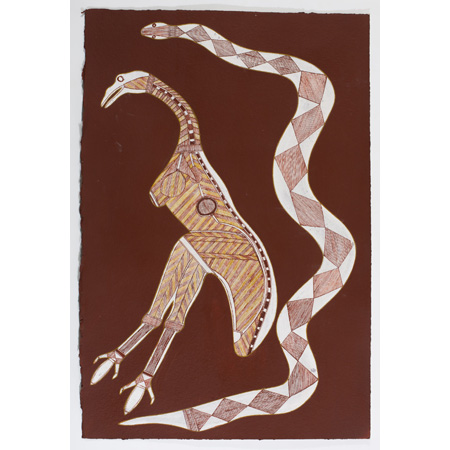


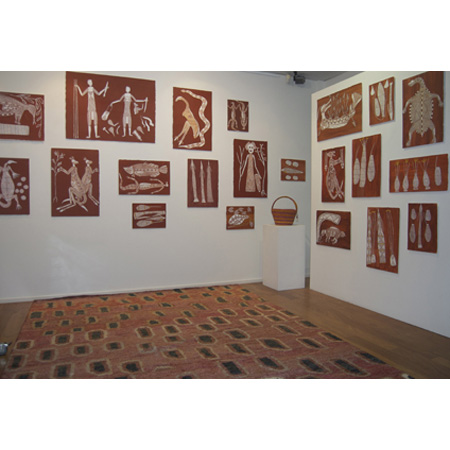
Manme Mayh: Gardens of the Stone Country
04 August - 01 September 2012Manme Mayh: Gardens of the Stone Country explores the links between Indigenous cultural heritage, environment and aesthetic traditions of artists from the Stone Country of western Arnhem Land through food and plants (manme) and animals (mayh).
The artists selected for this project represent a small and unique group of senior and emerging and artists who are actively maintaining the distinctive practise associated with the traditions of rock art painting in western Arnhem Land and the knowledge it purveys. The artists are Kalarriya Jimmy Namarnyilk (dec), Don Namundja, Allan Nadjamerrek, Maralngurra (Maath) Nadjamerrek, Namarnyilk (Gavin) Nadjamerrek and Ray Nadjamerrek
The Stone Country of Western Arnhem Land also known as the plateau country adjoins Kakadu National Park. The rocky outcrops of the escarpment dominate the landscape while adjacent floodplains, permanent rivers and billabongs are abundant with life of countless species of animals and plants.
Manme Mayh: Gardens of the Stone Country focuses on the native plants and animals integral to the culture and traditions of the Kunwinjku speaking people. The exhibition highlights cultural associations the Kunwinjku people have with species that include the echidna, possum, fruit bats, the kangaroo, black wallaroo, rock-rat, Oenpelli python, water lilies, crocodiles, turtles, fishes, yams, and other plants that provide both food and tools.

Seven Sisters
Seven Sisters is a series of eight limited edition etchings celebrating the ancestry of the seven Yunupingu sisters from North-east Arnhem Land. The Seven Sisters is a creation story told in many parts of Australia. The story is based on the two constellations of stars known as the Pleiades and Orion. The Yunupingu Sisters are: Barrupu Yunupingu Dhopiya Yunupingu […]
Read More >

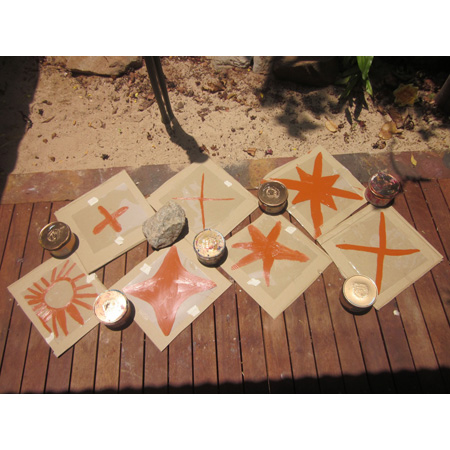


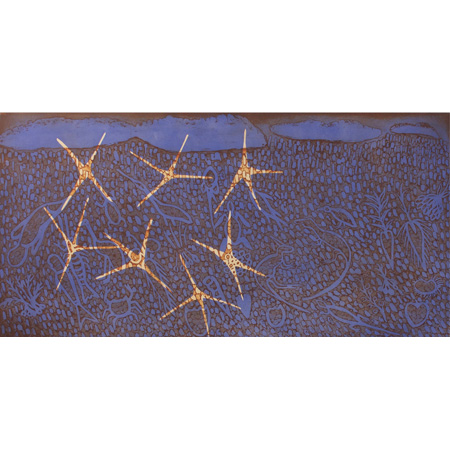
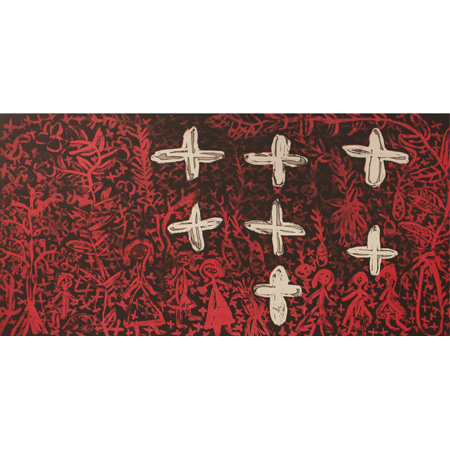
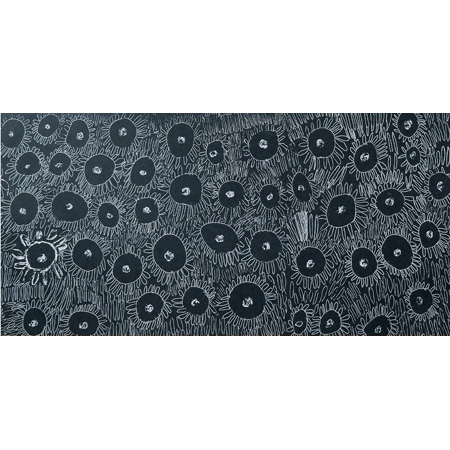


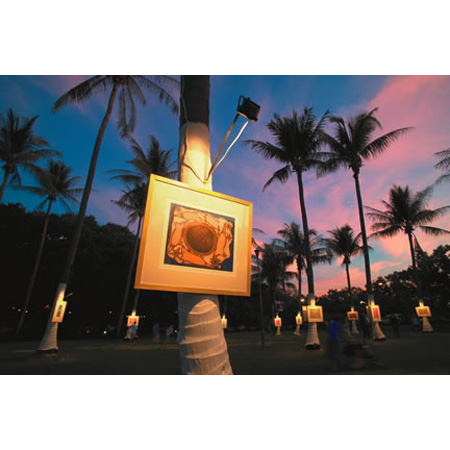
Seven Sisters
10 August - 26 August 2012Seven Sisters is a series of eight limited edition etchings celebrating the ancestry of the seven Yunupingu sisters from North-east Arnhem Land. The Seven Sisters is a creation story told in many parts of Australia. The story is based on the two constellations of stars known as the Pleiades and Orion.
The Yunupingu Sisters are:
Barrupu Yunupingu
Dhopiya Yunupingu
Dorothy Djakanngu Yunupingu
Gulumbu Yunupingu (dec)
Djerknngu Yunupingu
Nyapanyapa Yunupingu
Ranydjupi Yunupingu
Seven Sisters will be shown at the Ganyu (Star) Gallery, one of the highlights of the 2012 Darwin Festival, as Festival Park is transformed into a magical night-time gallery with no walls.
The Ganyu Gallery will also feature a new body of associated etchings that for the first time really emphasise the power of the marwat- hair brush which is one of NE Arnhem’s distinctive traits and strengths.

Prints and Fabric from Merrepen Arts
These new prints and fabrics from Merrepen Arts on the Daly River in Northern Territory are the result of print workshops held at the Art Centre in 2011 with Basil Hall Editions and Bobby Ruben. Merrepen artists are renowned for their stylised designs, which have traditional associations to the wetlands, plants and animals of the […]
Read More >

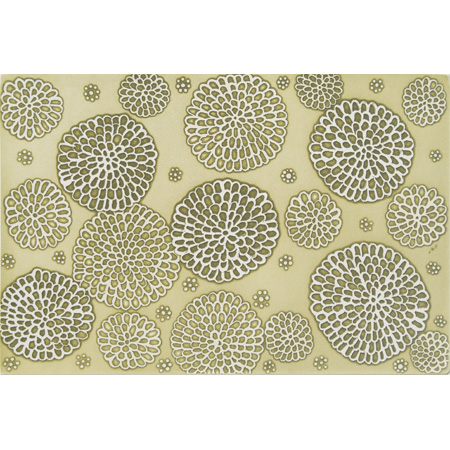


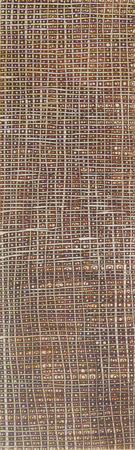
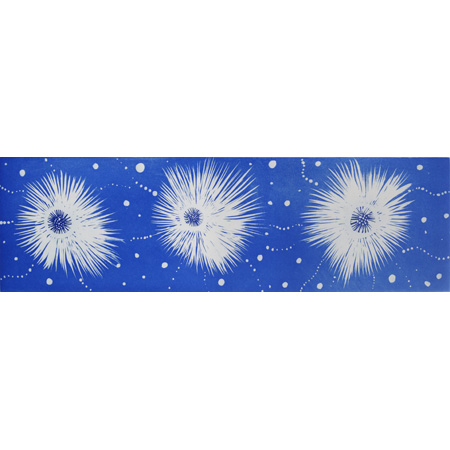


Prints and Fabric from Merrepen Arts
July 2012 -These new prints and fabrics from Merrepen Arts on the Daly River in Northern Territory are the result of print workshops held at the Art Centre in 2011 with Basil Hall Editions and Bobby Ruben. Merrepen artists are renowned for their stylised designs, which have traditional associations to the wetlands, plants and animals of the Daly River region. The exhibition features new works by Aaron McTaggart, Christina Yambeing, Gracie Kumbi, Louise Pandella, Marita Sambono and bright young star, Kieren (Karritypul) McTaggart.

Fabric from Injalak Arts
These beautiful new fabrics from Injalak Arts in Western Arnhem Land are the result of a screen printing workshop held at the Art Centre in 2011. Screen printing is an important part of art centre activities creating employment for artists and a alternate way to express traditional motifs. The designs were created by Injalak artists […]
Read More >


Fabric from Injalak Arts
09 June - 30 June 2012These beautiful new fabrics from Injalak Arts in Western Arnhem Land are the result of a screen printing workshop held at the Art Centre in 2011. Screen printing is an important part of art centre activities creating employment for artists and a alternate way to express traditional motifs. The designs were created by Injalak artists under the direction of Tim Growcott.
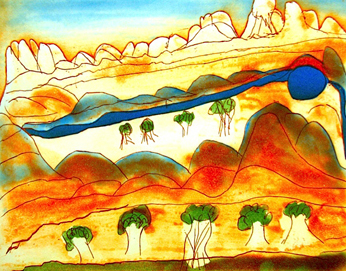
Recent Prints from Mangkaja Arts
This body of screen prints and etchings represents traditional connections Mangkaja artists have to the Kimberley region. Important sites and natural resources are depicted including many varieties of plant food. Mangkaja Arts is situated in Western Australia on the banks of the Fitzroy River.
Read More >


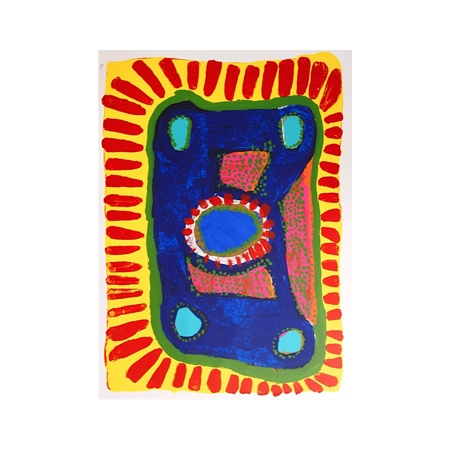


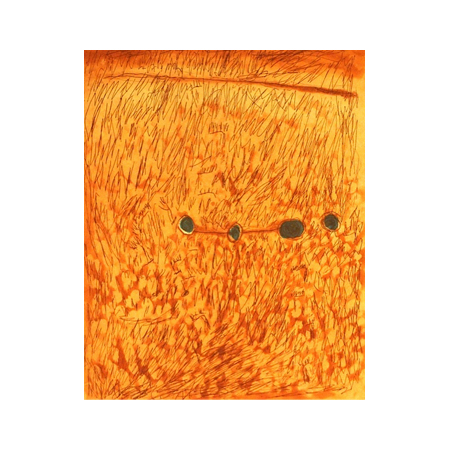
Recent Prints from Mangkaja Arts
12 May -This body of screen prints and etchings represents traditional connections Mangkaja artists have to the Kimberley region. Important sites and natural resources are depicted including many varieties of plant food. Mangkaja Arts is situated in Western Australia on the banks of the Fitzroy River.

Ngaruwanajirri Monotypes
Monotype prints, works on paper, paintings and sculpture by Ngaruwanajirri Artists, including Lorna Kantilla, Estelle Munkanome and Alfonso Puautjimi. Ngaruwanajirri Inc is located in Wurrumiyanga (Nguiu) on Bathurst Island. Ngaruwanajirri was established in 1994 to support local Tiwi artists with disabilities and to provide employment for people on the Tiwi Islands. Ngaruwanajirri is a Tiwi […]
Read More >

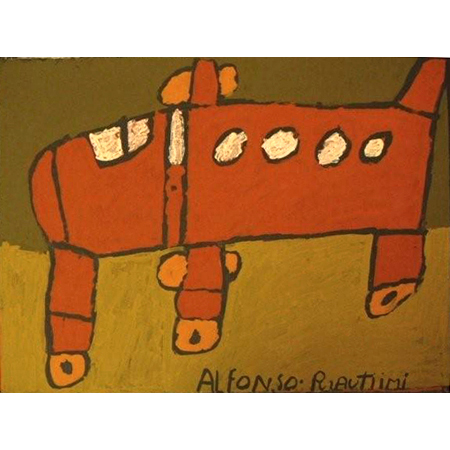


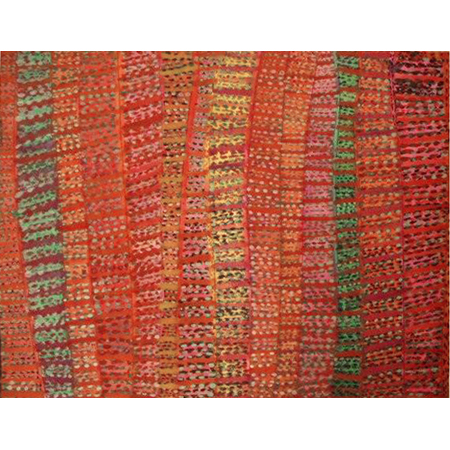

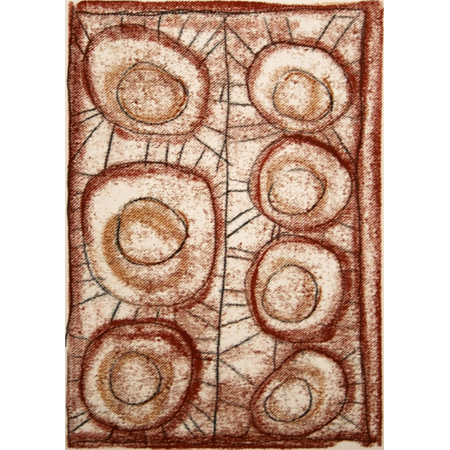


Ngaruwanajirri Monotypes
31 March - 06 May 2012Monotype prints, works on paper, paintings and sculpture by Ngaruwanajirri Artists, including Lorna Kantilla, Estelle Munkanome and Alfonso Puautjimi. Ngaruwanajirri Inc is located in Wurrumiyanga (Nguiu) on Bathurst Island.
Ngaruwanajirri was established in 1994 to support local Tiwi artists with disabilities and to provide employment for people on the Tiwi Islands. Ngaruwanajirri is a Tiwi word that means ‘helping one another’

Bush Animals: sculpture from the desert to the sea
An eclectic exhibition of animal sculptures by Aboriginal artists from across Australia. Bush Animals features more than 20 established and emerging Aboriginal artists who produce outstanding sculptural works depicting a variety of animals.
Read More >


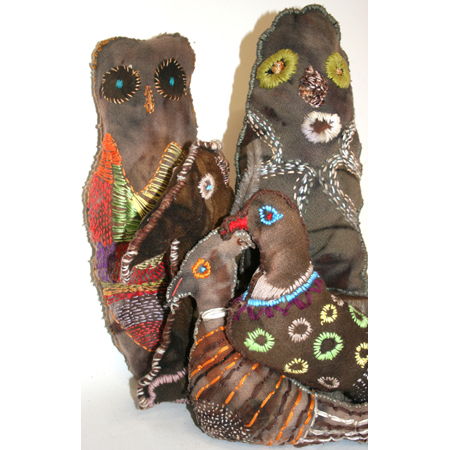
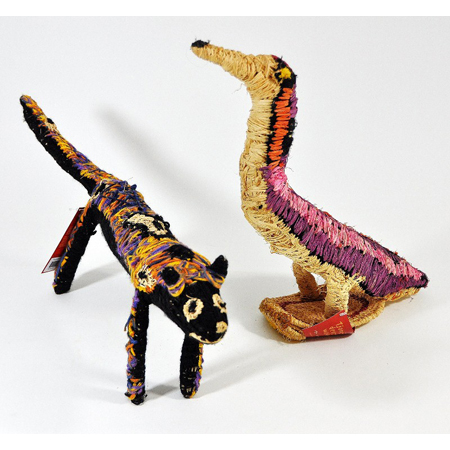
Bush Animals: sculpture from the desert to the sea
31 March - 05 May 2012An eclectic exhibition of animal sculptures by Aboriginal artists from across Australia. Bush Animals features more than 20 established and emerging Aboriginal artists who produce outstanding sculptural works depicting a variety of animals.

New prints from Iwantja Arts and Crafts
Iwantja Arts and Crafts is located at Indulkana in Anangu Pitjantjatjara Yankunytjatjara Lands (APY lands) in the far north of South Australia. The Iwantja artists have a long association with wood block printing. People enjoy carving into wood because it is similar to marking wooden artifacts (punu). In this new body of work the Iwantja artists […]
Read More >

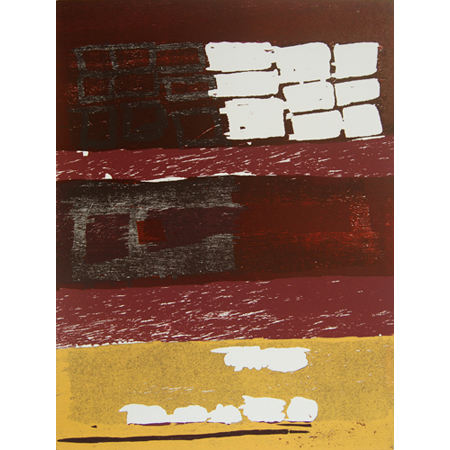
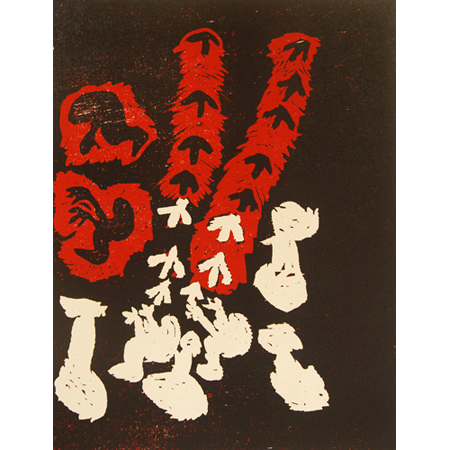


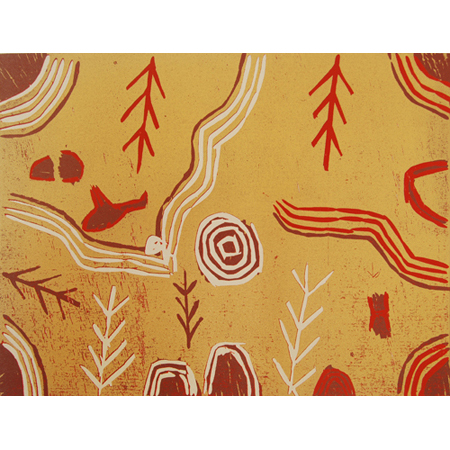
New prints from Iwantja Arts and Crafts
14 March - 31 March 2012Iwantja Arts and Crafts is located at Indulkana in Anangu Pitjantjatjara Yankunytjatjara Lands (APY lands) in the far north of South Australia.
The Iwantja artists have a long association with wood block printing. People enjoy carving into wood because it is similar to marking wooden artifacts (punu). In this new body of work the Iwantja artists have adapted traditional cultural values, images and stories into colourful carved imagery. The prints are the result of a workshop with Basil Hall in January 2012.

Waralungku Arts: prints and ceramics from the Gulf
Waralungku Arts is located at Borroloola, a remote community on the McArthur River in the Northern Territory of Australia. It is set in an arresting landscape of rocky hills, cattle-grazed scrub, billabongs, and wide horizons. Waralungku artists have a unique style that depicts both the life and the history of the community, as well as […]
Read More >


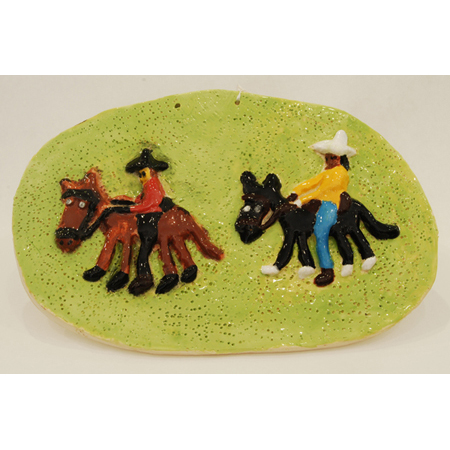


Waralungku Arts: prints and ceramics from the Gulf
16 March - 31 March 2012Waralungku Arts is located at Borroloola, a remote community on the McArthur River in the Northern Territory of Australia. It is set in an arresting landscape of rocky hills, cattle-grazed scrub, billabongs, and wide horizons. Waralungku artists have a unique style that depicts both the life and the history of the community, as well as the distinctive beauty of the surrounding landscape. The screenprints are the result of a workshop with Darwin artist Colin Holt in February 2012.

Breathe: Works in Paper by Winsome Jobling
Northern Territory based artist Winsome Jobling is engaged in all aspects of paper making from historical and seasonal research to sourcing, harvesting and nurturing the fibre and plants. Each plant produces uniquely different qualities of paper. In her exhibition of new work titled Breathe, Jobling applies her knowledge of plants and papermaking to reflect […]
Read More >


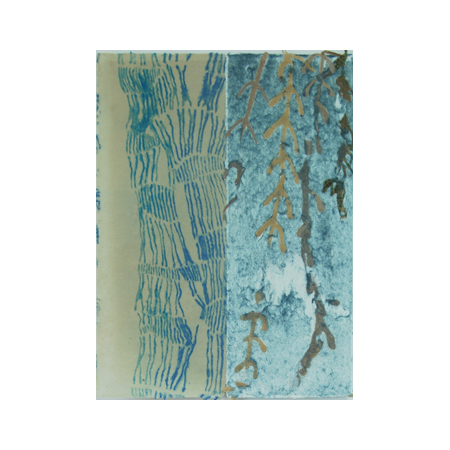
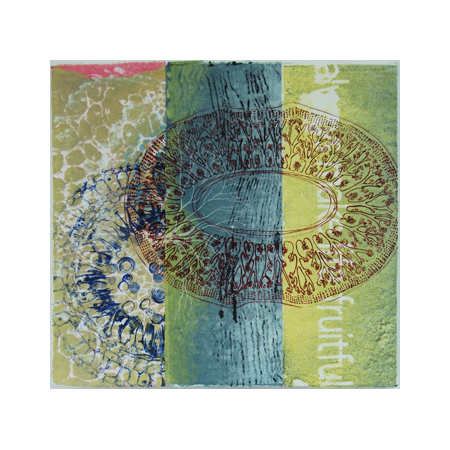

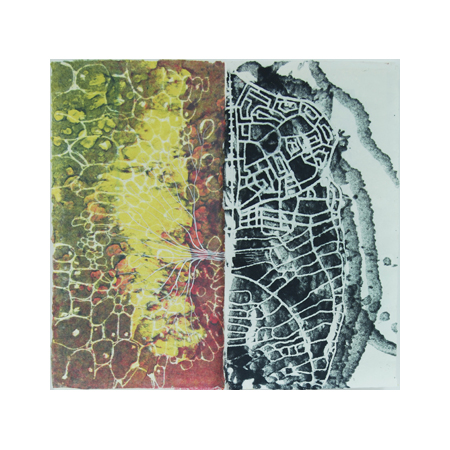


Breathe: Works in Paper by Winsome Jobling
10 February - 10 March 2012breathe in, listen… breathe out ...think, breathe in
Northern Territory based artist Winsome Jobling is engaged in all aspects of paper making from historical and seasonal research to sourcing, harvesting and nurturing the fibre and plants. Each plant produces uniquely different qualities of paper.
In her exhibition of new work titled Breathe, Jobling applies her knowledge of plants and papermaking to reflect upon the cycles and re-cycling rhythms of the earth.
The air we breathe in is taken into the lungs, we inhale oxygen and exhale carbon dioxide. This exchange of gases is the respiratory system’s means of getting oxygen to the blood. Plants breathe in carbon dioxide, absorb energy and release oxygen through photosynthesis. The oceans and other waters are like life’s bloodstream conveying nutrients, heat and the elements, while the atmosphere protects, supplies and recycles. Life is interconnected on every level

Maningrida Threads: hand crafted fabric from Babbarra Designs
This exhibition features Babbarra Designs renowned lino and screen printed fabric. The artists produce lino-tile designs and printed onto fabric with up to three layers of colour. Each piece of lino fabric is unique with varying tile and colour combinations. Lino-tiled fabric is printed in 2 & 3 metre lengths. Babbarra Designs […]
Read More >


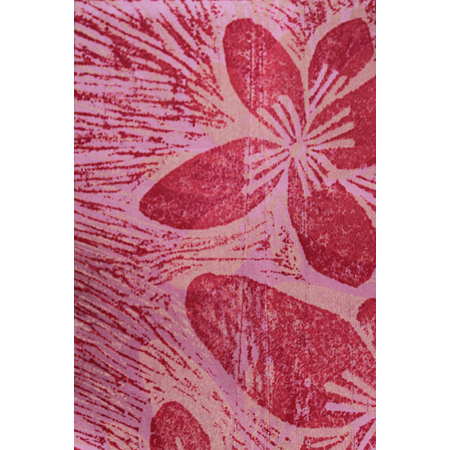


Maningrida Threads: hand crafted fabric from Babbarra Designs
10 February - 06 March 2012
This exhibition features Babbarra Designs renowned lino and screen printed fabric.
The artists produce lino-tile designs and printed onto fabric with up to three layers of colour. Each piece of lino fabric is unique with varying tile and colour combinations. Lino-tiled fabric is printed in 2 & 3 metre lengths.
Babbarra Designs print fine silk-screened fabrics are produced from original artwork designed by the artists and printed onto a range of mediums including cotton, linen and silk.
Babbarra Designs is based at Maningrida in central Arnhem Land and operate out of the Babbarra Women’s Centre. The Maningrida region of central Arnhem Land is one of immense cultural and linguistic diversity. The work depicts the landscape, dreaming stories, spirit beings, bush foods and bush crafts from their country surrounding Maningrida. The variation in subject matter reflects the cultural identity of women from the different language groups.